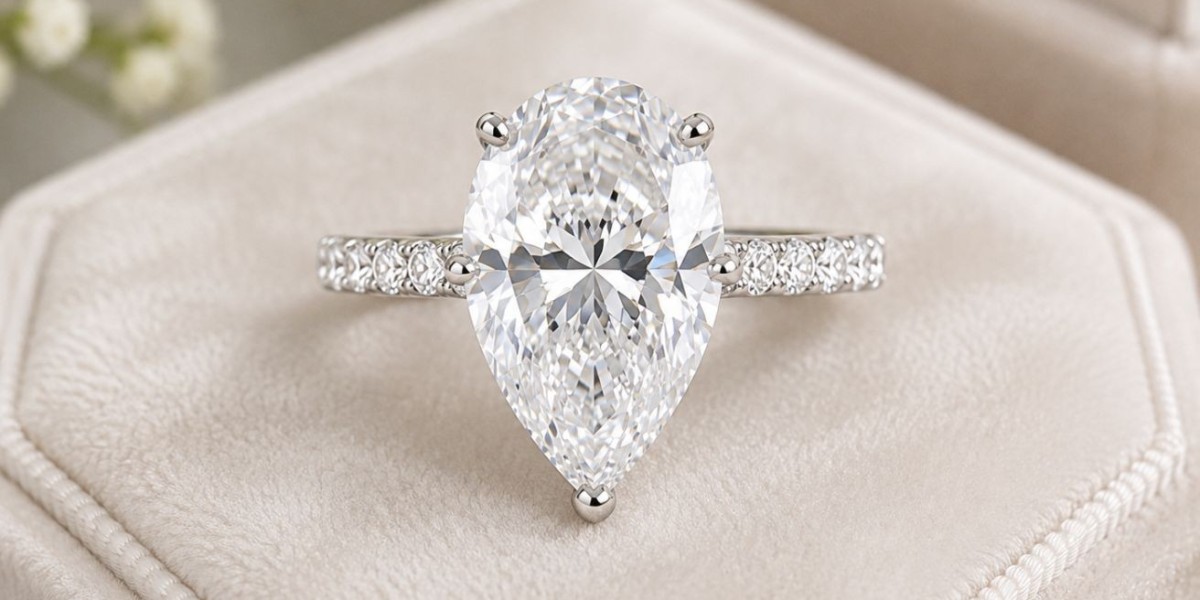


An engagement ring carries a story before it is even placed on the finger. It represents a relationship, a shared decision, and the beginning of a new chapter. While the diamond itself is an important part of that story, its shape and setting can communicate just as much about personal taste.
Pear shaped diamond rings have a particularly expressive design language. Their rounded end transitions into a delicate point, creating a silhouette that is often compared to a teardrop. This combination of softness and definition gives the shape a graceful appearance while allowing it to stand apart from more familiar diamond cuts.
The growing interest in lab grown diamonds has added another layer to this design story. Modern couples have more opportunities to explore different diamond options, settings, proportions, and styles. A pear-shaped lab grown diamond can therefore become the foundation for an engagement ring that balances traditional symbolism with contemporary preferences.
The appeal of the style is not limited to its appearance. Its versatility, adaptability, and potential for personalization make it particularly suitable for couples who want an engagement ring that feels connected to their individual story.
The Design Language Behind the Pear Shape
The pear cut is defined by two contrasting ends. The rounded portion gives the diamond a soft, full appearance, while the pointed tip provides structure and direction. This contrast creates a visual rhythm that is immediately recognizable.
When the pointed end faces toward the fingertip, the elongated shape can create a graceful vertical effect. This orientation is commonly associated with the traditional presentation of the pear cut, but it is not the only possibility. Some designs use a different orientation to create a more distinctive visual statement.
The proportions of the diamond also play a significant role. Pear shapes can range from slender and elongated to broad and rounded. A longer profile may create a delicate appearance, while a wider shape can provide a stronger visual presence.
Symmetry is another important part of the design story. Since the pear shape has a distinctive outline, balance between the two sides can influence how refined the stone appears. A harmonious silhouette can help the diamond look polished from different angles.
The pointed tip contributes much of the shape's personality, but it also requires appropriate protection. A well-designed setting can secure the tip while keeping it visible enough to preserve the character of the pear silhouette. Its appeal comes from the relationship between proportion, symmetry, light, and setting.
How Lab Grown Diamonds Bring a Contemporary Perspective
The rise of lab grown diamonds has expanded the conversation around modern engagement jewelry. Today's consumers often want to understand their choices before selecting a significant piece of jewelry. They may compare different diamond characteristics, shapes, settings, and production methods.
Lab grown diamonds are produced through advanced technological processes in controlled laboratory environments. They have the fundamental crystal structure and physical characteristics associated with diamonds, making them suitable for engagement rings and other fine jewelry.
For designers, their availability across different shapes and sizes creates opportunities to explore distinctive silhouettes. The pear shape works particularly well in this context because it can be adapted to many different design aesthetics.
A lab grown diamond does not automatically make a ring look contemporary. The final appearance depends on how the stone is styled. A classic yellow-gold setting can give a pear diamond a traditional character, while a streamlined white-metal setting can create a more modern effect.
For those who want to see more options of pear cut lab grown diamond ring designs, examining different combinations of settings and proportions can help demonstrate how much variety exists within the pear-shaped category. Couples can retain the traditional symbolism of a diamond engagement ring while choosing a design that feels more closely aligned with their personality.
From Solitaire Simplicity to Detailed Statement Designs
The setting is where the story of a pear-shaped diamond can take several different directions. A solitaire setting places the center stone at the heart of the design, allowing its distinctive outline to remain the main focus.
This approach can work particularly well for someone who prefers clean lines and understated elegance. Without additional stones competing for attention, the pear silhouette becomes the defining feature of the ring.
The band can also contribute to the character of the ring. A narrow polished band can create a delicate appearance, while a wider or textured band may provide greater visual weight.
Metal choice further changes the design language. White gold and platinum can create a crisp and contemporary impression. Yellow gold brings warmth and a traditional quality, while rose gold can produce a softer and more romantic effect.
Mixed-metal designs can introduce contrast for someone seeking something less conventional. Even small details, such as the finish of the band or the shape of the setting, can influence how the final ring feels.
Choosing a Pear Diamond Ring With Purpose
A meaningful engagement ring should be selected with both appearance and everyday practicality in mind. The distinctive shape of a pear diamond means certain details deserve particular attention.
Proportions are among the first things to evaluate. A very slender pear will create a different impression from a broader one. Looking at several examples can help couples determine which profile feels most natural.
Symmetry should be considered carefully. The two sides of the pear should appear balanced, while the pointed tip should align naturally with the center of the stone.
The setting needs to protect the point. Since this is the most delicate area of the pear shape, an appropriately designed setting can help reduce exposure while preserving the stone's distinctive outline.
Lifestyle is another consideration. An engagement ring is typically worn frequently, so the design should be comfortable and appropriate for everyday activities. A lower-profile setting may suit someone with an active routine, while a more elaborate design might be preferred by someone who wants a statement piece.
The Story of Modern Pear Diamond Design
As engagement-ring preferences continue to evolve, brands such as Antiquecut can bring contemporary design ideas to couples who want something beyond conventional silhouettes.
Pear-shaped lab grown diamond rings are particularly well suited to this changing market. They combine a distinctive diamond profile with the growing range of choices available through lab grown jewelry.
Their versatility allows the design to move in several directions. A simple solitaire can emphasize elegance and restraint, while a halo or side-stone arrangement can create a more expressive look.
The ability to personalize the ring also makes it more closely connected to the wearer. The choice of diamond proportions, metal, setting, and band style can transform a general design concept into something that feels individual.
This reflects a broader understanding of modern luxury. Fine jewelry does not need to be excessive to be impressive. Thoughtful proportions, craftsmanship, balanced design, and personal meaning can create a stronger impression than unnecessary decoration.
Conclusion
The elegant design story of pear shaped lab grown diamond rings is built around balance. The pear silhouette combines a rounded end with a refined point, creating a distinctive shape that can appear delicate, sophisticated, or dramatic depending on the setting.
Lab grown diamonds add another dimension by giving modern couples additional options when exploring engagement jewelry. Their availability in different cuts and sizes allows designers to create a wide variety of pear-shaped styles while maintaining the familiar beauty and symbolism of diamond jewelry.
The setting, metal, proportions, symmetry, and band design all contribute to the final character of the ring. A simple solitaire can highlight the center stone, while halos and side stones can create a more elaborate appearance. These choices allow each couple to approach the design according to their own preferences.
A carefully selected pear cut lab grown diamond ring can therefore become more than an attractive piece of jewelry. It can serve as a lasting symbol of commitment, chosen with intention and designed to remain meaningful for years to come.








