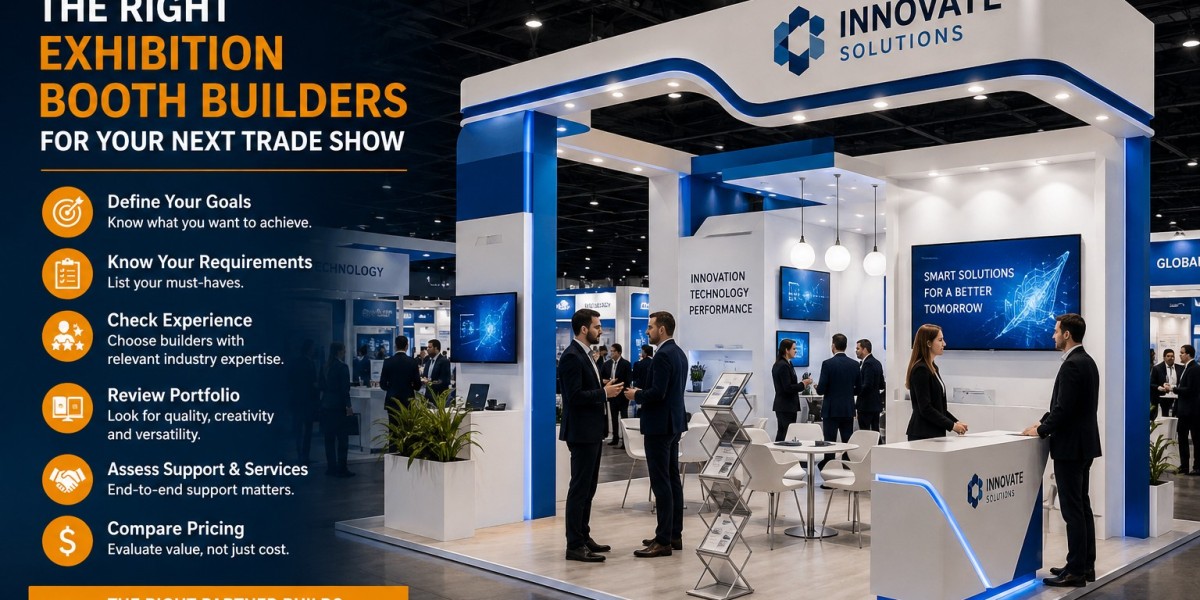


Las Vegas trade shows bring together exhibitors, buyers, industry professionals, and decision-makers in highly competitive exhibition environments. With hundreds of companies competing for attention, your booth needs to do more than display a logo and product information. Experienced Las Vegas trade show booth builders can help create exhibits that combine strong branding, functional layouts, engaging experiences, and practical features designed to attract visitors. A high-impact booth should immediately communicate your brand, encourage people to enter, and provide a comfortable environment for meaningful conversations.
Whether you are exhibiting at a major industry convention, launching a product, or building brand awareness, the right booth features can influence how attendees perceive and interact with your company. Here are ten essential features that can make a trade show booth more effective.
1. Strong and Visible Branding
Brand visibility is one of the most important elements of a successful trade show booth.
Visitors walking through an exhibition hall need to identify your company quickly. Your logo, company name, tagline, and primary message should be visible from appropriate distances and different viewing angles.
Strong branding can include:
- Large-format logos
- Branded back walls
- Hanging signs
- Illuminated signage
- Consistent brand colors
- Branded counters
- Custom graphics
However, effective branding is not simply about making everything larger.
The information needs to be organized so that visitors can understand the company without feeling overwhelmed.
A clear visual hierarchy helps guide attention.
For example, the company name can appear prominently at the top, followed by a concise value proposition and supporting visuals.
Why It Matters
Trade show attendees may walk past dozens of exhibitors.
If they cannot identify your company within a few seconds, they may continue walking.
Strong branding creates immediate recognition and helps visitors remember your company after the event.
2. An Open and Welcoming Layout
The second essential feature is accessibility.
A booth should invite visitors into the space rather than creating physical or psychological barriers.
Open layouts can provide:
- Better visibility
- Easier entry
- Improved visitor flow
- More natural conversations
- Greater accessibility
Avoid unnecessarily blocking the entrance with large furniture, walls, or displays.
Instead, consider creating clearly defined areas while maintaining open sightlines.
A visitor should be able to see what is happening inside the booth before deciding to enter.
Designing for Traffic Flow
Trade show halls can become crowded quickly.
Your booth should allow people to enter, move around, browse products, and leave without creating bottlenecks.
Professional booth designers consider visitor movement when planning the placement of furniture, displays, technology, and meeting areas.
3. High-Quality Graphics and Messaging
Graphics are another essential feature of a high-impact exhibit.
Your graphics should communicate your most important message quickly.
Effective graphics often contain:
- Strong headlines
- Product imagery
- Short statements
- Benefits
- Statistics
- Brand elements
- Calls to action
Avoid filling every available wall with text.
People rarely stop at a trade show booth to read a long article.
Instead, use concise messaging to create curiosity and encourage conversations with your staff.
Creating a Messaging Hierarchy
A useful approach is to divide information into three levels.
Primary message: What does your company offer?
Supporting message: Why should visitors care?
Call to action: What should visitors do next?
This makes the booth easier to understand from a distance.
4. Strategic Lighting
Lighting can dramatically change the appearance and atmosphere of an exhibit.
A well-lit booth can attract attention while highlighting important products and graphics.
Different lighting techniques can emphasize:
- Logos
- Product displays
- Architectural elements
- Graphics
- Demonstration areas
- Meeting spaces
For example, focused lighting can draw attention to a newly launched product.
Illuminated branding can improve visibility from the aisle.
Ambient lighting can make meeting areas feel more comfortable.
Lighting Should Have a Purpose
Avoid using lighting simply because it looks impressive.
Every lighting element should support the overall design.
Too much lighting can create visual distraction, while inadequate lighting can make your booth appear dull.
The goal is balance.
5. Interactive Technology
Technology has become an increasingly useful feature in modern exhibition environments.
Interactive technology can encourage visitors to spend more time learning about your company.
Potential options include:
- Touchscreens
- Interactive product catalogs
- Digital presentations
- Video walls
- Product configurators
- Virtual demonstrations
- Digital lead forms
- Charging stations
Technology can be particularly useful when products or services are difficult to explain through static graphics.
For example, an interactive screen can allow visitors to explore different product configurations or watch a demonstration.
Technology Should Support the Experience
Technology should not be added simply to appear modern.
It should solve a specific communication or engagement problem.
A useful question is:
Will this technology help visitors understand, experience, or remember our product?
If the answer is yes, it may deserve a place in the booth.
6. Dedicated Product Demonstration Areas
If your product benefits from being seen or tested, a demonstration area can become one of the most valuable parts of your exhibit.
A demonstration space allows visitors to:
- See how a product works
- Ask questions
- Interact with features
- Compare options
- Discuss applications
Depending on the product, the area might include display counters, screens, seating, product samples, or specialized equipment.
Make Demonstrations Easy to Find
A demonstration should be visible from the aisle without disrupting general visitor movement.
If visitors cannot tell that a demonstration is happening, you may miss potential engagement opportunities.
Use signage and lighting to make demonstration areas noticeable.
7. Comfortable Meeting Spaces
Trade shows are not only about attracting attention.
They are also about building relationships.
Once a visitor becomes interested, your team may need a quiet place to discuss pricing, technical requirements, partnerships, or future projects.
Meeting areas can include:
- Small tables
- Lounge seating
- Semi-private discussion spaces
- Private conference rooms
- Executive meeting areas
The type of meeting space should reflect your business needs.
A company selling complex industrial solutions may require private rooms for detailed discussions.
A consumer brand may only need informal seating for short conversations.
Balance Privacy and Accessibility
Completely enclosed meeting rooms can make a booth appear less approachable.
Where possible, use semi-private spaces that provide some separation while keeping the overall exhibit visually open.
8. Integrated Storage
Storage is an easily overlooked feature, but it can make a major difference during a busy trade show.
Booth staff may need space for:
- Brochures
- Samples
- Personal belongings
- Promotional materials
- Packaging
- Cleaning supplies
- Extra products
Leaving these items in visible areas can make the booth appear cluttered.
Integrated storage can be built into:
- Counters
- Cabinets
- Back walls
- Display units
- Meeting furniture
The goal is to keep necessary materials accessible while maintaining a clean appearance.
Why Cleanliness Matters
Visitors often associate an organized environment with professionalism.
A booth that remains clean throughout the event creates a better impression and makes it easier for staff to work efficiently.
9. Lead Capture and Engagement Tools
A high-impact booth should support measurable business objectives.
For many exhibitors, lead generation is a primary goal.
Lead capture tools can include:
- QR codes
- Digital forms
- Badge scanners
- Appointment scheduling
- Product inquiry forms
- Digital demonstrations
- Lead qualification systems
However, collecting contact information is only the beginning.
Your staff should determine whether visitors are:
- General information seekers
- Potential customers
- Existing clients
- Partners
- Industry contacts
- High-value prospects
This allows the sales team to prioritize follow-up after the event.
Make Lead Capture Natural
Visitors should not feel pressured to provide information immediately.
Instead, connect lead capture to something valuable.
For example, after a demonstration, staff can offer additional technical information or schedule a consultation.
10. A Memorable Visitor Experience
The tenth essential feature is perhaps the most important: memorability.
A trade show attendee may visit many booths during a single day.
Your goal is to give them a reason to remember yours.
A memorable experience might include:
- Product demonstrations
- Interactive activities
- Creative architecture
- Educational presentations
- Product testing
- Digital experiences
- Engaging storytelling
- Personalized consultations
The experience should always connect to your brand.
A memorable activity that has no connection to your business may attract crowds but fail to generate meaningful leads.
Create Meaningful Engagement
Ask yourself:
What should visitors remember about us after they leave?
That answer can guide the entire booth experience.
Combining the Ten Features
The most effective exhibits do not treat these features as separate elements.
They work together.
Imagine a booth where:
- Large branded signage attracts attention.
- An open layout encourages entry.
- Clear graphics explain the company's value.
- Lighting highlights key products.
- Interactive technology creates engagement.
- Demonstration areas showcase products.
- Comfortable seating supports conversations.
- Hidden storage keeps the booth organized.
- Lead capture tools record qualified prospects.
- A memorable experience encourages visitors to remember the brand.
Each feature supports the others.
This creates a complete visitor journey rather than a collection of unrelated design elements.
Designing for Different Booth Sizes
These principles can be applied to booths of different sizes.
Small Booths
Smaller exhibits need to prioritize efficiency.
Focus on:
- Strong branding
- Simple messaging
- Compact product displays
- Open access
- Multi-purpose furniture
- Integrated storage
Avoid overcrowding the space.
Medium Booths
Medium-sized exhibits provide opportunities for:
- Product demonstrations
- Small meeting areas
- Interactive technology
- Multiple display zones
The layout should still remain easy to navigate.
Large Booths
Large exhibits can incorporate:
- Private conference rooms
- Multiple demonstration areas
- Lounges
- Product theaters
- Large digital displays
- Hospitality areas
- Extensive architectural elements
However, more space does not automatically mean better performance.
Every section should serve a purpose.
How Booth Builders Bring These Features Together
Professional booth builders typically begin with your exhibition objectives rather than immediately choosing materials or furniture.
The process may involve:
Discovery
Understanding your brand, products, target audience, and goals.
Concept Development
Creating initial design directions.
Layout Planning
Determining how visitors and staff will move through the booth.
Graphic Development
Creating messaging and visual elements.
Technology Planning
Identifying appropriate interactive features.
Production
Manufacturing or preparing approved components.
Installation
Assembling and preparing the booth at the venue.
This process helps ensure that the final booth is both attractive and practical.
Matching Booth Features to Your Goals
Not every company needs every feature.
Instead, prioritize elements based on your goals.
If Your Goal Is Brand Awareness
Focus on:
- Large branding
- Strong architecture
- Memorable visuals
- Lighting
- High visibility
If Your Goal Is Lead Generation
Prioritize:
- Open access
- Demonstrations
- Lead capture
- Clear calls to action
- Conversation areas
If Your Goal Is Product Launch
Emphasize:
- Product displays
- Demonstration areas
- Interactive technology
- Strong messaging
- Photography-friendly design
If Your Goal Is Executive Meetings
Focus on:
- Comfortable seating
- Private meeting areas
- Professional materials
- Quiet spaces
- Hospitality features
A booth should be designed around business objectives rather than simply following popular design trends.
Common Booth Design Mistakes
Even a visually impressive booth can underperform if certain mistakes are made.
Overcrowding
Too many displays, chairs, products, and graphics can make a booth difficult to navigate.
Too Much Text
Visitors may ignore large blocks of information.
Weak Branding
If the company name is difficult to see, valuable attention can be lost.
Poor Staff Positioning
Staff should be available without blocking visitors.
Unnecessary Technology
Technology without a clear purpose can distract from the core message.
Lack of Storage
Visible materials can create clutter.
No Clear Objective
A booth without a defined purpose can become visually impressive but commercially ineffective.
Preparing Your Staff
Even the best booth design cannot replace effective staff engagement.
Before the event, train your team on:
- Opening conversations
- Qualifying visitors
- Explaining products
- Demonstrating technology
- Capturing leads
- Scheduling meetings
- Handling common questions
Staff should also understand how to use the booth's different features.
For example, if there is an interactive display, employees should know how to demonstrate it quickly.
Measuring Booth Performance
After the event, review performance.
Useful metrics include:
- Total visitors
- Qualified leads
- Product demonstrations
- Meetings
- Sales opportunities
- Appointments scheduled
- Engagements with interactive features
You can also ask staff for feedback.
Were certain areas too crowded?
Did visitors understand the messaging?
Did technology work reliably?
Were meeting areas adequate?
These insights can improve your next booth.
The Long-Term Value of a Well-Designed Booth
A successful booth can provide value beyond one exhibition.
If the design incorporates reusable or adaptable components, it may be possible to modify the exhibit for future events.
Graphics, layouts, furniture, technology, and displays can potentially be updated as your business evolves.
This makes your exhibition investment more flexible.
Final Thoughts
A high-impact trade show booth should attract attention, communicate a clear message, encourage engagement, and support your business objectives. Strong branding, open layouts, quality graphics, strategic lighting, interactive technology, product demonstrations, comfortable meeting areas, integrated storage, lead capture tools, and memorable experiences can work together to create an effective exhibition environment. With the support of experienced Las Vegas trade show booth builders, businesses can combine these essential features into a professional exhibit that reflects their brand and creates meaningful opportunities with trade show attendees. The right design is not simply about looking impressive—it is about creating an environment that helps your company attract, engage, and convert the right visitors.