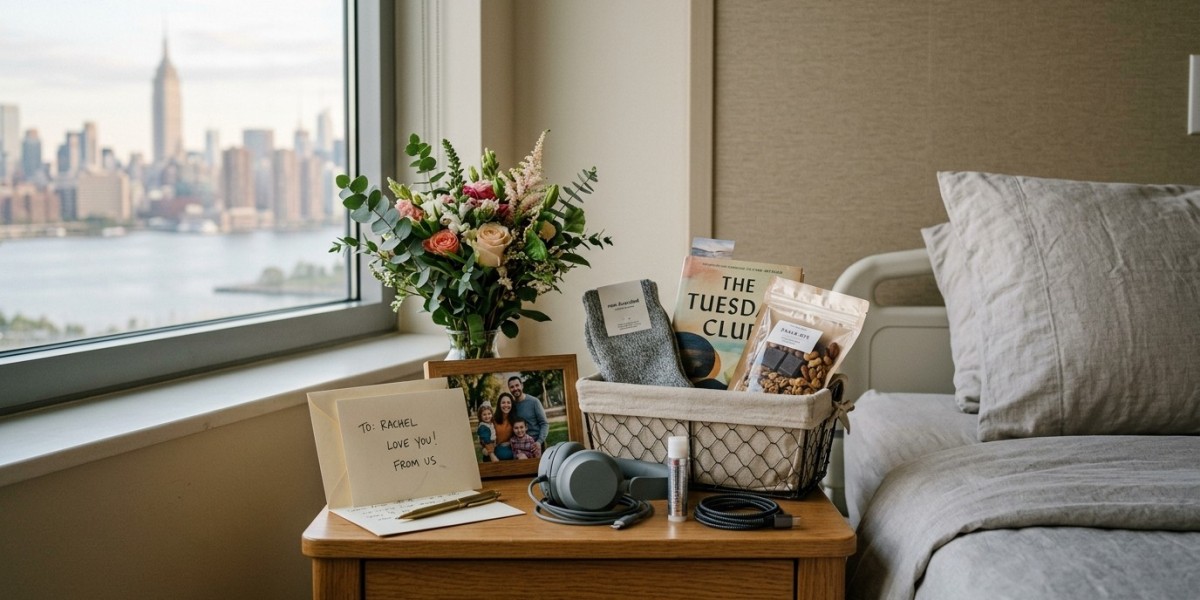


A hospital care package can be much more than a collection of useful things. For someone spending days or weeks away from home, familiar items, favorite treats, photographs, and handwritten notes can create a small sense of normality in an unfamiliar environment.
In New York City, where family members may be balancing work, commuting, childcare, and hospital visits, a thoughtfully assembled care package can also be a practical way to show support when you cannot be there every day. The key is to build it around the individual rather than following a generic checklist.
Start With What Your Loved One Actually Likes
Personalization begins with paying attention.
Think about the small things your loved one enjoys at home. Do they always have a particular type of tea in the morning? Do they read before going to sleep? Are they attached to a certain notebook, playlist, or family photograph?
Those details can make a care package feel intentional.
Before putting everything together, consider:
- Their favorite colors and flowers
- Hobbies they can comfortably enjoy while resting
- Preferred snacks and drinks
- Favorite books, magazines, or podcasts
- Items that make them feel comfortable at home
- Whether they prefer practical gifts or sentimental ones
- Any allergies, sensitivities, or dietary restrictions
You do not need to include everything they like. Choosing two or three meaningful details is often more effective than filling a bag with random products.
Add Something That Reminds Them of Home
A hospital room can quickly begin to feel separate from ordinary life. A familiar object can help bridge that gap.
A small framed photograph of family members, pets, friends, or a favorite place can add a personal touch without taking up much space. If a frame is impractical, a few printed photographs can work just as well.
Other possibilities include a favorite book from home, a handwritten recipe, a small piece of artwork made by a child, or a card signed by several friends.
The objective is not to decorate the entire room. It is to give your loved one something familiar to look at when the day feels long.
Include a Handwritten Note
A handwritten message can become the most meaningful part of the package.
Instead of relying on a standard “get well soon” message, write something that sounds like you. Mention a memory, tell a lighthearted story, or remind them of something you are looking forward to doing together after their hospital stay.
If the situation is emotionally difficult, there is no need to force excessive positivity. A simple message such as “You don't need to reply. I just wanted you to know I'm thinking about you” can feel more genuine.
You can also ask several relatives or friends to write short notes and place them together in an envelope. This gives the patient multiple messages to read whenever they need encouragement.
Choose Flowers With the Patient in Mind
Flowers can add color and warmth to a hospital room, but the arrangement should suit the setting and the recipient.
A large bouquet may look impressive but can become difficult to accommodate when bedside space is limited. A smaller arrangement in a manageable container can be easier for both the patient and their family.
When arranging Memorial Sloan Kettering flower delivery, consider choosing flowers based on the patient's personality rather than simply selecting the most traditional hospital bouquet. Their favorite blooms or colors can make the gesture feel considerably more personal.
It is also wise to confirm that flowers are permitted for the particular patient and location before arranging delivery. Hospital policies and individual medical circumstances can affect what patients are able to receive.
Build a Comfort-Focused Section
Hospital stays can involve a lot of waiting, interrupted sleep, and unfamiliar routines. Small comfort items can make everyday moments easier.
Depending on what the patient is allowed to use, consider adding:
- Soft socks
- A lightweight blanket
- An eye mask
- A comfortable robe
- Unscented moisturizer
- Lip balm
- A small notebook
- A long phone charging cable
- Headphones
- A reusable water bottle, if appropriate
Avoid strongly scented products unless you know the recipient enjoys them and can use them safely. Fragrances may be uncomfortable for some patients or people sharing the environment.
The American Cancer Society's guidance on coping with hospitalization also highlights the importance of practical preparation and comfort during hospital stays.
Add Entertainment for Slow Moments
Even when a patient is resting, there can be long stretches of downtime.
Choose entertainment according to their energy level. Someone who enjoys reading might appreciate a paperback or magazine. A person who finds reading tiring may prefer an audiobook, music playlist, podcast subscription, or comfortable headphones.
For shorter periods of concentration, consider:
- Crossword books
- Word searches
- Sudoku
- Coloring books
- Sketch pads
- Simple card games
- Short story collections
Do not assume the patient will want something intellectually demanding. A hospital stay is not necessarily the time to send a complicated puzzle or lengthy novel unless you know that is exactly what they enjoy.
Be Thoughtful About Food
Food is often included in care packages, but it deserves special consideration when someone is hospitalized.
A patient's diet may be affected by treatment, procedures, allergies, or medical instructions. Before adding snacks, check with the patient or a family member about what they can have.
If their dietary needs are uncertain, choose non-food items instead.
For family members spending time at the hospital, individually packaged snacks can be useful. A small coffee or meal gift card can also be more practical than sending a large food basket that requires storage.
Make the Package Useful for Family Members Too
A loved one's hospital stay affects the people around them. Family members may spend hours traveling across NYC, sitting at the hospital, coordinating updates, and managing responsibilities at home.
Consider creating a small second section specifically for them.
It could contain:
- Snacks for long hospital visits
- A water bottle
- Hand sanitizer
- A notebook for keeping track of questions or notes
- Phone charging accessories
- Coffee or tea
- A small gift card
- A handwritten message acknowledging their support
This does not need to be elaborate. Sometimes simply recognizing that the family member is having a difficult time can mean a great deal.
Family involvement is also an important part of cancer care. The National Cancer Institute's information on family caregivers discusses the practical and emotional challenges caregivers can experience while supporting someone with cancer.
Create a “Read This When…” Envelope
For a more personal touch, prepare several small notes for different moments.
You might label them:
- Read this when you miss home
- Read this when you need a laugh
- Read this when you're having a difficult day
- Read this when you can't sleep
- Read this when you need a reminder that you're loved
Friends and relatives can contribute their own messages. The result becomes something the patient can return to throughout the hospital stay rather than a gift they use only once.
Include Familiar Entertainment From NYC
A personalized care package can also reflect the city your loved one knows and enjoys.
If they have a favorite NYC neighborhood, restaurant, bookstore, sports team, museum, or cultural interest, use that as inspiration. A magazine about the city, photographs of familiar places, or a small item connected to a favorite local activity can make the package feel more personal.
The idea is to bring a little piece of their ordinary world into the hospital without overwhelming the limited space around them.
Avoid Turning Thoughtfulness Into Clutter
More is not always better.
Hospital rooms have limited storage, and patients may already have clothing, medical supplies, paperwork, electronics, and personal belongings nearby. A huge care package can unintentionally become another thing someone needs to organize.
A smaller package with carefully selected items is usually more useful.
Try using a simple formula:
One comfort item + one personal item + one practical item + one sentimental item.
For example, you might combine soft socks, a favorite photograph, a phone charger, and a handwritten letter. The result is simple but highly personal.
Ask Before Sending Something Unexpected
Personalization also means respecting boundaries.
If you are unsure whether a particular item is appropriate, ask a family member first. This is particularly important with food, flowers, large gifts, scented products, and anything that may require storage.
You can still keep the exact contents of the package a surprise while checking whether the general type of gift is suitable.
And if flowers are involved, confirm the hospital's current policies and the patient's circumstances before arranging delivery.
The Thought Behind the Package Matters Most
A meaningful hospital care package does not need to be expensive or elaborate. What makes it special is the evidence that you know the person receiving it.
Their favorite color. A photograph they love. A book they have been meaning to read. A snack they can safely enjoy. A note written in your own handwriting. A few messages from people who cannot be there in person.
These small choices transform a standard hospital package into something personal.
For someone going through a difficult period in New York City, that reminder of home, friendship, and everyday life can be one of the most comforting gifts of all.