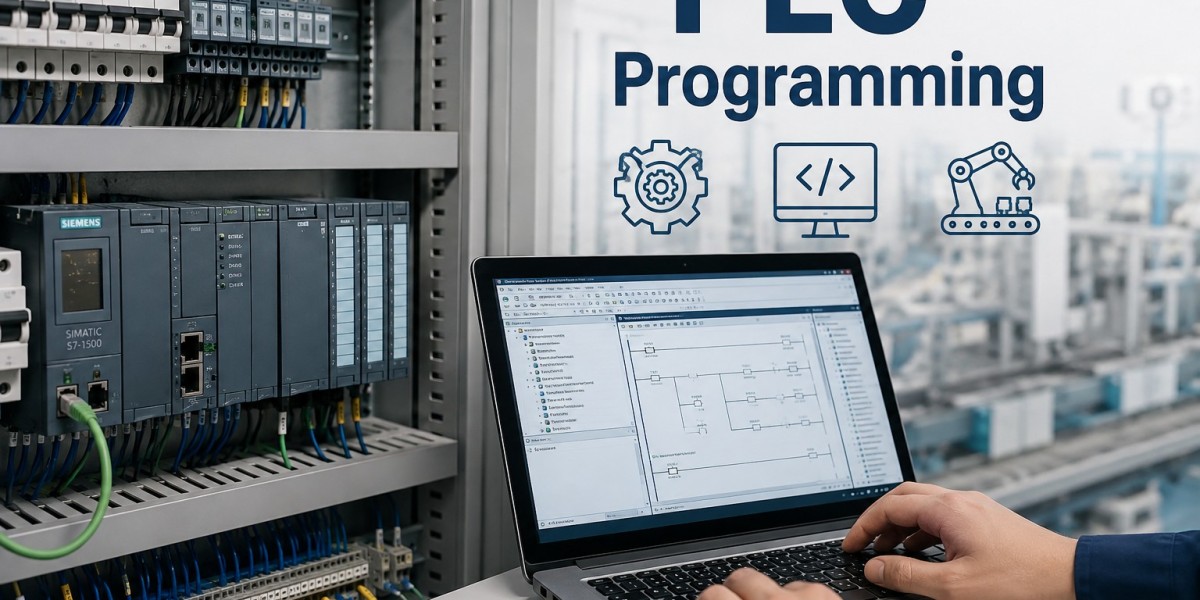


Industrial machines often need to perform the same sequence of operations repeatedly and accurately. A programmable logic controller provides the control needed to coordinate these activities, while PLC programming determines how the controller responds to different inputs and conditions.
A typical automated machine may contain proximity sensors, switches, motors, pneumatic components, and safety devices. The PLC receives signals from these components and executes the programmed logic to control the machine.
One advantage of PLC-based control is that the operating sequence can be modified through software. If a production process changes, engineers can update the control logic without redesigning the complete electrical system.
PLC programming is also useful for troubleshooting. Diagnostic information can help engineers identify whether a sensor, actuator, or particular control condition is responsible for a machine fault. This can reduce the time required to locate operational problems.
Modern PLC systems can communicate with operator interfaces and other industrial equipment. This enables operators to monitor machine conditions and adjust certain parameters according to production requirements.
For companies looking to improve machine reliability and process control, properly designed PLC programming can provide a strong foundation for industrial automation. Careful development, testing, and documentation are essential for achieving dependable results.









