

Introduction
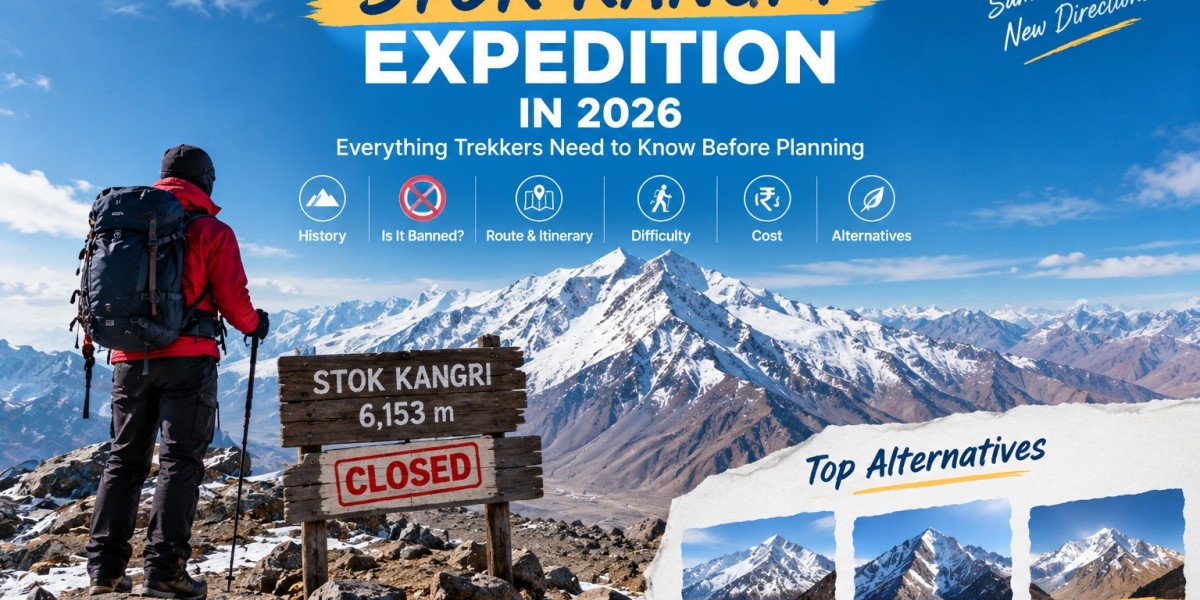
The stok kangri expedition was once considered the ultimate introduction to Himalayan mountaineering in India. Standing at 6,153 meters above sea level in Ladakh's Stok Range, it attracted thousands of trekkers who dreamed of standing on a Himalayan summit without requiring advanced technical climbing skills.
However, the story of Stok Kangri has changed dramatically in recent years. Today, the biggest question among trekkers is not about fitness, cost, or itinerary—it is "Is the Stok Kangri trek banned?"
If you're researching the expedition in 2026, it's important to understand both the mountain's legendary status and its current closure. This guide explains the history of the expedition, why it became so famous, the reasons behind the restrictions, whether the trek is currently permitted, and the best alternatives for trekkers looking for a similar high-altitude Himalayan experience.
This article is based on current publicly available information and official closure notices, helping trekkers make informed and responsible travel decisions.
Quick Facts About Stok Kangri
Feature | Details |
Peak Name | Stok Kangri |
Height | 6,153 m (20,187 ft) |
Location | Ladakh, India |
Mountain Range | Stok Range, Zanskar Mountains |
Nearest Town | Leh |
Historical Difficulty | Difficult |
Typical Duration | 8–11 Days |
Famous For | India's most popular 6,000m trekking peak |
Current Status | Closed to expeditions |
Best Known Route | Stok Village – Mankorma – Base Camp – Summit |
What is Stok Kangri Expedition?
The stok kangri expedition is a high-altitude mountaineering journey that historically involved trekking from Stok Village near Leh to the summit of Stok Kangri Peak at 6,153 meters.
Unlike regular Himalayan treks that end at a pass or viewpoint, this expedition aimed to reach a true mountain summit. The route included high camps, glacier terrain, snow slopes, and a demanding summit push that often began around midnight.
For nearly two decades, Stok Kangri was known as India's most accessible 6,000-meter peak. Trekkers from across the world traveled to Ladakh specifically to attempt the climb and gain their first high-altitude mountaineering experience.
The Rise of a Himalayan Legend
Few peaks in India achieved the popularity of Stok Kangri.
Several factors contributed to its reputation:
Close proximity to Leh
Relatively straightforward approach route
No highly technical climbing sections
Opportunity to summit above 6,000 meters
Spectacular views of Ladakh and the Karakoram
Ideal preparation for advanced Himalayan expeditions
Because of these advantages, Stok Kangri became one of the most climbed trekking peaks in the Indian Himalayas. Its popularity transformed it into a bucket-list adventure for serious trekkers and aspiring mountaineers alike.
Trek Highlights (Historical Route)
Before the closure, the expedition offered several unforgettable experiences:
Summit Above 6,000 Meters
Reaching 6,153 meters placed trekkers among a select group of Himalayan summit climbers.
Stunning Himalayan Views
The summit offered panoramic views of:
Karakoram Range
Zanskar Range
Ladakh Range
Surrounding Himalayan peaks
High-Altitude Camping
Trekkers camped under pristine night skies in one of India's most dramatic mountain regions.
Glacier Experience
The route introduced climbers to glacier travel and snow-covered mountain terrain.
Is the Stok Kangri Trek Banned?
The Short Answer
Yes. As of 2026, the Stok Kangri trek remains closed to trekking and climbing activities, and no official reopening date has been announced. The Ladakh administration issued orders restricting expeditions, and the closure has continued due to environmental concerns and glacier protection efforts.
Why Was It Closed?
The closure was primarily driven by concerns about:
Glacier degradation
Environmental damage
Water source protection
Over-tourism
Waste management issues
The Stok Glacier serves as an important water source for local communities. Increasing visitor numbers raised concerns about long-term ecological sustainability and pressure on fragile mountain ecosystems.
Is the Stok Kangri Trek Banned Permanently?
This is one of the most frequently asked questions.
While closure notices have used strong language and the peak remains inaccessible for expeditions, there has been no widely announced official reopening timeline. Multiple recent sources continue to report that climbing and trekking activities remain prohibited. Trekkers should always verify current regulations with local authorities before making plans.
Historical Day-Wise Expedition Itinerary
For educational purposes, this was the typical route followed before the closure:
Day 1: Arrival in Leh
Acclimatization and rest.
Day 2: Leh Acclimatization
Local sightseeing and altitude adaptation.
Day 3: Acclimatization Trek
Short hike to higher elevations.
Day 4: Trek to Chang Ma
Start trekking from Stok Village.
Day 5: Trek to Mankorma
Gradual altitude gain.
Day 6: Trek to Base Camp
Reach Base Camp around 5,000 meters.
Day 7: Acclimatization and Preparation
Equipment checks and rest.
Day 8: Summit Attempt
Midnight departure for summit push.
Day 9: Descent
Return to Stok Village.
Day 10: Leh
Drive back to Leh.
Day 11: Departure
End of expedition.
Best Time for the Stok Kangri Expedition
Historically, the climbing season ran from:
Month | Conditions |
June | Snowy and cold |
July | Stable weather |
August | Peak climbing season |
September | Clear mountain views |
However, since the expedition remains closed, these dates are relevant only for historical reference.
Difficulty & Fitness Requirements
Was Stok Kangri Difficult?
Yes.
Although technically less demanding than many mountaineering objectives, altitude made the expedition challenging.
Major difficulties included:
Extreme altitude
Long summit day
Thin oxygen levels
Glacier terrain
Snow-covered slopes
Rapid weather changes
Recommended Fitness Level
Successful climbers typically had:
Strong cardiovascular endurance
Previous Himalayan trekking experience
Ability to trek 6–8 hours daily
Experience above 4,000 meters
How to Reach the Region
Even though the summit remains closed, travelers can still explore Ladakh.
By Air
Flights connect Leh with:
Delhi
Mumbai
Bengaluru
Chandigarh
By Road
Travelers can use:
Manali–Leh Highway
Srinagar–Leh Highway
Both routes offer spectacular mountain scenery and gradual acclimatization.
Accommodation & Food
Historically, trekkers stayed in:
Hotels in Leh
Alpine camps during the expedition
Shared expedition tents
Meals generally included:
Rice
Dal
Vegetables
Soups
Chapati
Noodles
Tea and coffee
High-calorie meals were essential because of increased energy demands at altitude.
Essential Packing List
Clothing
Down jacket
Waterproof shell
Thermal layers
Trekking pants
Fleece jacket
Footwear
High-ankle trekking boots
Camp shoes
Wool socks
Equipment
Trekking poles
Headlamp
Sunglasses
Water bottles
Personal Essentials
Sunscreen
Lip balm
Personal medicines
Energy bars
Power bank
What Can Trekkers Do Instead?
Since the stok kangri expedition remains closed, many trekkers now choose alternative Himalayan peaks.
Popular alternatives include:
Kang Yatse II
A popular 6,000-meter peak in Ladakh that offers a similar high-altitude mountaineering experience.
Yunam Peak
Located in Himachal Pradesh, Yunam Peak is another excellent non-technical 6,000-meter objective.
Mentok Kangri
A remote and scenic expedition near Tso Moriri Lake.
These peaks have increasingly become the preferred options for trekkers seeking a challenge comparable to Stok Kangri.
Safety Tips for High-Altitude Expeditions
Acclimatize properly.
Stay hydrated.
Avoid rapid altitude gain.
Trek with experienced guides.
Learn AMS symptoms.
Carry emergency medication.
Monitor weather conditions.
Turn back if symptoms worsen.
Safety should always take priority over summit goals.
FAQs
1. What is the height of Stok Kangri?
Stok Kangri stands at approximately 6,153 meters above sea level.
2. Is the Stok Kangri trek banned?
Yes. Current reports and administrative notices indicate that expeditions remain closed.
3. Why was Stok Kangri closed?
The closure was implemented due to glacier depletion, environmental concerns, and pressure on local water resources.
4. Can I climb Stok Kangri in 2026?
No official reopening has been announced as of 2026.
5. Is the Stok Kangri trek banned permanently?
No confirmed reopening date exists, and authorities continue to keep expeditions closed.
Conclusion
The stok kangri expedition remains one of the most influential chapters in India's trekking and mountaineering history. While the mountain once attracted thousands of adventurers seeking their first 6,000-meter summit, environmental pressures and glacier conservation concerns led to its closure.
For anyone asking "Is the Stok Kangri trek banned?", the current answer remains yes. Respecting local regulations and ecological protection efforts is essential for responsible adventure travel. Until authorities announce an official reopening, trekkers should consider alternative peaks such as Kang Yatse II, Mentok Kangri, or Yunam Peak while continuing to appreciate the legacy and significance of the legendary stok kangri expedition.






