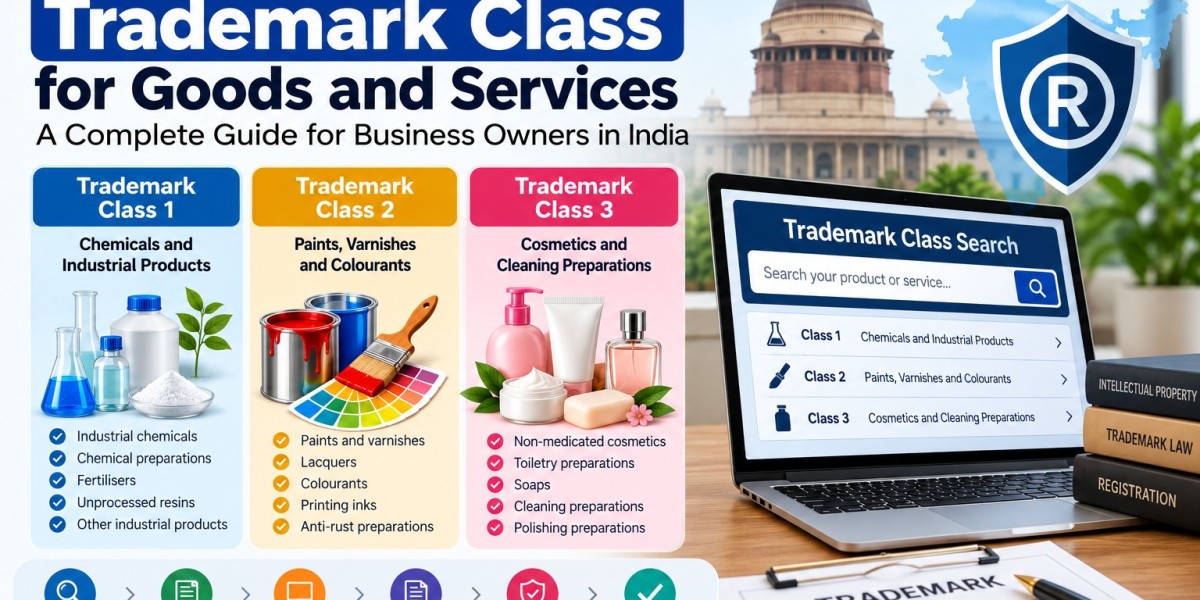


Trademark registration is an important step in protecting your brand name, logo, and business identity in India. Before filing an application, you must identify the correct trademark class for the goods or services you want to protect. A Trademark Class Search helps you find the appropriate category under the Nice Classification system. Understanding the differences between Trademark Class 1, Trademark Class 2, and Trademark Class 3 is particularly useful for businesses dealing with chemicals, paints, cosmetics, and cleaning products.
Choosing the right class helps define the scope of your application and reduces the risk of avoidable filing errors.
Quick Summary
- India follows the Nice Classification system, which contains 45 trademark classes.
- Classes 1–34 cover goods, while Classes 35–45 cover services.
- Trademark Class 1 generally covers specified industrial and scientific chemicals.
- Trademark Class 2 generally covers paints, varnishes, and colourants.
- Trademark Class 3 generally covers non-medicated cosmetics, toiletries, and specified cleaning preparations.
- Businesses offering different goods or services may need multiple classes.
- Selecting the correct class does not guarantee trademark registration.
What Is a Trademark Class Search?
A Trademark Class Search is the process of identifying the appropriate category for the goods or services covered by a trademark application.
India follows the Nice Classification system administered by the World Intellectual Property Organization (WIPO). It divides goods and services into 45 classes to help applicants specify the scope of the protection they are seeking.
For example, an industrial chemical manufacturer may need to investigate Class 1, a paint manufacturer may need Class 2, and a cosmetics brand may need Class 3.
The correct class depends on the actual goods or services associated with your brand. Your business name or industry alone does not determine the appropriate classification.
How to Find the Correct Trademark Class Online
Follow these steps before submitting your trademark application.
Step 1: Identify Your Goods or Services
Prepare a detailed list of the products you manufacture, sell, or plan to introduce. If your business provides services, describe each service clearly.
For example, a beauty business might sell non-medicated skincare products and provide beauty treatments. These activities may require separate classification assessments.
Step 2: Search Using Relevant Keywords
Use specific product or service names when conducting your Trademark Class Search. Include synonyms and technical descriptions because official classification terminology may differ from everyday business language.
For example, a company selling industrial chemicals should search for its specific chemical products and intended applications rather than relying only on the general term "chemicals."
Step 3: Consult Official Resources
Visit the Intellectual Property India website to access official trademark information and search facilities.
You can also consult the World Intellectual Property Organization website for guidance on the Nice Classification system.
Step 4: Review the Class Description
Read the detailed class description and check whether your specific goods or services are included.
Pay attention to exclusions. Products with similar ingredients or uses may belong to different classes because of their nature, intended purpose, or official classification.
Step 5: Search Existing Trademarks
After identifying the likely class, search for identical and similar trademarks.
Review the available information about the mark, proprietor, application status, and listed goods or services. This helps you assess whether your proposed brand may conflict with an existing trademark.
Step 6: Confirm the Appropriate Class
Choose the class or classes that accurately describe the goods or services you intend to protect. If your business operates across several categories, you may need to consider multiple classes.
Prepare precise descriptions before filing. If the classification is unclear, consider professional assistance.
Trademark Class 1: Chemicals and Industrial Products
Trademark Class 1 generally covers specified chemicals used in industry, science, photography, agriculture, horticulture, and forestry, along with other goods listed in the official classification.
Examples may include:
- Industrial chemicals used in manufacturing
- Chemical preparations for scientific research
- Certain chemical fertilisers
- Unprocessed artificial resins
- Unprocessed plastics
- Certain chemical additives used in industrial processes
- Specified chemical preparations for agricultural applications
Which Businesses Should Consider Class 1?
Class 1 may be relevant to industrial chemical manufacturers, chemical suppliers, scientific chemical businesses, and companies producing certain chemical preparations.
For example, a business manufacturing industrial chemical ingredients should examine Class 1 to determine whether its products are included.
However, not every product containing chemicals belongs to Class 1. Finished medicines, paints, cosmetics, and household cleaning preparations may fall under other classes depending on their nature and intended purpose.
Always verify the exact classification before applying.
Trademark Class 2: Paints, Varnishes, and Colourants
Trademark Class 2 generally covers paints, varnishes, lacquers, colourants, and certain products used for painting, decoration, or protection against corrosion.
Examples may include:
- Paints and varnishes
- Lacquers
- Certain colourants
- Certain printing inks
- Specified anti-rust preparations
- Certain protective coatings
Which Businesses Should Consider Class 2?
Class 2 may be relevant to paint manufacturers, coating businesses, colourant suppliers, and brands selling products covered by this category.
For example, a business selling decorative wall paints should investigate Class 2 before applying for trademark registration.
However, products used to remove paint or clean painted surfaces may belong to another class. The classification depends on the specific product rather than the industry alone.
Trademark Class 3: Cosmetics and Cleaning Preparations
Trademark Class 3 generally covers non-medicated cosmetics and toiletry preparations, as well as specified cleaning, polishing, and abrasive preparations.
Examples may include:
- Non-medicated skincare creams
- Makeup and cosmetic preparations
- Perfumes and certain fragrances
- Non-medicated shampoos
- Soaps and toiletry preparations
- Household cleaning preparations
- Polishing and abrasive preparations
Which Businesses Should Consider Class 3?
Class 3 may be relevant to cosmetics manufacturers, skincare brands, personal-care businesses, and companies selling specified household cleaning products.
For example, a brand selling non-medicated face creams and makeup may need to investigate Class 3.
Medicinal preparations may fall under Class 5, depending on their nature and classification. Businesses should distinguish between non-medicated cosmetics and medicinal products before applying.
Trademark Classes for Goods vs Services
Goods and services are classified differently under the Nice Classification system.
| Category | Classes | Examples |
|---|---|---|
| Goods | 1–34 | Chemicals, paints, cosmetics, clothing, food products |
| Services | 35–45 | Advertising, financial services, education, healthcare, legal services |
For example, a business manufacturing cosmetic products may need to consider Class 3, while a separate beauty treatment service may require assessment under Class 44.
Similarly, a company selling software products and providing software development services may need to assess different classes based on the nature of its offerings.
The correct classification depends on the actual goods or services for which protection is sought.
Can You Register a Trademark in Multiple Classes?
Yes. A business may apply in multiple classes when it needs protection for goods or services that fall into different categories, subject to applicable requirements and fees.
For example, a business selling industrial chemical ingredients and finished cleaning preparations may need to investigate both Class 1 and Class 3.
However, each class should accurately reflect the intended scope of protection. Selecting additional classes without a genuine business requirement may increase filing costs without providing meaningful benefits.
Common Mistakes to Avoid
When conducting a Trademark Class Search, avoid these common errors:
- Choosing a class based only on your industry: Classification depends on the specific goods or services.
- Using vague descriptions: Clearly identify the products or services you want to protect.
- Ignoring similar trademarks: Search for identical and similar marks before applying.
- Assuming one class covers every product: Different goods or services may require multiple classes.
- Ignoring official exclusions: Read detailed descriptions rather than relying only on class headings.
- Assuming the correct class guarantees registration: The application remains subject to examination and other applicable procedures.
Frequently Asked Questions
1. What is a Trademark Class Search?
A Trademark Class Search helps identify the appropriate category for the goods or services covered by a trademark application under the Nice Classification system.
2. How many trademark classes are there in India?
India follows a system containing 45 classes. Classes 1–34 cover goods, while Classes 35–45 cover services.
3. What is the difference between Trademark Class 1, Class 2, and Class 3?
Class 1 generally covers specified chemicals, Class 2 covers paints and colourants, and Class 3 covers non-medicated cosmetics and specified cleaning preparations.
4. Can one business register a trademark in multiple classes?
Yes. Multiple classes may be appropriate when a business offers goods or services across different categories, subject to the applicable requirements and fees.
5. Does selecting the correct class guarantee trademark registration?
No. Existing trademarks, legal restrictions, examination objections, and other factors may affect whether an application is approved.
Conclusion
Finding the correct trademark class is an essential part of preparing a trademark application in India. Conducting a Trademark Class Search helps you identify the appropriate category and define the goods or services for which you want protection.
Understanding Trademark Class 1, Trademark Class 2, and Trademark Class 3 is particularly useful for businesses dealing with chemicals, paints, cosmetics, and cleaning preparations. Review official classification descriptions, check for potentially conflicting trademarks, and prepare accurate application details before filing. Careful preparation can help reduce avoidable errors and support a stronger brand-protection strategy.







