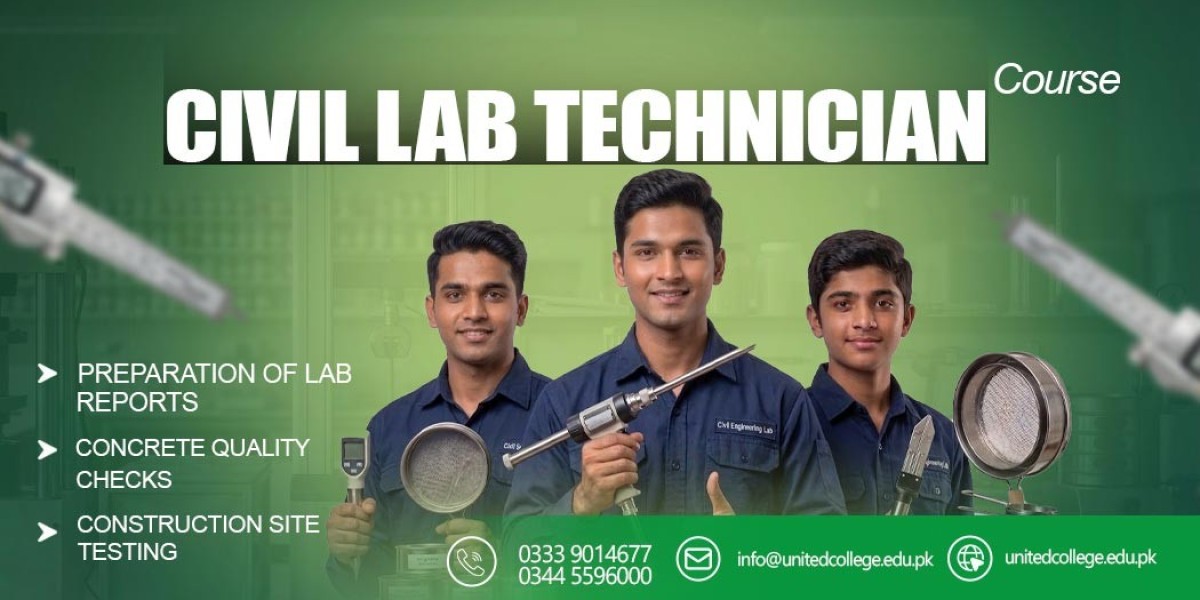


After completing Matric, many students start thinking about what to do next. Some want to continue their education, while others prefer learning practical skills that can help them enter a technical field.
If you are interested in construction, material testing, and laboratory work, a Civil Lab Technician course may be an option worth exploring.
Some institutes accept students after Matric, particularly those with a science background. These courses introduce students to construction materials such as cement, concrete, soil, and aggregates.
However, admission requirements depend on the institute and the specific programme. Before applying, you should understand the eligibility criteria, course duration, and subjects included in the training.
Can You Join This Course After Matric?
Yes, students who have completed Matric can apply for certain Civil Lab Technician and construction material testing programmes.
For example, the Construction Technology and Training Institute (CTTI) lists its six-month Construction Material Laboratory Technician course with Matric Science as the required qualification.
This means students with a Matric Science background can consider this programme, subject to the institute's current admission conditions.
Some other training providers describe their programmes as suitable for fresh students or individuals with basic education. However, you should not assume that every institute has the same eligibility rules.
If you have completed Matric in Arts, ask the institute directly whether your qualification is accepted before submitting an application.
Why Is Matric Science Useful for Civil Laboratory Training?
A science background can make some technical subjects easier to understand. Civil laboratory work involves measurements, material properties, basic calculations, and testing procedures.
For example, students may learn how concrete strength is checked or why soil properties matter before construction begins. Basic knowledge of mathematics and science can help them understand these topics.
However, students should not feel that they need to know everything before joining. A training programme should explain the relevant concepts and guide students according to its syllabus.
Interest in technical learning, attention to detail, and willingness to practise are also useful qualities.
What Will You Learn During the Course?
A Civil Lab Technician course introduces students to the materials used in construction projects and the methods used to examine their quality.
One important subject is cement testing. Students learn why cement properties matter and how testing helps assess construction materials.
Concrete testing is another major area. Concrete is widely used in buildings, roads, and other structures, so understanding its testing procedures is useful for laboratory work.
Students may also study soil testing and aggregate testing. Soil testing helps engineers understand ground conditions, while aggregate testing examines materials used in concrete and road construction.
In addition, the course may introduce laboratory equipment, sample preparation, measurement methods, safety procedures, and report writing. The exact subjects depend on the institute's course outline.
How Long Does a Civil Lab Technician Course Take?
Course duration depends on the institute and its training structure. Some programmes take three months, while others run for six months.
For example, United College of Technology (UCT) lists a three-month Civil Lab Technician course at its Islamabad campus. Its published information also mentions morning and evening class options.
CTTI lists a six-month Construction Material Laboratory Technician programme.
These are two different programmes, so students should compare their course outlines and practical training arrangements rather than judging them only by duration.
Can You Get Practical Training After Matric?
Yes, practical training can be an important part of technical education after Matric.
During a Civil Lab Technician programme, students may learn how laboratory equipment is used and how construction material samples are prepared for testing.
For example, a student may first learn about concrete testing in the classroom and then observe or practise the procedure during a supervised laboratory session.
Practical learning helps students connect theory with actual laboratory activities. Before admission, ask the institute whether students perform tests themselves, what equipment is available, and how practical sessions are supervised.
What Can You Do After Completing the Course?
After completing relevant training, you may explore entry-level opportunities connected with construction material testing.
Possible roles include laboratory assistant, material testing assistant, junior lab technician, and quality control assistant. However, job titles and requirements differ between employers.
Some organisations may accept candidates with technical training, while others require a diploma, further education, or previous experience.
A short course does not make you a civil engineer, and it does not guarantee employment. It provides an introduction to a particular technical field that you can build on through further learning and supervised experience.
Is a Civil Lab Technician Course Better Than Continuing Your Education?
This depends on your plans.
If you want to develop practical skills related to construction material testing, a short technical course may be useful. It can introduce you to laboratory procedures and help you understand whether this type of work interests you.
However, if you plan to become a civil engineer or pursue a higher technical qualification, continuing your formal education is important.
A short course and formal education serve different purposes. You can discuss both options with your teachers or family before making a decision.
Civil Lab Technician Course at UCT Islamabad
United College of Technology offers a Civil Lab Technician course at its Islamabad campus. Its published course information lists a duration of three months and a fee of PKR 45,000, with morning and evening class options.
The programme introduces students to construction material testing, including cement, concrete, soil, and aggregates. Its course page also describes practical learning and a course completion certificate upon successful completion.
You can review the Civil Lab Technician Course in Islamabad at UCT to understand the programme.
One important point: the published UCT page describes the course as suitable for beginners but does not clearly state a specific Matric Science or Matric Arts admission requirement. Contact the institute to confirm whether your Matric qualification is accepted before registration.
What Should You Check Before Admission?
Before selecting an institute, understand its actual admission requirements. Ask whether Matric Science is necessary or whether students from other educational backgrounds can also apply.
You should also check the course duration, total fee, class schedule, practical laboratory facilities, and subjects included in the syllabus.
Certificate details are equally important. Find out who issues the certificate and whether you must complete an assessment before receiving it.
Taking time to confirm these details can help you select a programme that matches your education and plans.
Frequently Asked Questions
1. Can I join a Civil Lab Technician course after Matric?
Yes, some institutes accept Matric students. However, certain programmes specifically require Matric Science, so always check the admission criteria.
2. Is Matric Science required for this course?
Some institutes require Matric Science. For example, CTTI lists Matric Science as the qualification for its six-month Construction Material Laboratory Technician course.
3. Can a Matric Arts student apply?
It depends on the institute. Contact the admissions office and ask whether Matric Arts is accepted for the specific programme.
4. How many months does the course take?
Duration varies. UCT lists a three-month programme in Islamabad, while CTTI lists a six-month Construction Material Laboratory Technician programme.
5. What subjects are taught in this course?
Common subjects include cement testing, concrete testing, soil testing, aggregate testing, laboratory equipment, sample preparation, and report writing.
6. Can I get a job after completing the course?
You can explore relevant entry-level positions, but employment depends on your education, practical skills, experience, and the employer's requirements.
Start Planning Your Technical Education After Matric
Completing Matric can be the beginning of your journey into technical education. If you enjoy science, construction, and practical learning, a Civil Lab Technician course may be worth considering.
Before joining, compare institutes and check their eligibility rules carefully. Make sure the course includes useful practical training and provides clear information about its certificate.
With the right educational choices and continued learning, you can build a foundation in construction material testing and explore further opportunities in the technical field.







