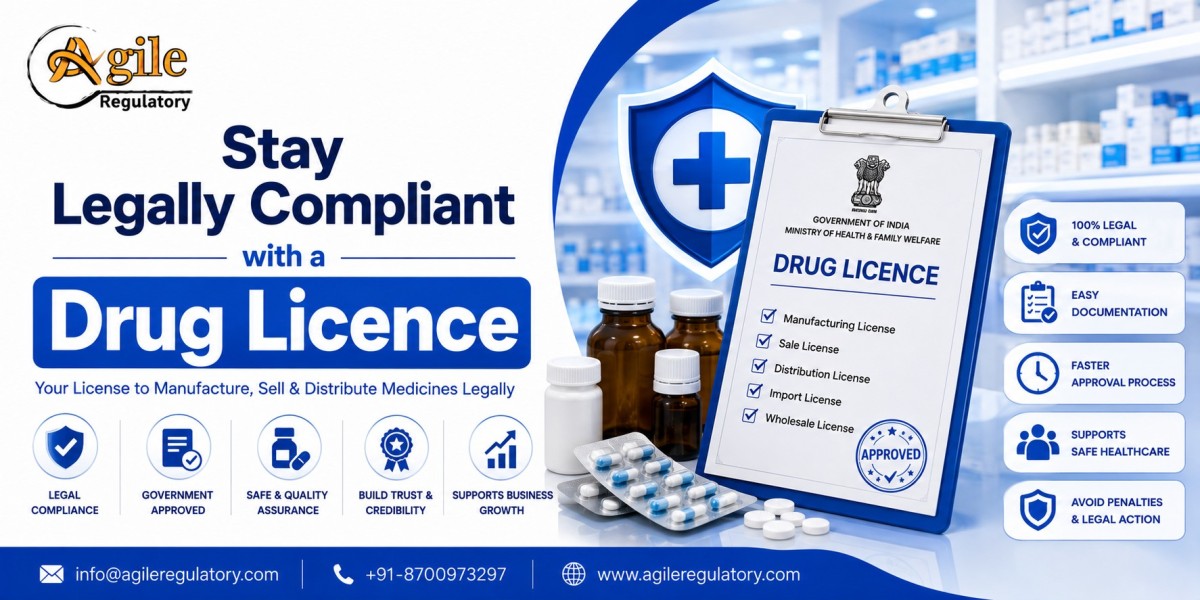


India's pharmaceutical sector is one of the largest and fastest-growing industries in the world. From retail pharmacies and wholesale medicine distributors to hospitals, clinics, and healthcare startups, every business dealing with medicines must comply with strict regulatory requirements. One of the most important legal requirements is obtaining a Drug Licence before starting operations.
A valid drug licence not only ensures compliance with the Drugs and Cosmetics Act, 1940, but also helps build trust with customers, healthcare professionals, suppliers, and regulatory authorities. Businesses operating without the required licence may face penalties, cancellation of business operations, product seizures, and legal action.
This comprehensive 2026 guide explains everything you need to know about obtaining a Drug Licence, including eligibility, licence types, documents, application process, compliance requirements, and how Agile Regulatory helps businesses across India complete the licensing process efficiently.
What is a Drug Licence?
A Drug Licence is an official authorization issued by the State Drug Control Department or the appropriate licensing authority that permits eligible businesses to manufacture, stock, distribute, sell, or supply medicines in accordance with applicable pharmaceutical laws.
The primary objective of the licensing system is to ensure that medicines are stored, handled, and sold under regulated conditions while protecting public health and preventing the circulation of counterfeit or unsafe drugs.
Whether you plan to open a pharmacy or establish a pharmaceutical distribution business, obtaining the appropriate licence is the first step toward operating legally.
Why is a Drug Licence Important?
Medicines directly impact human health, making regulatory compliance essential for every pharmaceutical business.
Some major benefits of obtaining a Drug Licence include:
- Legal authorization to deal in medicines
- Compliance with pharmaceutical regulations
- Increased business credibility
- Improved customer confidence
- Better supplier relationships
- Eligibility to work with hospitals and healthcare institutions
- Reduced legal and financial risks
- Support for long-term business growth
A licensed business also demonstrates professionalism and commitment to quality healthcare services.
Who Needs a Drug Licence?
Several categories of businesses require a Drug Licence, depending on the nature of their operations.
These include:
- Retail pharmacies
- Medical stores
- Wholesale pharmaceutical distributors
- Hospital pharmacies
- Clinics dispensing medicines
- Pharmaceutical companies
- Drug importers
- Online pharmacies
- Healthcare institutions
- Veterinary medicine businesses
Businesses should identify the appropriate licence category before submitting an application.
Types of Drug Licences
The licensing authority issues different licences based on business activities.
Retail Drug Licence
A retail licence allows businesses to sell medicines directly to consumers.
Typical applicants include:
- Medical stores
- Community pharmacies
- Hospital pharmacies
- Retail chemists
Retail businesses must generally appoint a qualified pharmacist and maintain proper storage facilities.
Wholesale Distributor License
A Wholesale distributor license is required by businesses supplying medicines to pharmacies, hospitals, healthcare institutions, and other licensed entities instead of directly selling to consumers.
Wholesale distributors play an important role in the pharmaceutical supply chain by ensuring medicines reach healthcare providers efficiently.
Eligibility Criteria
Before applying for a Drug Licence, applicants should satisfy the prescribed eligibility requirements.
Generally, businesses should have:
- A legally registered business entity
- Suitable commercial premises
- Proper storage arrangements
- Refrigeration facilities for temperature-sensitive medicines, where applicable
- A qualified pharmacist or competent person as prescribed
- Required business registrations
- Compliance with applicable pharmaceutical regulations
Eligibility requirements may vary depending on the licence category and state regulations.
Documents Required for Drug Licence
Applicants should prepare complete documentation before starting the application process.
Commonly required documents include:
- PAN Card
- Aadhaar Card
- Passport-size photographs
- GST Registration
- Company Incorporation Certificate
- Partnership Deed or LLP Agreement
- Business address proof
- Rent agreement or ownership documents
- Premises layout plan
- Site plan
- Electricity bill
- Refrigerator details (if applicable)
- Qualification certificate of pharmacist or competent person
- Appointment letter
- Identity proof
- Address proof
- Affidavits as prescribed
Providing complete documentation helps reduce processing delays.
Step-by-Step Drug Licence Apply Process
Businesses planning to Drug licence apply should follow a structured process.
Step 1: Determine the Appropriate Licence
Identify whether your business requires a retail, wholesale, manufacturing, or another category of licence.
Step 2: Prepare Documentation
Collect all required legal, technical, and business documents.
Step 3: Submit the Application
Complete the prescribed application form and attach supporting documents.
Step 4: Document Verification
The licensing authority reviews the submitted application.
Step 5: Premises Inspection
Officials may inspect the business premises to verify compliance with infrastructure and storage requirements.
Step 6: Licence Approval
After successful verification, the Drug Licence is issued.
Careful preparation helps avoid unnecessary delays during processing.
Drug Licence Online Apply
Many businesses now prefer the Drug licence online apply process because it simplifies application management and document submission.
Benefits of online applications include:
- Digital application submission
- Faster document uploads
- Improved transparency
- Easier status tracking
- Reduced paperwork
- Better communication during processing
Applicants should ensure that all uploaded documents are accurate, complete, and clearly legible.
Infrastructure Requirements
The business premises should comply with applicable regulatory standards.
Important infrastructure considerations include:
- Adequate storage space
- Proper ventilation
- Hygienic environment
- Temperature-controlled storage where required
- Secure medicine storage
- Clean working conditions
- Fire safety arrangements
- Organized inventory management
Maintaining suitable infrastructure supports product quality and regulatory compliance.
Responsibilities After Obtaining the Licence
Obtaining a licence is only the beginning. Businesses must continue complying with applicable legal obligations.
These include:
- Maintaining purchase and sales records
- Proper medicine storage
- Selling only authorized products
- Employing qualified personnel
- Maintaining stock registers
- Renewing licences on time
- Cooperating during inspections
- Following labeling and packaging requirements
Regular compliance helps businesses avoid legal complications.
Common Reasons for Application Delays
Many businesses experience delays because of avoidable mistakes.
Some common issues include:
- Incomplete documentation
- Incorrect application details
- Missing pharmacist qualifications
- Errors in premises documents
- Poor-quality document uploads
- Inadequate storage facilities
- Delayed responses to authority queries
Preparing a complete application before submission significantly improves approval timelines.
Benefits of Holding a Drug Licence
Legal Compliance
Businesses can legally stock, distribute, and sell medicines.
Improved Customer Trust
Customers are more confident purchasing medicines from licensed establishments.
Better Supplier Relationships
Pharmaceutical companies generally prefer working with licensed businesses.
Business Expansion
Licensed businesses can expand operations more confidently.
Competitive Advantage
Regulatory compliance enhances business credibility in a competitive market.
Common Compliance Mistakes to Avoid
Businesses should avoid:
- Selling medicines beyond the approved scope
- Poor storage conditions
- Failure to maintain records
- Delayed licence renewal
- Selling expired medicines
- Employing unqualified staff
- Ignoring inspection notices
- Improper stock management
Regular compliance reviews help maintain operational excellence.
Why You Need Professional Assistance
Pharmaceutical licensing involves legal requirements, documentation, inspections, and ongoing compliance obligations. Working with professionals simplifies the process and minimizes approval delays.
Professional assistance can help with:
- Licence selection
- Documentation preparation
- Premises compliance
- Application filing
- Regulatory consultation
- Inspection readiness
- Licence renewal
- Amendment support
- Compliance management
Expert guidance allows businesses to focus on growth while ensuring regulatory compliance.
How Agile Regulatory Can Help
Obtaining a Drug Licence requires accurate documentation, regulatory expertise, and timely coordination with the licensing authorities. Agile Regulatory offers comprehensive pharmaceutical licensing solutions for businesses across India.
Our services include:
- Eligibility assessment
- Documentation preparation
- Drug licence online apply assistance
- Regulatory consultation
- Wholesale distributor license support
- Application filing
- Premises compliance guidance
- Inspection preparation
- Licence renewal assistance
- Amendment support
- End-to-end application tracking
With years of regulatory experience, Agile Regulatory helps pharmacies, distributors, hospitals, healthcare startups, and pharmaceutical companies complete the licensing process efficiently while minimizing delays and compliance risks.
Whether you are opening a retail pharmacy or establishing a pharmaceutical distribution business, our experts provide personalized guidance throughout every stage of the licensing process.
Why Compliance Should Be a Business Priority
The pharmaceutical industry operates under strict regulatory supervision because medicines directly affect public health. Businesses that maintain strong compliance systems enjoy several long-term advantages.
These include:
- Better customer confidence
- Improved regulatory reputation
- Reduced legal exposure
- Easier business expansion
- Stronger supplier relationships
- Sustainable business growth
Compliance should be viewed as a strategic investment that protects both the business and its customers.
Conclusion
Operating a pharmaceutical business without the required Drug Licence can expose businesses to significant legal and operational risks. Whether you operate a pharmacy, hospital, medical store, or pharmaceutical distribution company, obtaining the appropriate licence is essential for conducting business legally and professionally.
If you are planning to Drug licence apply, complete the Drug licence online apply process, or require a Wholesale distributor license, Agile Regulatory offers complete regulatory support from documentation to approval. Our experienced team helps businesses across India navigate licensing requirements efficiently, ensuring smooth approvals and long-term compliance.
Frequently Asked Questions (FAQs)
1. What is a Drug Licence?
A Drug Licence is an authorization issued by the competent licensing authority that allows eligible businesses to manufacture, stock, distribute, or sell medicines in compliance with applicable pharmaceutical regulations.
2. Can I complete the Drug licence online apply process?
Yes. The Drug licence online apply process enables eligible applicants to submit applications and supporting documents through the prescribed online system, depending on the applicable state procedures.
3. Who needs a Wholesale distributor license?
Businesses supplying medicines to pharmacies, hospitals, healthcare institutions, and other licensed entities generally require a Wholesale distributor license.
4. What documents are required to Drug licence apply?
Applicants typically require identity proof, business registration documents, GST registration, premises documents, pharmacist qualification certificates (where applicable), layout plans, and other supporting documents prescribed by the licensing authority.
5. What happens if a business operates without a Drug Licence?
Operating without the required Drug Licence may result in penalties, suspension of business operations, seizure of medicines, cancellation of licences, and other legal action under applicable pharmaceutical laws.
6. Why choose Agile Regulatory for Drug Licence services?
Agile Regulatory provides end-to-end assistance for Drug Licence applications, including documentation, Drug licence online apply support, Wholesale distributor license guidance, regulatory consultation, inspection preparation, renewals, and ongoing compliance services, helping pharmaceutical businesses obtain approvals efficiently across India.