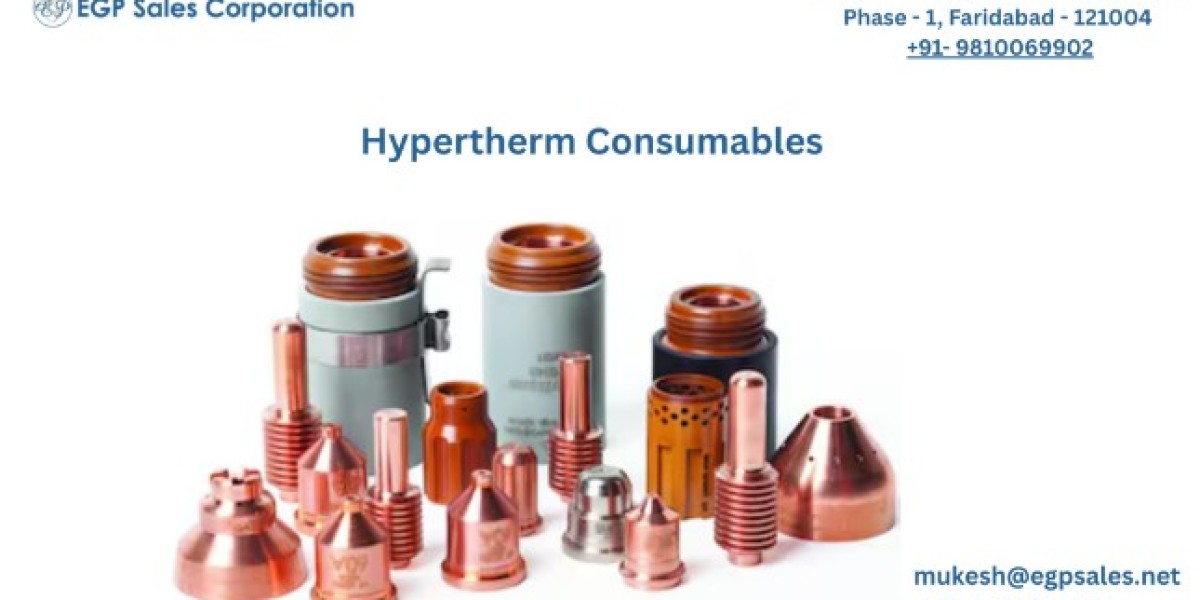


Choosing the right Hypertherm Consumables Supplier can have a direct effect on cutting quality, machine performance, operating costs, and production schedules. For fabrication companies and industrial workshops, consumables are not simply replacement parts. They are working components that influence how efficiently a plasma cutting system performs.
A supplier may offer competitive prices, but that alone does not make them a good long-term partner. Product compatibility, availability, part-number accuracy, quality, technical knowledge, and delivery reliability all matter.
This becomes especially important when a business uses Hypertherm plasma systems regularly. A wrong nozzle, electrode, shield, retaining cap, or other consumable can affect the cutting process and may lead to poor edge quality, excessive dross, shorter consumable life, or unnecessary downtime.
So, how do you identify a supplier you can depend on?
The answer is to look beyond price and evaluate the complete supply relationship. This guide explains the key factors businesses should consider before selecting a Hypertherm consumables supplier.
What is a Hypertherm Consumables Supplier?
A Hypertherm Consumables Supplier provides replacement and wear components used with Hypertherm plasma cutting systems. These may include electrodes, nozzles, shields, swirl rings, retaining caps, and other system-specific consumables.
A dependable supplier helps customers identify the correct components for their plasma system and cutting application. This includes checking the machine or torch type, consumable specifications, material being cut, amperage, and other operating requirements. The goal is to ensure that the supplied parts are suitable for the intended cutting process.
Why Choosing the Right Supplier Matters
Plasma cutting consumables naturally wear during operation. Their service life depends on factors such as material thickness, cutting current, duty cycle, piercing frequency, gas settings, and operating practices.
When consumables are replaced with the correct components at the right time, the cutting system can maintain more consistent performance.
On the other hand, buying unsuitable or poor-quality components can create several problems:
- Inconsistent cut quality
- Increased dross
- Poor edge appearance
- Frequent consumable replacement
- Higher operating costs
- Unplanned production interruptions
- Incorrect torch operation
- Additional troubleshooting time
For example, a fabrication workshop cutting mild steel every day may rely on a plasma system for hundreds of cuts per shift. Even a small reduction in consumable life can become a significant expense over several months.
That is why supplier selection should be treated as part of production planning rather than simply a purchasing decision.
Key Considerations When Choosing a Hypertherm Consumables Supplier
1. Check Product Compatibility
The first question to ask is whether the supplier can provide the consumables required for your specific Hypertherm plasma system.
Different plasma systems and torch configurations use different consumable combinations. A supplier should be able to work with the relevant machine, torch, amperage, material, and application requirements.
Before ordering, provide accurate information about your system and verify the required part number.
This simple step can prevent incorrect orders and unnecessary returns.
2. Verify Part Numbers Carefully
Industrial consumables are often identified by specific part numbers. A small mistake in a number can result in receiving a component that does not match the intended application.
A professional supplier should understand the importance of part-number accuracy.
Instead of relying only on product names, compare the required part number with the machine documentation, existing component, or supplier's product information.
This is particularly useful for businesses managing multiple plasma systems because different machines may require different consumable configurations.
3. Look for Consistent Product Availability
Production cannot always wait for consumables to arrive.
If a nozzle or electrode reaches the end of its service life during an active production schedule, delayed replacement can stop work. For businesses with regular plasma cutting requirements, consistent stock availability is therefore a major supplier consideration.
Ask potential suppliers:
- Which consumables are normally kept in stock?
- What is the usual dispatch time?
- Can they handle recurring orders?
- Do they support bulk requirements?
- How quickly can they respond to urgent requirements?
A supplier with reliable inventory planning can help reduce the risk of production delays.
4. Evaluate Product Quality
Quality should be considered alongside price.
Consumables work under demanding electrical, thermal, and mechanical conditions. Their performance can influence arc stability, cut quality, and service life.
When comparing suppliers, ask about product specifications and compatibility rather than choosing solely on the lowest quotation.
For industrial buyers, the real cost of a consumable is not only its purchase price. It also includes how long it lasts and how effectively it performs.
A slightly cheaper component that requires frequent replacement may cost more over time than a dependable product with better service life.
5. Consider Technical Knowledge
A supplier that understands plasma cutting can be more useful than a supplier that simply processes orders.
Technical knowledge becomes valuable when you need help identifying the right consumable or investigating a cutting problem.
For example, if a workshop is experiencing excessive dross, inconsistent cuts, or unusually short electrode life, the problem may involve more than the consumable itself. Cutting parameters, gas pressure, material, torch condition, and operating practices can also affect results.
A knowledgeable supplier can help direct the buyer toward the right product and identify questions that should be checked before placing an order.
6. Compare Total Cost, Not Just Unit Price
Price is naturally important for industrial purchasing, but it should not be the only factor.
Consider the complete cost of using a consumable:
Total operating cost = purchase price + replacement frequency + downtime + cutting inefficiencies
For example, Supplier A may offer a lower price per component, but if the consumables need to be replaced more frequently, the apparent saving may disappear.
Supplier B may provide better availability, accurate product matching, and consistent service. That can reduce purchasing delays and production interruptions.
A practical supplier comparison should therefore consider value over time.
Benefits of Working With a Reliable Supplier
A dependable consumables supplier can provide several operational advantages.
Benefits
- Better consumable availability
- Reduced purchasing delays
- More accurate part selection
- Consistent product quality
- Easier repeat ordering
- Better support for regular production
- Lower risk of incorrect purchases
- Improved production planning
- Potentially lower overall operating costs
For companies that consume plasma parts regularly, establishing a reliable supply relationship can make purchasing much easier.
Questions to Ask Before Selecting a Supplier
Before placing your first major order, ask a few practical questions.
Can you supply the required Hypertherm consumable part numbers?
This confirms whether the supplier can meet your specific requirements.
Do you have regular stock availability?
Useful for businesses that cannot afford long waiting periods.
Can you help identify the correct consumable?
This is particularly valuable when several torch or machine configurations are involved.
Do you support bulk or recurring orders?
Regular purchasing may require better stock planning and order management.
What is the expected delivery timeline?
Knowing the normal dispatch and delivery schedule helps production teams plan inventory.
How do you handle incorrect or damaged products?
A clear replacement process can prevent unnecessary purchasing complications.
Supplier Comparison: What Should Businesses Evaluate?
| Factor | Basic Supplier | Reliable Supplier |
|---|---|---|
| Product information | Limited | Detailed and practical |
| Part-number guidance | May be limited | Clear compatibility support |
| Stock availability | Variable | Better inventory planning |
| Technical knowledge | Basic | Strong industry understanding |
| Repeat orders | Standard | Easier and more organized |
| Delivery reliability | Variable | Consistent |
| Pricing approach | Focused on unit price | Considers overall value |
| Customer support | Limited | Responsive and solution-focused |
The comparison shows why supplier selection should involve more than checking a quotation.
Common Mistakes When Buying Plasma Consumables
Even experienced purchasing teams can make avoidable mistakes.
Buying Only on Price
The lowest quotation may appear attractive, but it does not always represent the lowest operating cost. Consider product life, performance, availability, and replacement frequency.
Ordering Without Checking the Part Number
Never assume that two similar-looking consumables are interchangeable. Confirm the correct part number and system compatibility before ordering.
Waiting Until Stock Runs Out
Consumables are routine production items. Waiting until the last component is used can create unnecessary pressure and increase the chance of production delays.
Ignoring Application Requirements
Material type, thickness, cutting current, and operating conditions can influence which consumable configuration is appropriate.
Using the Wrong Consumable Configuration
A component that does not match the torch or cutting system can produce poor results and may create additional troubleshooting issues.
Best Practices for Managing Hypertherm Consumables
Supplier selection is only one part of effective consumable management.
Maintain a simple inventory record for frequently used components. Track how quickly items are consumed and identify the parts that need regular replenishment.
It is also useful to establish minimum stock levels for critical consumables.
For example, a fabrication company that regularly uses electrodes and nozzles can set a reorder point before inventory becomes critically low. This gives the purchasing team enough time to place an order without affecting production.
Keep frequently used part numbers documented and separate them according to the machines or torch systems where they are used.
Regular inspection also helps. If consumables are wearing unusually quickly, investigate the cause rather than simply increasing the replacement frequency.
How to Build a Long-Term Supplier Relationship
Once you find a supplier that consistently provides the right products and service, building a long-term relationship can simplify procurement.
Share your regular consumption requirements with the supplier. If certain consumables are used every week or month, advance planning can make stock management easier.
A good supplier should understand your purchasing pattern and help you maintain continuity.
For larger fabrication operations, recurring supply arrangements can also reduce the administrative effort involved in sourcing the same components repeatedly.
The relationship should work both ways. Buyers should provide accurate specifications, part numbers, quantities, and delivery requirements. Suppliers should respond with clear product information, realistic timelines, and dependable service.
When Should You Replace Your Consumables Supplier?
Changing suppliers may be worth considering if you regularly experience:
- Incorrect part deliveries
- Unclear product information
- Repeated stock shortages
- Unpredictable delivery times
- Poor communication
- Limited technical support
- Inconsistent product quality
- Difficulty placing repeat orders
One isolated issue may not justify changing suppliers. However, repeated problems can increase purchasing costs and create avoidable production risks.
A supplier should make your procurement process easier, not more complicated.
How EGP Sales Corporation Can Support Your Consumables Requirements
For businesses seeking a Hypertherm Consumables Supplier, EGP Sales Corporation offers access to industrial plasma-cutting consumables and related solutions.
The company focuses on supplying products for industrial cutting applications and can assist businesses looking for the right consumables for their operational requirements.
When selecting consumables, buyers should provide the relevant machine information, torch configuration, required part number, and application details. This helps ensure that the purchasing decision is based on compatibility rather than guesswork.
For businesses with recurring plasma cutting requirements, having a dependable source for consumables can also make inventory planning and repeat purchasing more efficient.
Frequently Asked Questions
What should I look for in a Hypertherm Consumables Supplier?
Look for product compatibility, accurate part-number information, reliable stock availability, fair pricing, technical knowledge, responsive communication, and dependable delivery. A good supplier should understand your application rather than simply provide a product catalogue.
How do I know which Hypertherm consumable I need?
Start with your plasma system and torch information, then identify the required part number and application specifications. If you are unsure, provide the supplier with your machine and torch details so they can help verify the correct consumable.
Is the cheapest plasma consumable always the best choice?
No. Purchase price is only one part of the total cost. Consumable service life, cut quality, replacement frequency, availability, and production downtime should also be considered when comparing suppliers.
Why is consumable availability important for industrial cutting?
Consumables are wear components that need regular replacement. If critical parts are unavailable when required, production may be interrupted. Maintaining a reliable supplier and sensible inventory level can reduce this risk.
Can a supplier help with consumable selection?
A knowledgeable supplier can help identify suitable consumables based on machine type, torch configuration, part number, and application requirements. Buyers should still verify final compatibility against their machine documentation and operating specifications.
Conclusion
Choosing a reliable Hypertherm Consumables Supplier is about more than finding a competitive price. Industrial buyers should evaluate product compatibility, part-number accuracy, quality, stock availability, delivery reliability, technical knowledge, and overall value.
The right supplier can make routine consumable purchasing easier while reducing the risk of incorrect orders and unexpected shortages.
Before selecting a supplier, compare more than quotations. Check how well the supplier understands your plasma cutting requirements and how consistently they can support your business.
For regular fabrication and industrial cutting operations, a dependable supply chain of consumables can be just as important as the equipment itself.









