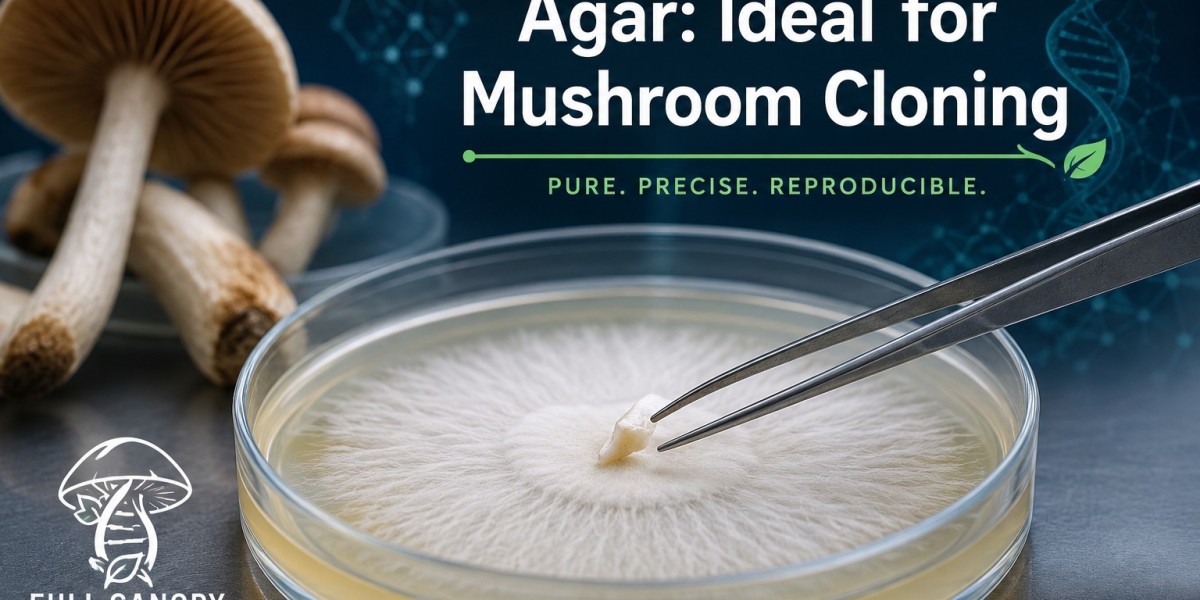


Mushroom cloning is one of the most useful techniques for preserving desirable traits and developing consistent cultures. Instead of starting with spores, cloning allows growers to reproduce tissue from a living mushroom that already displays characteristics they want to maintain. The success of this process depends heavily on selecting an appropriate medium, and agar has become one of the most reliable choices for isolating and maintaining mushroom cultures.
Agar provides a controlled environment where mushroom tissue can develop into visible mycelium. Because it is transparent, relatively easy to prepare, and adaptable to different cultivation needs, it allows growers to observe growth closely while identifying healthy cultures. Whether someone is learning basic laboratory techniques or working toward more advanced culture management, understanding why agar works so well can make the cloning process more organized and dependable.
Understanding Mushroom Cloning
Mushroom cloning is essentially the process of taking a small piece of tissue from a desirable mushroom and encouraging that tissue to produce new mycelial growth. Unlike spore propagation, which introduces genetic variation, cloning begins with tissue from an existing mushroom.
Cloning Versus Spore Cultures
Spores are produced through sexual reproduction and can create offspring with different combinations of genetic traits. This variation can be useful for breeding projects, but it may make it difficult to reproduce a mushroom with exactly the characteristics of a particular fruiting body.
Cloning takes a different approach. Tissue from an existing mushroom is transferred to a suitable growth medium, where its cells can develop into mycelium. This makes cloning especially valuable when the goal is to preserve desirable characteristics such as fruiting performance, appearance, or growth behavior.
Why the Medium Matters
The culture medium provides nutrients and a physical surface for mycelium to establish itself. A good medium should support healthy growth while also making it possible to observe the culture.
Agar is particularly useful because it creates a solid, transparent surface. This makes it easier to monitor mycelial development and notice unusual growth patterns before moving a culture into another stage of cultivation.
Why Agar Works So Well
Agar has become a standard medium for mushroom culture work because of its versatility. It is derived from certain types of algae and forms a firm gel when combined with water. When supplemented with suitable nutrients, it provides an effective environment for mycelial growth.
Clear Visibility of Mycelium
One of agar's biggest advantages is transparency. Mycelium grows across the surface and can often be viewed directly through the container. This visibility gives cultivators an opportunity to monitor the culture rather than relying solely on growth outside the container.
Healthy-looking mycelial growth can be easier to distinguish from unusual or unwanted growth when the culture is developing on a clear medium. This makes agar useful for culture observation and selection.
Easy Culture Management
Agar also provides flexibility. A culture can be observed over time, and sections of desirable growth can be selected for further propagation. This makes agar more than just a growing surface—it can function as a useful tool for organizing and evaluating cultures.
For people interested in developing strong laboratory habits, learning to work with agar also introduces important concepts such as cleanliness, culture observation, documentation, and careful handling.
Agar and Culture Isolation
One of the most important benefits of agar is its ability to support the isolation of individual mycelial growth. When a mushroom tissue sample is placed onto agar, the resulting growth can be observed as it develops.
Identifying Desirable Growth
Agar makes it easier to study how a culture behaves before committing it to a larger cultivation system. Growers can examine the appearance and development of the mycelium and decide whether a culture is worth continuing.
This is particularly valuable when working with multiple samples. Instead of treating every culture as identical, growers can document differences and maintain the lines that demonstrate desirable characteristics.
Maintaining Culture Records
Good documentation can significantly improve culture management. Labels can identify the source of a sample, date of transfer, culture generation, and other useful observations.
Keeping organized records helps prevent confusion between cultures and makes it easier to track which samples produced successful results. Over time, these records can become an important reference for future cultivation and research.
The Role of Mushroom Genetics Experts
Culture work becomes increasingly interesting when growers begin thinking beyond basic cloning. Mushroom Genetics Experts can help explain how inherited traits, selection, and culture preservation influence the characteristics growers observe.
Agar supports this work by providing a practical platform for observing cultures. Although cloning itself does not create new genetic combinations, it can help preserve material from a particular fruiting body for further evaluation. This distinction is important because maintaining a culture and creating genetic diversity are two different goals.
Understanding that difference allows cultivators to make more informed decisions about whether they should clone, work with spores, or pursue structured breeding and selection.
Advantages of Agar for Long-Term Culture Work
Agar is not limited to initial cloning. It can also become part of a broader culture-management system. Once a useful culture has been established, maintaining clean and well-documented agar cultures can make future transfers more organized.
Culture Preservation
Maintaining a culture on a suitable medium gives growers a way to keep desirable material available for future use. Rather than repeatedly returning to a fruiting mushroom, a maintained culture can provide a continuing source of mycelium.
Proper labeling is particularly important when maintaining multiple cultures. A simple naming system can make it much easier to distinguish between varieties, samples, and generations.
Culture Selection
Agar also creates opportunities for careful selection. Different areas of mycelial growth may display different characteristics, allowing growers to observe and compare development.
Selection should be based on consistent observations rather than a single visual characteristic. Growth patterns can change depending on environmental conditions, medium composition, and other factors, so maintaining good records is essential.
Advanced Mushroom Genetics and Agar-Based Work
Advanced Mushroom Genetics becomes particularly relevant when culture work expands into systematic selection and breeding. Agar can provide a practical foundation for maintaining and comparing cultures during these projects.
The key advantage is organization. Cultivators can maintain separate cultures, document their origins, and evaluate their development over time. This structured approach can make it easier to understand which characteristics remain consistent and which may vary.
However, agar alone does not determine genetic quality. Genetics, culture health, environmental conditions, and cultivation practices all contribute to the final outcome. Agar is best viewed as a useful medium that supports observation and culture management rather than as a shortcut to improved genetics.
Common Mistakes When Working With Agar
Although agar is relatively straightforward, poor technique can reduce its usefulness. Contamination is one of the most common challenges because unwanted microorganisms can compete with mushroom mycelium.
Poor Cleanliness
Clean working practices are essential whenever cultures are handled. Unwanted organisms can quickly establish themselves and make it difficult to determine whether a culture is healthy.
Maintaining an organized workspace, using appropriate sterile procedures, and minimizing unnecessary exposure can help reduce contamination risks.
Choosing Cultures Too Quickly
Another common mistake is selecting a culture based on limited observation. A culture may initially appear promising but behave differently later.
Allowing enough time for observation and maintaining detailed records can help cultivators make more informed selections.
Agar as a Foundation for Better Cultivation
The value of agar goes beyond simply growing mycelium. It provides a controlled platform where cultivators can observe, compare, document, and maintain mushroom cultures.
Full Canopy Genetics represents a genetics-focused approach where careful culture management can complement a broader interest in mushroom genetics. For growers and researchers, understanding the relationship between culture work and genetics can help create a more organized cultivation process.
Agar is especially useful because it allows decisions to be made before a culture is introduced into a larger growing system. This can save time and resources while providing greater insight into how individual cultures develop.
Final Thoughts
Agar remains one of the most useful media for mushroom cloning because it combines visibility, flexibility, and practical culture management. It allows growers to observe mycelial development, maintain selected cultures, and organize their work more effectively.
The real strength of agar is the control it provides. Instead of moving immediately from a mushroom tissue sample to a larger cultivation environment, growers can first observe the culture and make informed decisions. When combined with careful documentation, appropriate cleanliness, and a clear understanding of genetics, agar becomes a valuable part of a well-structured mushroom cultivation workflow.
For anyone interested in mushroom cloning, learning how agar works is an important step toward understanding culture isolation, preservation, and selection. It provides a simple but powerful foundation for developing better cultivation practices while giving growers greater visibility into the cultures they are working with.









