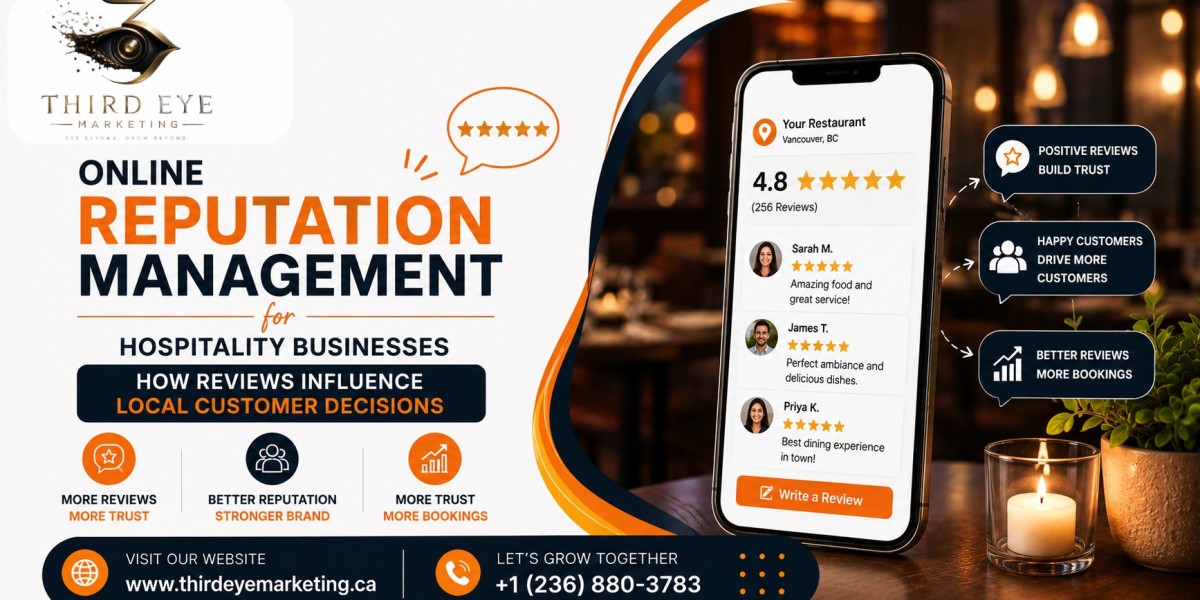


Online Reputation Management for Hospitality Businesses: How Reviews Influence Local Customer Decisions
In hospitality, reputation can influence a customer's decision before they ever visit your business. A restaurant, café, hotel, or bar may have an excellent menu, attractive interiors, and great service, but potential customers often look for one thing first: what other people are saying about the experience.
Google reviews, social media comments, ratings, photographs, and customer feedback can shape whether someone chooses your business or moves on to a competitor.
For hospitality businesses in Vancouver, Chilliwack, Surrey, and across Canada, online reputation management should therefore be treated as an important part of customer acquisition—not simply a process for responding to negative reviews.
A strong reputation strategy combines reviews, customer service, local search visibility, social media, trust signals, and consistent brand communication.
Why Online Reviews Matter for Hospitality Businesses
Hospitality purchases are experience-based.
When someone books a hotel, chooses a restaurant, or visits a café, they are not simply buying a product. They are investing in an experience.
Before making that decision, customers may look at:
Overall rating
Number of reviews
Recent reviews
Customer comments
Business responses
Food or property photographs
Social media activity
Website information
Location and opening hours
This means your digital reputation can influence customers at multiple stages of their decision-making journey.
A business with hundreds of recent, authentic, positive reviews can create a very different first impression from one with outdated information or numerous unresolved complaints.
Reviews Are Powerful Local Trust Signals
Local customers want reassurance that a business is worth their time and money.
Imagine someone searching:
“Best restaurant near me.”
They may see several businesses on Google Maps.
One has a strong rating, recent customer photographs, detailed reviews, and professional responses.
Another has fewer reviews and several unanswered complaints.
Even if both businesses offer similar products, the first may receive more clicks and customer consideration.
This is why reputation should be connected with local restaurant SEO rather than managed as a completely separate activity.
Search visibility gets your business discovered.
Trust signals can influence what happens next.
Google Business Profile Is a Critical Customer Touchpoint
Your Google Business Profile can act as a digital storefront.
Customers can often discover information such as:
Business location
Opening hours
Phone number
Website
Menu
Photos
Reviews
Questions and answers
Customer updates
Effective Google Business Profile optimization helps ensure that important information is complete, accurate, and useful.
However, optimization is not just about adding information.
Your profile should remain active and trustworthy.
Businesses should monitor reviews, update important details, add relevant photographs, and make it easy for customers to understand what the business offers.
Responding to Reviews Builds Trust
Responding to reviews demonstrates that a business is paying attention.
Positive reviews deserve appreciation.
Negative reviews deserve professionalism.
A good response should:
Acknowledge the customer's experience.
Avoid becoming defensive.
Address the concern professionally.
Offer a practical next step where appropriate.
Keep private matters out of public conversations.
For example, instead of arguing with a customer, a business can acknowledge the concern and invite them to contact the management team directly.
The response is not only for the original reviewer.
Future customers may read it too.
That makes every public response part of your brand communication.
Don't Try to Hide Negative Reviews
No business will satisfy every customer.
Trying to create an online presence containing only perfect feedback can appear unrealistic.
A few negative reviews do not automatically destroy a reputation.
What matters is how the business responds and whether customers consistently report positive experiences.
Potential customers understand that mistakes can happen.
They often want to see evidence that the business takes responsibility and tries to improve.
Transparency can therefore be more valuable than pretending everything is perfect.
Social Media and Reputation Work Together
Your reputation doesn't exist only on Google.
Customers may also evaluate your business through Instagram, Facebook, TikTok, and other platforms.
This is where a social media marketing agency can help create a consistent communication strategy.
Social content can showcase:
Customer experiences
Behind-the-scenes moments
New menu items
Staff
Events
Community involvement
Testimonials
Brand values
When customers see positive activity across multiple channels, it can reinforce credibility.
Social media also provides another opportunity to address questions and engage with customers before and after their visit.
Use Customer-Generated Content
User-generated content can be a powerful trust signal because it comes from real customers.
For example, a restaurant might receive:
Customer food photographs
Dining videos
Tagged Stories
Event photographs
Customer recommendations
With permission where required, businesses can reshare appropriate customer content.
This creates social proof while giving potential customers a more authentic view of the experience.
Professional brand photography and customer-generated content can work together effectively.
Professional visuals communicate brand quality.
Customer content communicates authenticity.
Reputation Management Should Connect With Hospitality Marketing
For hospitality businesses, reputation cannot be isolated from broader marketing.
A strong hospitality marketing agency approach should connect:
Search → Social Media → Reviews → Website → Booking → Customer Experience → Repeat Visit
Each stage influences the next.
For example, a customer may discover your restaurant through Google.
They then check your reviews.
They visit your Instagram.
They browse your website.
They view your menu.
Finally, they make a reservation.
If your branding, information, reviews, and customer experience are consistent across these touchpoints, the customer journey becomes more trustworthy.
Your Website Also Influences Perception
Your website can reinforce or weaken the reputation created by your reviews.
If customers find an outdated website, broken booking links, confusing menus, or missing information, they may question the quality of the business.
This is why website optimization company services can be relevant to reputation and conversion strategy.
A hospitality website should make important information easy to find.
Customers should quickly understand:
What you offer
Where you're located
When you're open
How to contact you
What the experience looks like
How to book or order
Strong reviews may create interest, but the website should make taking action easy.
Reviews Can Support Customer Retention
Reputation isn't only about acquiring new customers.
It can also support customer retention.
Customers who have a positive experience may leave a review, follow your social profiles, join your loyalty program, or return for another visit.
Businesses can encourage this relationship by:
Thanking customers
Sharing new experiences
Promoting seasonal offers
Recognizing loyal customers
Introducing new menu items
Creating useful social content
The goal is to move customers from:
First Discovery → First Visit → Positive Experience → Review → Repeat Visit
This creates a long-term customer relationship rather than a single transaction.
Measure Your Reputation Strategy
You cannot improve what you don't monitor.
Hospitality businesses should track:
Average rating
Review volume
Review recency
Response rate
Common customer complaints
Common compliments
Google profile interactions
Website visits
Calls
Booking actions
Repeat customer activity
Look for patterns.
If customers repeatedly mention slow service, investigate the operational issue.
If customers consistently praise a particular dish, feature it more prominently.
Your reviews can become a source of customer intelligence.
Turn Your Digital Reputation Into a Competitive Advantage
In hospitality, reputation is built through hundreds of small customer interactions.
A review can create trust.
A professional response can demonstrate accountability.
A customer photograph can show authenticity.
A strong Google profile can support discovery.
A useful website can turn interest into a booking.
Together, these elements create a digital reputation that can influence customer decisions.
At Third Eye Marketing, we help hospitality businesses build connected digital growth strategies across local SEO, Google Business Profile optimization, social media, content, reputation management, website optimization, AEO, GEO, AIO, and conversion strategy.
The objective isn't simply to collect more reviews.
It's to build a digital presence that makes potential customers feel confident choosing your business.
Ready to Strengthen Your Hospitality Brand? Book your free consultation.
Website: https://thirdeyemarketing.ca/
Phone: +1 236-880-3783
Build trust. Strengthen your reputation. Turn local searches into customers.
FAQs
1. Why is online reputation management important for restaurants?
It helps businesses monitor and respond to customer feedback while building trust with potential customers researching where to eat.
2. How do Google reviews affect hospitality businesses?
Reviews can influence customer perception, local discovery, click-through decisions, and whether potential customers consider booking or visiting a business.
3. Should businesses respond to negative reviews?
Yes. Professional responses can demonstrate that the business takes customer concerns seriously and is willing to improve.
4. Can social media improve restaurant reputation?
Yes. Consistent social content, customer experiences, authentic visuals, and engagement can reinforce trust and strengthen the overall digital brand.
5. How can restaurants get more positive reviews?
Focus first on delivering an excellent customer experience. Then make it easy for satisfied customers to leave genuine feedback without manipulating or incentivizing reviews in ways that violate platform policies.