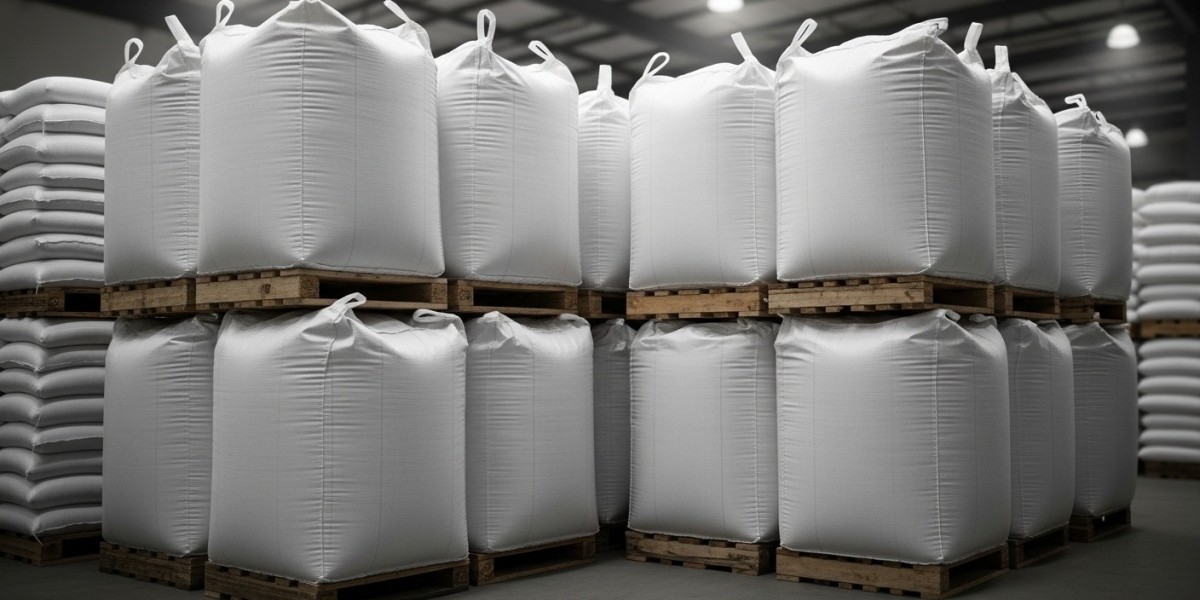


In industries where large volumes of materials must be handled safely and efficiently, packaging is a critical operational component. From agriculture and construction to chemicals, mining, and food processing, jumbo bags—also known as FIBCs (Flexible Intermediate Bulk Containers)—have become the preferred solution for bulk packaging and transportation.
Their strength, flexibility, and cost efficiency make them indispensable in global supply chains. However, to fully benefit from these advantages, it is essential to work with a reliable jumbo bags manufacturer and understand the different FIBC bag types available for specific applications.
What Are Jumbo Bags?
Jumbo bags are large, flexible containers made primarily from woven polypropylene fabric. They are designed to carry dry, flowable materials in quantities typically ranging from 500 kg to 2,000 kg. Despite their large capacity, jumbo bags remain lightweight and easy to handle using forklifts or cranes.
These bags are engineered with features such as lifting loops, filling spouts, discharge spouts, and optional inner liners. This design allows efficient filling, transportation, storage, and discharge while minimizing product loss and handling time.
Why Jumbo Bags Are Widely Used
The increasing adoption of jumbo bags across industries is driven by their operational and economic benefits. Compared to traditional packaging solutions like drums, rigid containers, or small sacks, jumbo bags offer:
Significant reduction in packaging and logistics costs
Faster loading and unloading operations
Efficient use of warehouse and transport space
Lower labor requirements
Reduced risk of material spillage
Reusability and recyclability
These advantages make jumbo bags an ideal choice for companies focused on scalability, efficiency, and sustainability.
Role of a Reliable Jumbo Bags Manufacturer
The performance and safety of jumbo bags depend heavily on manufacturing quality. A trusted jumbo bags manufacturer ensures consistent fabric strength, precise stitching, and compliance with industry standards.
Experienced manufacturers invest in advanced weaving technology, automated cutting and stitching systems, and strict quality control procedures. They conduct thorough testing to ensure bags meet load-bearing, stacking, and safety requirements.
Working with a reliable manufacturer also provides access to customization options, technical guidance, and consistent supply—key factors for industries operating at scale.
Understanding Different FIBC Bag Types
One of the biggest advantages of jumbo bags is the availability of multiple designs tailored to specific materials and environments. Understanding the various FIBC bag types helps businesses select the right solution for safe and efficient operations.
Type A FIBC Bags
Type A jumbo bags are made from standard woven polypropylene fabric without any anti-static or conductive properties. They are suitable for non-flammable products and environments where static electricity is not a concern.
These bags are commonly used for construction materials such as sand, cement, minerals, and aggregates.
Type B FIBC Bags
Type B bags are designed to reduce the risk of dangerous static discharges. While they do not dissipate static electricity completely, they prevent propagating brush discharges.
They are suitable for dry powders with low ignition sensitivity and are often used in controlled industrial environments.
Type C FIBC Bags (Conductive Bags)
Type C jumbo bags are manufactured using conductive threads woven into the fabric. These bags must be grounded during filling and emptying to safely dissipate static electricity.
They are used for flammable powders, chemicals, and hazardous materials where static control is critical.
Type D FIBC Bags (Static-Dissipative Bags)
Type D bags safely dissipate static electricity into the atmosphere without requiring grounding. This makes them ideal for environments where grounding is difficult or impractical.
They are widely used in pharmaceutical, chemical, and specialty material handling applications.
Food-Grade FIBC Bags
Food-grade jumbo bags are produced using virgin polypropylene under hygienic manufacturing conditions. They often include inner liners to prevent contamination and moisture ingress.
These bags are used for sugar, rice, flour, grains, starch, and other food ingredients.
UN-Certified FIBC Bags
UN-certified jumbo bags are designed for transporting hazardous materials and comply with strict international safety regulations. They undergo rigorous testing for load capacity, drop resistance, and stacking performance.
These bags are used for regulated chemicals and hazardous industrial materials.
Industries That Rely on Jumbo Bags
Thanks to their versatility, jumbo bags are used across a wide range of industries:
Agriculture (grains, seeds, fertilizers, animal feed)
Construction (cement, sand, aggregates)
Chemicals and minerals
Food processing and ingredients
Pharmaceuticals
Mining and industrial manufacturing
Their adaptability allows them to meet diverse packaging and handling requirements.
Customization Options in Jumbo Bags
Leading jumbo bags manufacturers offer extensive customization to suit specific applications. Common customization options include:
Bag dimensions and load capacity
Fabric GSM and strength
Coated or uncoated fabric
Inner liners for moisture protection
Filling and discharge spouts
Lifting loop configurations
UV stabilization for outdoor storage
Customization ensures that jumbo bags perform efficiently throughout their lifecycle, from filling to final discharge.
Sustainability and Reusability
Sustainability is an increasingly important consideration in industrial packaging. Jumbo bags support environmentally responsible practices due to their durability and recyclability. Many FIBC bags can be reused multiple times, reducing packaging waste and lowering long-term costs.
Modern jumbo bags manufacturers are also focusing on optimized fabric designs and efficient production processes to reduce material usage while maintaining strength.
Jumbo bags have become a cornerstone of modern bulk packaging and logistics. Their strength, flexibility, and cost efficiency make them indispensable across industries. By understanding the different FIBC bag types and partnering with a trusted jumbo bags manufacturer, businesses can ensure safe handling, regulatory compliance, and long-term operational efficiency.
As global trade and industrial production continue to grow, jumbo bags will remain one of the most reliable and future-ready packaging solutions available today.










