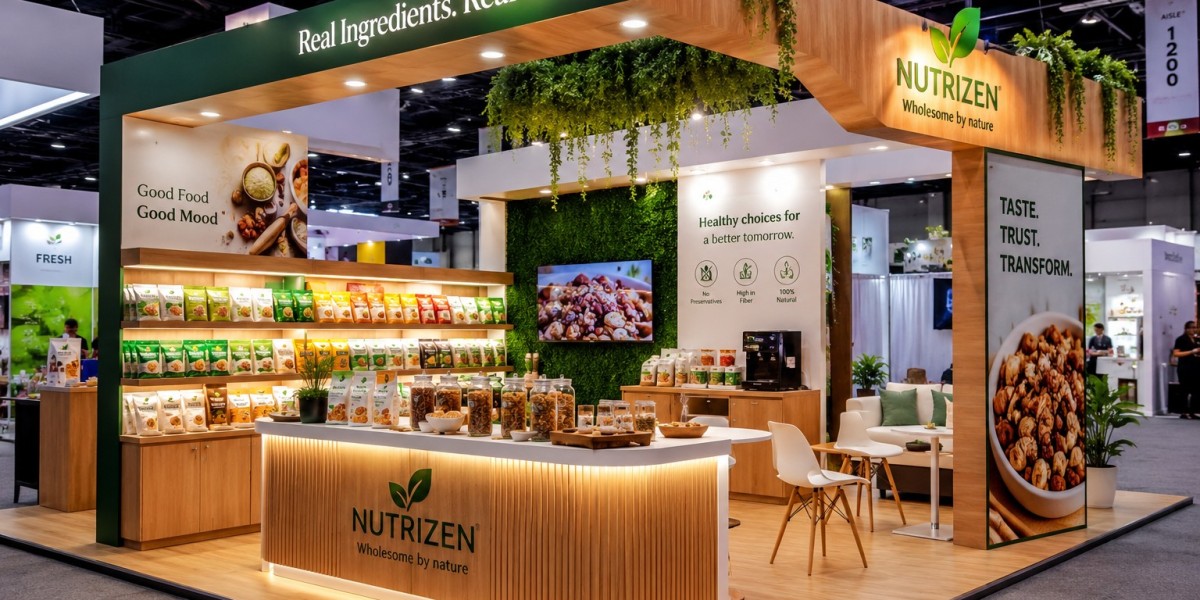


In the competitive food and beverage exhibition environment, attracting visitors requires more than placing products on shelves and putting a company logo on a backdrop. Exhibitors need a booth that creates curiosity, communicates the brand quickly, and gives attendees a reason to stop and interact. A strategic Food industry trade show booth design can combine creative architecture, product presentation, sensory experiences, technology, demonstrations, and hospitality to transform an ordinary exhibit into an engaging brand destination. For companies exhibiting at major events such as the Americas Food & Beverage Show 2026, creative booth planning can help attract qualified buyers, distributors, retailers, and foodservice professionals.
Why Creative Booth Design Matters
Trade show attendees have limited time and countless exhibitors to explore. They naturally gravitate toward booths that look different, feel inviting, or offer something interesting.
Creativity does not necessarily mean building the largest or most expensive booth.
It means designing an environment that makes people curious.
A creative booth can help you:
- Capture attention from the aisle
- Communicate your brand identity
- Highlight important products
- Encourage visitors to enter
- Create memorable experiences
- Generate conversations
- Increase product sampling
- Capture qualified leads
- Encourage social sharing
- Strengthen brand recognition
The best creative ideas should always support your business goals.
1. Create an Oversized Product Display
One of the easiest ways to attract attention is to make a familiar product visually unexpected.
Consider creating an oversized version of your hero product.
For example, a beverage company could display a large-scale bottle or can, while a snack company could create a giant package installation.
Oversized products can become visual landmarks within an exhibition hall.
They also create excellent photo opportunities.
Make sure the display includes clear branding so visitors immediately connect the creative feature with your company.
2. Design a Product Wall
A well-organized product wall can create a powerful visual statement.
Instead of placing products randomly on shelves, arrange them according to a clear theme.
You could organize products by:
- Flavor
- Category
- Packaging
- Product line
- Ingredients
- Market segment
- New versus established products
Use lighting and consistent spacing to make the display look polished.
A product wall can also help visitors understand your entire portfolio at a glance.
3. Build a Branded Tasting Bar
Food and beverage companies have a unique advantage: they can let visitors experience their products directly.
Turn sampling into a memorable experience by creating a branded tasting bar.
Use attractive counters, menu-style signage, product information, and comfortable interaction space.
You could also offer guided tastings.
For example:
Taste 1: Original flavor
Taste 2: New flavor
Taste 3: Premium variation
Staff can explain the differences and ask visitors for feedback.
This creates an easy opening for a sales conversation.
4. Create a Live Cooking Theater
If your products are suitable for cooking applications, consider building a small demonstration theater.
A chef or product specialist can prepare recipes using your products.
Visitors can watch the process and sample the finished result.
Schedule demonstrations throughout the day and advertise the times prominently.
A cooking theater can:
- Attract groups of visitors
- Demonstrate product applications
- Educate buyers
- Encourage sampling
- Generate conversations
- Create memorable experiences
The demonstration area should be positioned so people in the aisle can easily see what is happening.
5. Use an Interactive Ingredient Map
Food brands often have interesting sourcing stories.
Turn yours into an interactive experience.
Create a large map showing where ingredients originate.
Visitors can interact with different regions to learn about:
- Farms
- Suppliers
- Ingredients
- Sourcing practices
- Production facilities
- Regional specialties
This is particularly useful for companies that emphasize origin, authenticity, or responsible sourcing.
A map can transform a technical supply-chain story into an engaging visual experience.
6. Build a Farm-to-Product Story
If your company emphasizes fresh ingredients or responsible sourcing, create a visual journey showing how your product is made.
The journey might include:
Farm → Ingredient → Processing → Packaging → Finished Product
Use photographs, illustrations, physical samples, or digital screens.
This approach helps visitors understand what happens behind the packaging.
It also gives your sales team an easy storytelling framework.
7. Create a Sensory Experience Zone
Food is naturally connected to the senses.
Use that advantage.
A sensory zone could allow visitors to:
- Smell ingredients
- Taste products
- Compare textures
- Explore flavors
- See preparation methods
For example, a spice company could create an aroma wall featuring different ingredients.
A beverage company might create a flavor comparison station.
A specialty food brand could let visitors compare different varieties of the same product.
Sensory experiences can create stronger memories than traditional displays.
8. Add a Recipe Inspiration Wall
A recipe wall can show visitors how your products can be used.
Display attractive food photography alongside short recipes or serving suggestions.
You can organize recipes according to:
- Breakfast
- Lunch
- Dinner
- Snacks
- Desserts
- Cocktails
- Foodservice applications
Include QR codes that allow visitors to save or download recipes.
This makes the display useful even after the trade show ends.
9. Use Interactive Touchscreens
Touchscreens can help visitors explore your product range without requiring dozens of printed materials.
An interactive catalog might allow users to browse products by category, application, flavor, packaging, or market.
You can also include:
- Product specifications
- Ingredient information
- Videos
- Recipes
- Certifications
- Packaging details
- Contact information
Keep the interface simple.
Visitors should be able to understand how to use it immediately.
10. Create a Product Discovery Game
Games can encourage visitors to interact with your brand.
For food companies, consider games based on:
- Ingredient identification
- Flavor matching
- Product trivia
- Brand history
- Food knowledge
- Packaging recognition
Keep the game short.
A visitor should be able to participate within a few minutes.
You can offer a small branded giveaway as an incentive, but the experience should remain connected to your products.
11. Build a Photo-Friendly Installation
Create something that visitors genuinely want to photograph.
Ideas include:
- Oversized food replicas
- Creative product sculptures
- Branded walls
- Artistic ingredient displays
- Interactive installations
- Unique seating areas
Make sure your company name and logo are naturally visible.
Visitors may share their photographs on social platforms, giving your booth additional exposure.
12. Use Hanging Signs for Maximum Visibility
If exhibition regulations and booth configuration allow, overhead signage can dramatically improve visibility.
A hanging sign can help attendees locate your booth from a distance.
Use:
- Large logos
- Short brand messages
- Distinctive shapes
- Illuminated elements
Avoid placing too much information on an overhead sign.
Its primary purpose is identification and attraction.
13. Create a Comfortable Lounge
Not every visitor wants to stand while talking.
A comfortable lounge can encourage longer conversations.
Use seating that matches your brand identity.
You could create:
- A modern café
- A premium tasting lounge
- A casual hospitality area
- A private meeting zone
For food and beverage brands, refreshments can make the area even more inviting.
The lounge should still maintain a connection with the main product display.
14. Create a Dedicated New Product Zone
New products deserve special attention.
Instead of placing a new product somewhere among an existing portfolio, give it a dedicated area.
Use:
- Strong lighting
- Large product imagery
- Clear launch messaging
- Sampling
- Product demonstrations
- Digital information
You can also schedule a formal product reveal.
This can create excitement among buyers and distributors.
15. Design a Custom Packaging Display
Packaging is an important part of food marketing.
Create a display that shows your packaging in an artistic or unexpected way.
For example, arrange products in a gradient of colors or build a three-dimensional installation from packaging units.
If packaging innovation is a major selling point, explain what makes the packaging different.
You could highlight convenience, sustainability, durability, shelf appeal, or functionality.
16. Use Strategic Lighting
Lighting can dramatically change how a booth looks.
Use lighting to emphasize important areas instead of illuminating everything equally.
Highlight:
- Hero products
- Logos
- Product walls
- Demonstration areas
- Architectural features
- New products
Backlit graphics can attract attention from the aisle.
Accent lighting can make a premium product display more sophisticated.
Good lighting also helps photography and video content look better.
17. Create an Interactive Sustainability Display
If sustainability is central to your brand, make the topic interactive.
For example, visitors could explore:
- Packaging materials
- Sourcing practices
- Waste reduction
- Production processes
- Recycling initiatives
Use digital screens or physical samples to explain the story.
Instead of simply saying that your company is sustainable, show visitors what your company actually does.
Specific information is more meaningful than generic claims.
18. Create a “Meet the Maker” Area
Personal stories can make food brands more relatable.
Create a small area where visitors can learn about the people behind your products.
You could feature:
- Founders
- Chefs
- Product developers
- Farmers
- Food scientists
- Production specialists
Use photographs and short stories.
If possible, schedule live conversations with company representatives.
People often remember brands more easily when they can connect with the people behind them.
19. Combine Technology With Physical Products
The most effective modern booths do not necessarily choose between technology and physical displays.
They combine them.
For example:
Physical product → Touchscreen → Product video → Sample → Sales conversation
A visitor sees a product, explores its information digitally, watches how it is made, tastes it, and then speaks with a representative.
This creates a complete experience.
Technology should enhance the product rather than distract from it.
20. Build a Memorable Brand Landmark
If your booth has enough space, create one major feature that visitors can recognize from across the exhibition hall.
This could be:
- A large branded structure
- An unusual architectural element
- An oversized product
- A dramatic product wall
- A creative hanging installation
- A distinctive illuminated feature
The landmark becomes the visual identity of your booth.
Everything else should support it.
How to Choose the Right Creative Ideas
You do not need to use every creative idea in one booth.
Too many features can make the space crowded and confusing.
Instead, choose ideas according to your objectives.
If Your Goal Is Product Sampling
Focus on:
- Tasting bars
- Demonstrations
- Sensory stations
- Recipe displays
If Your Goal Is Brand Awareness
Focus on:
- Large visual installations
- Strong branding
- Storytelling
- Photo opportunities
If Your Goal Is Lead Generation
Focus on:
- Interactive product catalogs
- Demonstrations
- Meeting areas
- Digital lead capture
If Your Goal Is Product Launch
Focus on:
- Dedicated launch zones
- Product reveals
- Sampling
- Interactive displays
Creative design works best when every element has a clear purpose.
Keep the Visitor Journey Simple
A creative booth should still be easy to navigate.
Think about the visitor journey:
Attract → Enter → Explore → Interact → Discuss → Connect
Your main visual feature should attract people from the aisle.
The entrance should feel open.
Products should be easy to discover.
Interactive elements should be simple.
Staff should be visible and approachable.
Lead capture should be convenient.
This structure ensures creativity contributes to business results.
Train Your Booth Staff
Even the most creative exhibit cannot perform well without an effective team.
Train staff members before the event.
They should understand:
- Key products
- Brand messages
- Product benefits
- Target customers
- Sampling procedures
- Interactive features
- Lead qualification
- Follow-up processes
Encourage staff to ask questions rather than immediately delivering a sales pitch.
For example:
“What type of products are you currently sourcing?”
“What category are you most interested in?”
“Would you like to try our newest product?”
These questions can create more natural conversations.
Make Creativity Measurable
Creative design should ultimately contribute to measurable outcomes.
Track:
- Booth traffic
- Qualified leads
- Product samples distributed
- Demonstration attendance
- Product inquiries
- Meetings scheduled
- QR code scans
- Social media mentions
- Follow-up opportunities
Compare the performance of different interactive elements.
If the tasting station generates more qualified conversations than a digital game, you may want to prioritize tastings at future events.
The goal is not simply to create the most entertaining booth.
The goal is to create the most effective booth for your business.
Common Creative Booth Design Mistakes
Creativity can become counterproductive when it lacks strategy.
Too Many Features
A booth packed with activities can overwhelm visitors.
Weak Branding
A beautiful installation has little value if attendees cannot identify the company behind it.
Difficult Navigation
Visitors should be able to enter and move through the booth easily.
Unclear Messaging
Creative visuals should not replace clear communication.
Poorly Managed Sampling
Food demonstrations and tastings require careful organization and hygiene.
Technology Overload
Digital features should support the experience rather than dominate it.
No Follow-Up Strategy
Attracting visitors is only the first step.
Make sure your team has a clear process for continuing conversations after the show.
Preparing for the Americas Food & Beverage Show 2026
Companies planning to exhibit at the Americas Food & Beverage Show 2026 should begin booth planning early.
Start by identifying your objectives.
Determine which products deserve the most attention and understand who you want to attract.
Then choose creative elements that support those goals.
For example, a company launching a new beverage could combine an oversized product display, branded tasting bar, interactive product information, and a comfortable buyer meeting area.
A specialty food company could use an ingredient map, sensory station, recipe wall, and storytelling display.
The right combination depends on your products, audience, space, and objectives.
Early planning also provides time for design revisions, graphics production, logistics, product preparation, staff training, and technical testing.
Choosing an Experienced Booth Builder
Creative concepts need to be transformed into safe, functional, and practical exhibition structures.
An experienced booth builder can help with design development, materials, graphics, lighting, technology, installation, dismantling, and logistics.
When evaluating potential partners, review their previous work and ask whether they have experience creating interactive food and beverage exhibits.
Look for a partner who can balance creativity with practical considerations such as visitor flow, storage, product handling, electrical requirements, branding, and event regulations.
Final Thoughts
Creative booth design can help food and beverage brands stand out in crowded exhibition halls. From oversized product displays and tasting bars to interactive ingredient maps, live cooking demonstrations, sensory experiences, photo installations, digital catalogs, and storytelling walls, there are many ways to give visitors a reason to stop and engage.
The most effective creative ideas are not simply visually impressive. They support your brand message, showcase your products, encourage conversations, and create measurable opportunities. A well-designed booth should make the visitor journey feel natural—from discovering your brand to experiencing your products and ultimately connecting with your team.
For companies preparing for the Americas Food & Beverage Show 2026, choosing the right design and booth-building partner can help turn creative concepts into a professional exhibition experience. Explore Food industry trade show booth design options to create a distinctive booth that attracts visitors, strengthens your brand, and supports meaningful trade show results.






