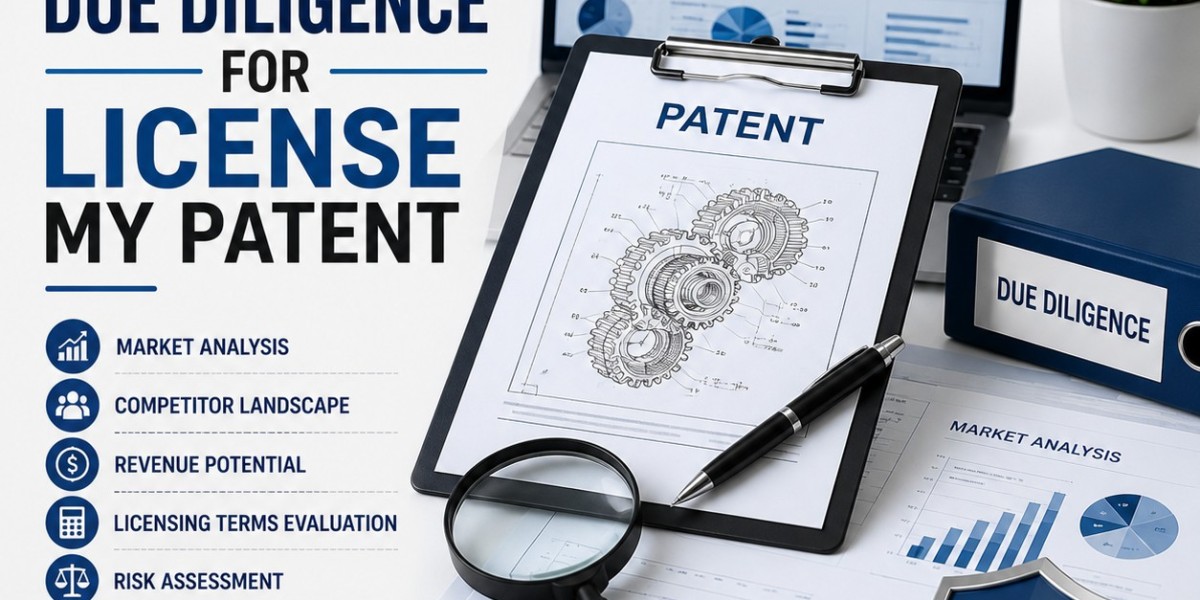


When an inventor decides to License My Patent, finding an interested company may feel like the biggest achievement. However, a serious licensing discussion goes beyond technical quality. The potential partner also wants to know whether the invention has a real market, who the competitors are, what customers may pay and whether the technology can generate sustainable revenue. This is where commercial due diligence becomes important, particularly for inventors and startups entering India’s competitive business environment.
Understanding the Market Before You License My Patent
Commercial due diligence starts with understanding where the patented technology fits in the market. An inventor may have developed an excellent product, but its commercial potential depends on customer demand, existing alternatives and industry trends. Research can reveal whether businesses are actively looking for such a solution or whether the market still needs to be educated.
Competition also deserves close attention. A potential licensee may examine competing products, substitute technologies and the advantages offered by the patented invention. Pricing, target customers, distribution channels and possible market size can influence how attractive the patent becomes during negotiations. A clear commercial picture helps both parties avoid unrealistic expectations.
Evaluating Opportunities Through Patent Monetization Strategies
Once market potential is understood, the next question is how the patent can create financial value. Patent Monetization Strategies may include licensing the technology, transferring rights, forming strategic partnerships or entering different markets through commercial agreements. The most suitable option depends on the invention, business model and objectives of the patent owner.
For example, an Indian startup with a patented industrial solution may not have the capital to manufacture and distribute the product across the country. Licensing can allow an established company to handle production and sales while the patent owner earns agreed payments or royalties. A patent monetization platform may also help connect intellectual property owners with businesses searching for commercially useful technologies.
Making a Better Licensing Decision
Commercial due diligence gives inventors a stronger foundation for negotiations. It can help establish realistic expectations about pricing, royalties, market demand and the responsibilities of both parties. It may also reveal whether a potential licensee has the resources and market reach needed to successfully commercialise the invention.
Before signing an agreement, understanding Patent Acquisition Meaning is also useful because some companies may prefer purchasing patent rights instead of entering a licensing arrangement. At the same time, reviewing Patent Monetization Strategies can help an inventor compare licensing with other commercial options. When market evidence supports the technology, a well-prepared patent becomes more than legal protection—it can become a valuable business asset with genuine commercial potential.






