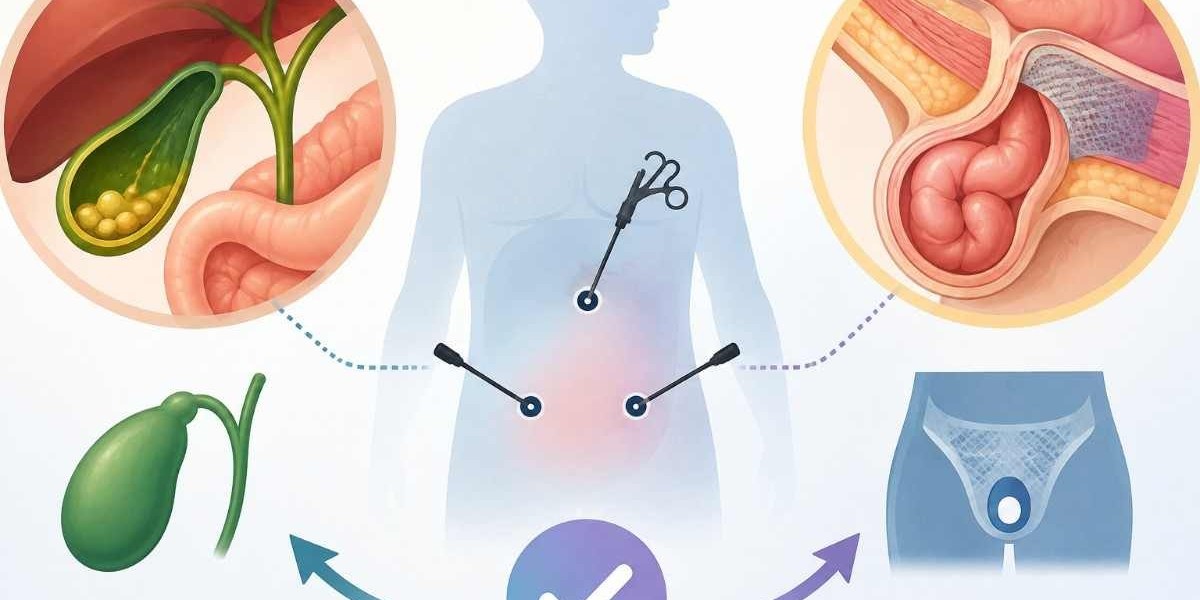


It is possible for a patient to have two unrelated surgical problems at the same time. Gallstones and an inguinal hernia are a good example. One affects the gallbladder, while the other involves weakness in the abdominal wall. This naturally raises a common question: Can gallbladder surgery and hernia repair be performed during the same operation?
In selected patients, the answer can be yes. Research has specifically examined simultaneous laparoscopic cholecystectomy and laparoscopic inguinal hernia repair. A systematic review published in 2025 analysed 10 studies involving 199 patients and found that combined surgery can be a safe and effective option for appropriately selected patients. However, the decision needs to be individualised rather than based simply on having both conditions.
Why Might Two Surgeries Be Combined?
When a patient has symptomatic gallstones and a hernia that also requires repair, performing both procedures in one planned operation may have practical advantages.
Instead of having:
- One admission for gallbladder surgery
- A separate recovery period
- Another hospital visit
- Another anaesthetic
- Another interruption to work and daily activities
the surgical team may consider addressing both conditions during the same operative session.
The 2025 systematic review reported operative times ranging from 55 to 157 minutes across the included studies, while hospital stays ranged from one to four days. The review also found no reported deaths or mesh infections among the included cases.
These findings are encouraging, but they should not be interpreted as a guarantee that combined surgery is appropriate or risk-free for every patient.
What Does the Research Actually Say?
One of the most useful pieces of evidence is the systematic review published in the Journal of Laparoendoscopic & Advanced Surgical Techniques. The researchers evaluated available evidence on simultaneous laparoscopic cholecystectomy and laparoscopic inguinal hernia repair.
Across the 10 studies, the overall reported complication rate was 22%, with seroma or haematoma being among the more common complications. Importantly, the review reported no mortality and no cases of mesh infection in the included studies. The authors concluded that simultaneous procedures may be considered a safe and effective option in appropriately selected patients.
An earlier clinical study involving patients undergoing both procedures also reported no mesh-related infections during follow-up. Most patients were discharged within 24 hours, although the study was relatively small and should be interpreted in that context.
So, the evidence is promising—but it is not a reason to automatically combine operations.
Who May Be Suitable for Combined Surgery?
There is no universal checklist that determines whether two procedures should always be performed together.
A surgeon may consider factors such as:
- The severity of gallbladder symptoms
- Whether the gallstones are causing recurrent problems
- Type and size of the hernia
- Whether the hernia is symptomatic
- Previous abdominal operations
- Overall health
- Diabetes and other medical conditions
- Body weight
- Previous infections or complications
- Anaesthesia risk
- Whether both procedures can be safely completed laparoscopically
This is why consultation with an experienced general surgeon in Dehradun is important before making a decision.
For example, a small, uncomplicated hernia in a patient undergoing gallbladder surgery may be approached differently from a large, complicated or incarcerated hernia.
Does Combining the Procedures Increase the Risk of Mesh Infection?
This is one of the biggest concerns patients have.
Hernia repair may involve placing surgical mesh to reinforce the abdominal wall. Because gallbladder surgery can involve contamination concerns, patients often wonder whether performing both procedures together could increase the chance of mesh infection.
Available research is reassuring but limited. The 2025 systematic review found no reported mesh infections among the 199 patients included in its analysis. Earlier clinical data also reported no mesh-related infection during follow-up.
However, this does not mean the risk is zero.
The condition of the gallbladder matters. Elective surgery for uncomplicated gallstone disease is different from emergency surgery involving severe inflammation, infection or perforation.
The surgeon must therefore assess the individual circumstances before deciding whether combining procedures is appropriate.
What Could Be the Benefits?
For a suitable patient, combined surgery may offer several practical benefits.
One anaesthetic
Both procedures may potentially be completed during the same anaesthetic rather than requiring two separate operations.
One recovery period
Patients may be able to recover from both procedures at the same time.
Fewer hospital visits
Combining planned procedures may reduce repeated admissions and appointments.
Potential cost savings
The evidence also suggests that performing the procedures together may reduce overall treatment costs in selected situations. One earlier study reported lower costs when both operations were performed simultaneously rather than separately.
However, cost should never be the only reason to combine surgery. Patient safety and the appropriateness of the procedure come first.
What If the Gallbladder Is Inflamed?
This is where the decision becomes more complicated.
A patient with uncomplicated gallstones may have a very different surgical risk profile from someone with acute cholecystitis, gallbladder perforation or another active infection.
In such situations, the surgeon may decide that combining the procedures is not appropriate.
The sequence of procedures can also matter. The 2025 systematic review noted that the optimal sequence remains debatable.
This is one reason patients should not compare their treatment plan directly with someone else's experience.
Choosing the Right Surgeon Matters
When searching for the best gallbladder surgeon in Uttarakhand, patients should look beyond promotional claims. Ask about the surgeon's qualifications, relevant surgical experience, the proposed technique and why a particular approach is appropriate for your condition.
Similarly, someone searching for the best hernia surgeon in Dehradun should consider whether the surgeon routinely evaluates different types of hernias and can explain both laparoscopic and open options where appropriate.
Dr. Uday Shankar Baluni is a General & Laparoscopic Surgeon whose professional profile includes gastrointestinal and laparoscopic surgical care. His qualifications include MBBS from Government Medical College, Haldwani, and an MS in General Surgery from Baroda Medical College.
For patients looking for a Gallbladder Surgeon Dehradun, the important step is not simply choosing a doctor based on the word “best.” It is getting an appropriate evaluation and understanding why a particular surgical plan has been recommended.
FAQs:
1. Can gallbladder surgery and hernia repair really be done together?
Yes, they can be performed together in selected patients, particularly when both conditions can be safely managed laparoscopically. Research suggests that simultaneous surgery can be a reasonable option, but suitability must be assessed individually.
2. Is combined surgery safer than having two separate operations?
Not necessarily for everyone. Combining procedures can reduce repeated anaesthesia and recovery periods, but it also means a longer or more complex operative session. The decision depends on the patient's health and surgical circumstances.
3. Will having gallbladder surgery at the same time increase mesh infection risk?
Current evidence is reassuring, with no mesh infections reported in the 199-patient systematic review. However, the risk cannot be considered zero, particularly when infection or severe gallbladder inflammation is present.
4. How long does combined gallbladder and hernia surgery take?
Published studies in the systematic review reported operative times ranging from approximately 55 to 157 minutes. Actual operating time varies according to the patient's anatomy, the complexity of each condition and the surgical technique used.
5. Will I need to stay in the hospital longer?
Hospital stays in the reviewed studies generally ranged from one to four days. Your actual stay depends on your recovery, medical condition and whether any complications occur.
6. Can every type of hernia be repaired during gallbladder surgery?
No. The type, size, location and complexity of the hernia all matter. Some patients may be better treated with a separate procedure or a different surgical approach.
7. Should I ask my surgeon about combining both operations?
Yes. If you have both symptomatic gallstones and a hernia that requires treatment, discuss the possibility with your surgeon. Ask about the benefits, risks, alternatives and why combining the procedures is—or is not—appropriate for you.
The Bottom Line
Current research suggests that gallbladder surgery and hernia repair can be performed together in carefully selected patients, particularly when both procedures can be safely approached laparoscopically. The available evidence is encouraging, including the absence of reported mesh infections in the 2025 systematic review, but the evidence base remains relatively small.
The right decision depends on the patient's symptoms, medical history, gallbladder condition, type of hernia and overall surgical risk—not simply on convenience.
If you are in Dehradun, Uttarakhand and have been diagnosed with gallstones, a hernia or both, discuss your options with a qualified surgeon before deciding on treatment. Dr. Uday Shankar Baluni can assess the individual circumstances and explain whether laparoscopic or another surgical approach may be appropriate.
If you are considering treatment, Contact Us to discuss your symptoms and arrange a consultation.
For patients looking for a general surgeon in Dehradun or evaluating options for gallbladder and hernia treatment, an individual surgical assessment is the safest way to determine the right approach. If you have reports or previous scans, bring them to your consultation so your surgeon can review the findings in context.
Contact Us for consultation and further guidance regarding gallbladder, hernia and other gastrointestinal surgical conditions.
Medical disclaimer: This article is for general educational purposes and does not replace an examination, diagnosis or personalised treatment recommendation from a qualified healthcare professional.