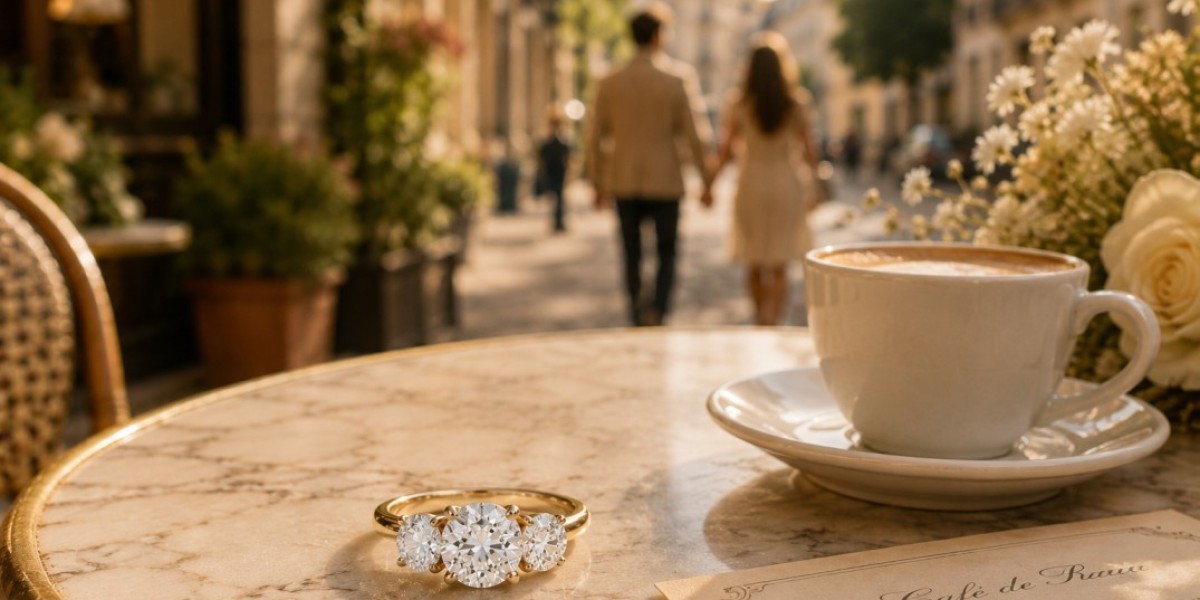


Choosing the right diamond color can change how a ring looks on your hand. This is especially true when a ring has three diamonds sitting side by side. You want the stones to look balanced, clean, and naturally matched rather than having one stone appear noticeably different from the others.
When shopping for a three-stone design, diamond color is only one part of the decision, but it is an important one. The right color grade can help the center stone stand out while keeping the side stones visually connected.
Understanding Diamond Color
Diamond color refers to how much yellow or brown tint can be seen in a diamond. The standard grading scale runs from D to Z.
Diamonds graded D, E, and F are considered colorless. G through J fall into the near-colorless range and can still look very bright when set in a ring.
For a three-stone ring, you do not always need the highest color grade. A well-selected G or H color can offer a clean appearance while giving you more flexibility with your budget.
The most important thing is how the three stones look together. A single diamond may look beautiful on its own, but when three stones are placed next to each other, differences in color can become easier to notice.
Which Color Grade Works Best?
For many buyers, G, H, or F can be a practical choice.
D–F: A Very Clean Look
D, E, and F diamonds have very little visible color. They can be a good choice if you want the three stones to have a crisp, bright appearance.
D color is at the top of the grading scale, but choosing it does not automatically mean the ring will look better than one made with a slightly lower grade. Once diamonds are mounted, the difference between some higher color grades can be difficult to see without professional equipment.
If your budget allows it and color is one of your biggest priorities, an F or E color combination can be worth considering.
G–H: A Balanced Choice
G and H diamonds are popular because they can look very close to colorless while often costing less than higher grades.
This range can work particularly well for a three-stone ring because it gives you room to focus on other details, such as cut quality, carat weight, and matching the three stones.
For many engagement rings, an H color diamond can look bright and clean once it is set. G can be a good middle ground if you want a little more color protection without moving to the highest grades.
I–J: A Warmer Appearance
I and J diamonds can show a little more warmth, especially when viewed from the side. That does not mean they look unattractive. In fact, some people prefer a slightly warmer diamond because it can give the ring a softer appearance.
However, matching becomes more important when using three stones. If the center is an I color while the side diamonds are noticeably whiter, the difference may catch your eye.
Should All Three Diamonds Have the Same Color?
Not necessarily, but matching them closely is usually the safer choice.
The center diamond is normally larger than the two side stones. Because larger diamonds can show body color more easily, some buyers choose a center stone that is one grade higher than the side stones.
For example, you might choose an F center diamond with G side stones or a G center with H side stones. The difference should remain subtle enough that the stones still look like part of the same ring.
The goal is not simply to make every number identical. The goal is to create a combination that looks balanced when the diamonds are viewed together.
How Your Ring Metal Changes the Look
The metal color can influence which diamond color works best.
White Gold and Platinum
White metals can make diamond color easier to notice because there is less warmth around the stones. If you are choosing white gold or platinum, staying within a higher color range can help maintain a consistent appearance.
G and H can still work very well, especially when the diamonds have strong cut quality.
Yellow Gold
Yellow gold can make slightly warmer diamonds feel more natural within the overall design. You may have more flexibility with G, H, or even I color stones depending on the setting and personal preference.
A warm diamond against yellow gold can create a soft contrast that many people enjoy.
Rose Gold
Rose gold adds its own pinkish tone, so slightly warmer diamonds can sometimes blend nicely with the setting. Still, the diamond should be chosen based on how much color you personally want to see.
Cut Can Matter More Than Color
It is easy to focus heavily on color when comparing diamonds, but cut quality has a major effect on how a diamond looks.
A well-cut diamond can appear bright and lively even when it is not at the very top of the color scale. On the other hand, a poorly cut diamond may look dull despite having a high color grade.
For a three-stone design, look at the three diamonds as a group. Their proportions, shape, and overall appearance should work together.
This is particularly important when the center and side stones have different sizes. A small difference in color may be less noticeable when the diamonds have similar visual qualities.
What About Lab Grown Diamonds?
Lab grown diamonds follow the same color grading system as mined diamonds. You can find them across the same D-to-Z scale.
This gives you plenty of options when creating a three-diamond engagement ring. Choosing a G, H, or F color can allow you to put more of your budget toward a larger center stone or better cut quality.
If you are considering a lab grown three-stone design, compare the actual diamonds rather than choosing based only on the color letter.
A Simple Way to Choose
If you are unsure where to begin, use this simple approach:
- Choose D–F if you want a very white appearance and color is a top priority.
- Choose G–H if you want a good balance between appearance and budget.
- Consider I–J if you like a warmer look and the stones are carefully matched.
- Keep the three diamonds close in color when possible.
- Consider your ring metal before choosing the final color grade.
- Give serious attention to cut quality, not just color.
Most importantly, look at the three stones together. A beautiful center diamond will not feel quite right if the side stones look noticeably different.
Finding the Right Combination
There is no single diamond color that works for every person or every setting. Your choice should reflect the metal, diamond shape, budget, and the amount of warmth you want to see.
Discover three diamond engagement ring designs to compare different three-stone styles and see which combination feels right for your ring.
A well-matched three stone ring should feel like one complete design, with the center stone naturally connected to its side diamonds. At Antiquecut, you can explore ring styles and consider how diamond color, shape, and setting work together before making your choice.
Final Thoughts
The best diamond color is the one that gives you the look you want without forcing you to spend more than necessary. D–F offers a very white appearance, while G–H can provide an excellent balance for many buyers. Warmer grades can also work when they are selected carefully.
For a ring with three diamonds, matching matters just as much as the individual color grade. Take a moment to compare the stones together, consider the metal, and pay attention to cut quality. When those details work together, your ring can feel personal, balanced, and right for you.









