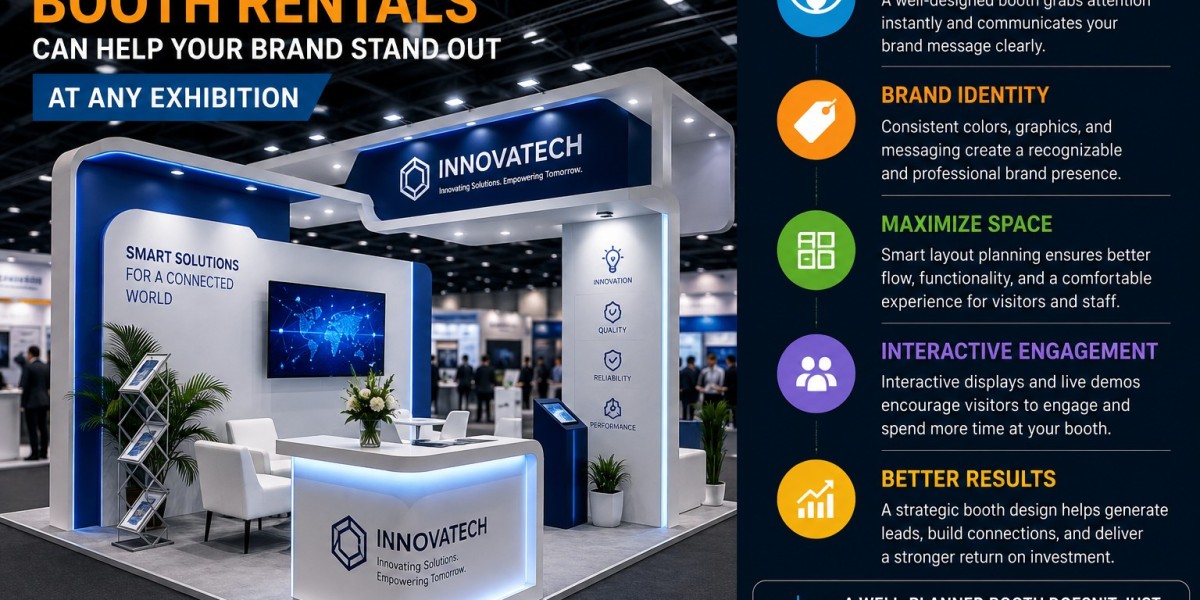


Trade shows offer businesses a valuable opportunity to connect with potential customers, introduce products, and strengthen brand visibility. However, having a booth at an exhibition does not automatically guarantee strong results. The way your booth looks, communicates, and guides visitors can have a major influence on engagement. A professional trade show display design can help your brand attract attention and create a better visitor experience, but several common design mistakes can reduce its effectiveness. Understanding these mistakes before your next event can help you create a display that is more attractive, functional, and focused on your business goals.
Why Display Design Matters at Trade Shows
Exhibition halls are highly competitive environments. Visitors are surrounded by company logos, product displays, promotional messages, digital screens, and sales teams. With so much information competing for attention, exhibitors have only a limited opportunity to make an impression.
Your booth needs to communicate your brand and value proposition quickly. If visitors cannot understand what your company does or why they should stop, they may simply continue walking.
Good design helps solve this problem by creating a clear visual identity, strong messaging, accessible layout, and engaging experience.
Mistake 1: Trying to Say Too Much
One of the most common exhibition display mistakes is including too much information.
Businesses often want to explain every product, service, feature, achievement, and benefit. The result can be a booth filled with long paragraphs and small text.
Trade show visitors usually do not have time to read large amounts of information while walking through the exhibition hall.
Instead, focus on your most important message. Use a strong headline and supporting visuals to communicate your primary value proposition.
Detailed information can be provided through conversations, brochures, videos, demonstrations, or digital resources.
Mistake 2: Using Weak or Low-Quality Graphics
Your booth represents your company, so poor-quality graphics can negatively affect how visitors perceive your brand.
Blurry images, inconsistent typography, poor contrast, and outdated visual styles can make the display appear unprofessional.
Invest in high-resolution graphics that are designed specifically for the size and viewing distance of the booth.
Make sure your text is large enough to read and your images remain clear when printed at a large scale.
Mistake 3: Ignoring Brand Consistency
Your trade show booth should look like your company.
Using colors, fonts, imagery, and messaging that are completely different from your existing brand identity can confuse visitors.
Consistent branding helps attendees connect your exhibition presence with your website, advertising, products, and other marketing channels.
Use your established brand guidelines wherever possible. If you introduce new design elements, make sure they complement rather than compete with your identity.
Mistake 4: Creating a Cluttered Layout
More does not always mean better.
Adding too many products, displays, tables, banners, screens, furniture pieces, and promotional materials can make a booth feel crowded.
A cluttered space can also make it difficult for visitors to move around.
Leave enough open space for people to enter and explore. Give important products and messages room to stand out.
A clean layout often feels more professional and inviting than an overcrowded one.
Mistake 5: Making the Booth Difficult to Enter
Visitors should feel comfortable walking into your booth.
Large furniture pieces or physical barriers placed near the entrance can create an unwelcoming environment.
An open entrance can make it easier for attendees to explore your products and interact with your team.
Think about your booth from the perspective of someone walking through the aisle. Ask yourself whether the space looks accessible or whether it appears as though visitors need an invitation to enter.
Mistake 6: Poor Use of Lighting
Lighting can have a significant impact on booth visibility, yet it is sometimes treated as an afterthought.
A display with insufficient lighting may make graphics and products difficult to see. Poorly positioned lights can also create distracting shadows or glare.
Use lighting strategically to highlight important features and create a comfortable environment.
Your main branding, products, demonstration areas, and meeting spaces should all receive appropriate illumination.
Mistake 7: Choosing the Wrong Message
Your booth should quickly answer an important question for visitors: “Why should I care?”
A company-focused message that only talks about the business may not be enough.
Instead, communicate the value you provide. Highlight the problems you solve, the benefits you deliver, or what makes your offering different.
A clear customer-focused message can create stronger curiosity and encourage visitors to start a conversation.
Mistake 8: Depending Too Much on Technology
Technology can make a booth more engaging, but it is not a substitute for a good strategy.
Some exhibitors install large screens or interactive displays simply because they look impressive. If the technology does not help visitors understand the brand or product, it may become an expensive distraction.
Use technology when it has a clear purpose.
A touchscreen that helps visitors explore products can be valuable. A digital display that simply plays generic promotional content may have a much smaller impact.
Mistake 9: Forgetting About Visitor Flow
A booth should have a logical flow.
Visitors need to know where to enter, what to explore, where to find information, and how to engage with staff.
Poorly positioned displays can create bottlenecks. Meeting areas that block walkways can make the booth uncomfortable.
Plan the layout around actual visitor movement. Leave enough space for people to stop, watch demonstrations, and have conversations without disrupting others.
Mistake 10: Not Creating a Clear Focal Point
A booth without a focal point can struggle to attract attention.
When every graphic, product, and display element has equal visual importance, visitors may not know where to look first.
Create one or two dominant elements. This could be a product, headline, branded structure, video wall, or interactive experience.
The focal point should communicate something important about your brand.
Mistake 11: Ignoring Seating and Conversation Areas
Trade shows are relationship-building environments.
If your booth has no comfortable place for conversations, your team may struggle to turn visitor interest into meaningful discussions.
Include seating or consultation areas where appropriate. These spaces do not need to be large, but they should be comfortable and positioned away from the busiest visitor paths.
A well-planned meeting area can make your booth more useful for sales conversations.
Mistake 12: Displaying Everything You Sell
Trying to showcase your entire product range can make the booth confusing.
Instead, identify the products or services that are most relevant to the exhibition audience.
Give your strongest offerings more space and visibility. Organize supporting products into clear categories.
Visitors should be able to understand what you want them to focus on without searching through dozens of displays.
Mistake 13: Using Weak Calls to Action
Attracting visitors is only part of the process.
Once someone is interested, your booth should provide a clear next step. Without a call to action, visitors may look around and leave without engaging.
Use simple actions such as scheduling a meeting, requesting a demonstration, scanning a QR code, speaking with a representative, or receiving additional information.
Make the action visible and easy to complete.
Mistake 14: Forgetting About Staff Positioning
Even a well-designed booth can perform poorly if staff members are positioned incorrectly.
Team members should be approachable and ready to greet visitors. They should avoid standing together in groups that make the booth feel closed to outsiders.
Staff should also avoid spending excessive time on phones or having private conversations while visitors are nearby.
The booth design and staff behavior should work together to create a welcoming environment.
Mistake 15: Ignoring the Audience
A display should be designed around the people attending the event.
A highly technical audience may want detailed demonstrations, while senior decision-makers may prefer concise information and private conversations.
Research the event audience before finalizing your design.
Understanding visitor expectations can help you choose the right message, layout, technology, and interaction style.
Mistake 16: Failing to Plan for Different Distances
Your display needs to work at multiple viewing distances.
From far away, visitors should recognize your company and main message. As they approach, they should be able to see supporting information and product details.
This requires careful planning of graphic sizes and visual hierarchy.
Large elements should communicate the broad message, while smaller details can provide additional information for people who have already stopped.
Mistake 17: Treating the Booth as Decoration
A trade show booth should be more than a visually attractive structure.
Every element should contribute to your marketing objectives.
Ask why each graphic, product display, screen, furniture piece, and interactive feature is included.
If an element does not support your message or visitor experience, consider removing it.
Purpose-driven design is often more effective than decoration for its own sake.
Mistake 18: Not Considering the Entire Visitor Experience
Your booth should guide visitors through a logical journey.
They should first notice your brand, then understand your message, explore your offering, interact with your team, and receive a clear next step.
If any part of this experience is confusing, you may lose potential opportunities.
Consider the entire journey when reviewing your design rather than focusing only on individual components.
Mistake 19: Waiting Until the Last Minute
Exhibition planning involves many details.
Graphics, booth construction, technology, furniture, shipping, installation, electrical requirements, and event deadlines all need to be coordinated.
Starting too late can limit your choices and increase the risk of mistakes.
Begin the design process early so you have enough time for revisions, production, testing, and logistics.
Mistake 20: Failing to Measure Results
After the event, many businesses focus only on how attractive their booth looked.
Appearance is important, but performance matters too.
Track leads, meetings, product demonstrations, QR code scans, visitor interactions, and other relevant metrics.
Ask your team what worked and what did not.
This information can help you make better design decisions for future exhibitions.
How to Avoid These Mistakes
The best way to avoid common booth design problems is to start with a clear strategy.
Define your goals, understand your audience, develop concise messaging, and create a layout around visitor behavior.
Then select graphics, lighting, technology, furniture, and other elements that support those objectives.
Professional exhibit specialists can also help you identify potential problems before production and ensure that the final booth works both visually and practically.
Build a Booth That Supports Your Brand
A successful exhibition presence should feel like a physical extension of your company.
Your branding should be recognizable, your message should be clear, and your products or services should be presented in a way that makes sense to visitors.
When the design, staff, technology, and messaging all work together, your booth can become a more effective marketing environment.
Conclusion
Avoiding common booth design mistakes can make a significant difference in exhibition performance. Excessive text, weak graphics, cluttered layouts, poor lighting, confusing messaging, unnecessary technology, and limited visitor access can all reduce engagement.
A thoughtful trade show display design focuses on clarity, accessibility, brand consistency, visitor experience, and measurable business objectives. The goal is not simply to create the biggest or most elaborate booth, but to create a space that attracts the right people and encourages meaningful interactions.
If you are preparing for an upcoming event, professional planning can help you avoid costly design problems and create a display that represents your brand effectively. Explore trade show display design solutions to create a polished, engaging, and strategically planned booth for your next exhibition.









