

Introduction
Drought is one of the most important environmental topics children can learn about, yet it is also one of the most difficult to explain. Young children often associate drought with a simple lack of rain or a few hot summer days. They may not realize that drought can affect groundwater, wells, rivers, farms, wildlife, household water supplies, and entire communities for months or even years.
Unlike floods or storms, drought develops slowly. There are often no dramatic scenes to show children what is happening beneath the ground. Water levels quietly drop, reservoirs shrink, crops struggle, and wells may eventually stop producing enough water. Because much of this process is invisible, children may find it difficult to understand why people suddenly need to conserve water.
This is where drought books for children become invaluable. Stories transform scientific concepts into personal experiences that children can understand and remember. Rather than simply explaining drought with facts, they allow young readers to experience how water shortages affect everyday life through characters they care about.
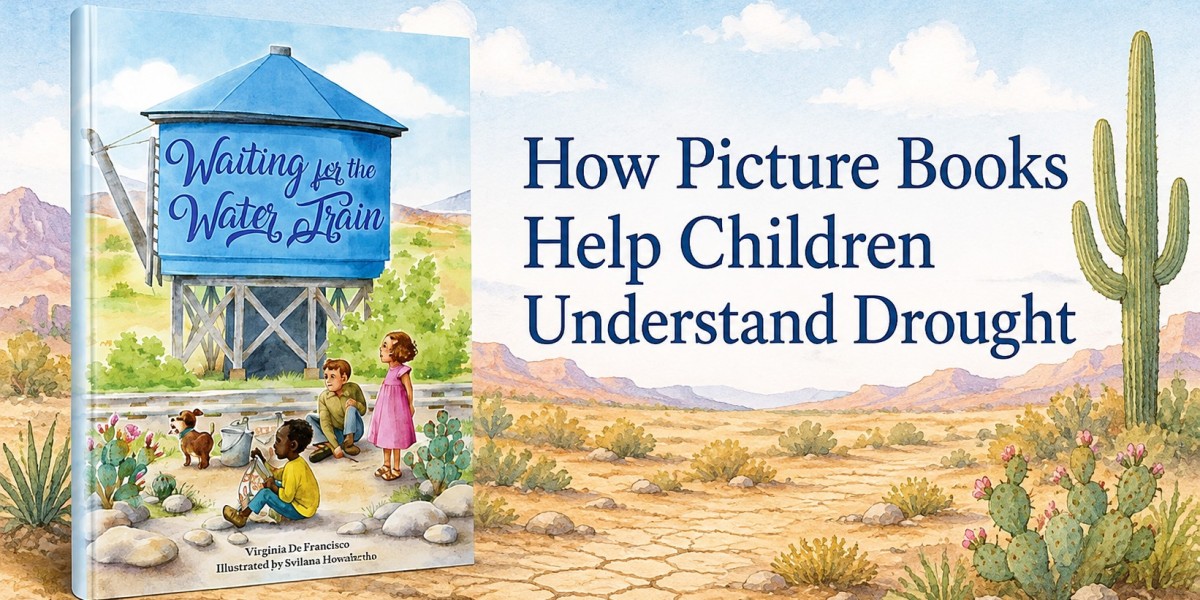
Waiting for the Water Train provides an excellent example of this approach. Through Emma's journey, children discover that drought is not simply about dry weather—it is about how limited water affects families, neighbors, animals, plants, and entire communities. By combining emotional storytelling with accurate environmental concepts, the book helps children understand both the science and the human side of drought.
Why Drought Is an Abstract Concept
Many environmental issues are easy for children to observe.
They can see rain.
They can watch rivers flow.
They can notice snow falling.
But groundwater remains hidden beneath the Earth's surface.
Children cannot easily see:
- Underground aquifers
- Water tables
- Wells
- Soil moisture
- Groundwater recharge
Because these systems are invisible, children may assume that water simply appears whenever someone turns on a faucet.
Modern infrastructure also hides much of the process.
Water arrives through pipes.
It fills sinks and bathtubs.
It comes from sprinklers and garden hoses.
Everything appears normal until suddenly it isn't.
When drought develops, children may wonder:
- Why did the faucet stop working?
- Why can't we just get more water?
- Why does everyone suddenly need to save water?
Without understanding groundwater, these questions can be confusing.
Picture books bridge that gap by connecting scientific ideas with familiar experiences.
Instead of beginning with technical explanations, they begin with people.
Children first understand the character.
Then they understand the science.
Emma's Town Makes the Consequences Visible
One of the strengths of Waiting for the Water Train is that it shows drought through daily life.
Emma's community depends on a well for its water supply.
As drought continues, the underground water table falls lower and lower.
Eventually, the well begins pumping mud instead of clean water.
Suddenly, ordinary routines become impossible.
The family can no longer rely on running water for:
- Drinking
- Cooking
- Washing dishes
- Taking baths
- Doing laundry
- Flushing toilets
- Watering gardens
- Caring for pets
These familiar activities help children recognize how deeply water supports everyday life.
The crisis affects everyone.
Parents worry.
Neighbors cooperate.
Animals need water.
Plants begin to suffer.
The entire town waits together for the arrival of the water train that will temporarily restore their supply.
This shared experience teaches children that drought is not simply an environmental issue—it is also a community issue.
Water connects everyone.
Why Emotional Stories Support Science Learning
Facts are important.
Children should learn about aquifers, groundwater recharge, evaporation, and precipitation.
But facts alone rarely create lasting understanding.
Children remember stories because stories involve emotions.
Emma's experience makes drought personal.
She becomes thirsty.
She misses the carefree days when water seemed endless.
She realizes that some of her earlier choices wasted a valuable resource.
She waits anxiously for the water train.
These emotional moments create empathy.
Instead of memorizing a definition of drought, children imagine living through one.
Educational research has long shown that emotional engagement improves learning.
When information connects with feelings, children are more likely to remember it.
Stories also encourage children to ask questions.
They begin wondering:
- Could this happen where I live?
- Where does our water come from?
- How can I help save water?
Those questions naturally lead to deeper learning.
Rather than making children afraid, stories inspire curiosity and responsibility.
Questions Parents and Teachers Can Ask
One of the greatest advantages of drought books for children is that they encourage meaningful conversations.
After reading Waiting for the Water Train, adults can extend learning by asking thoughtful questions.
For example:
What would happen if our faucets stopped working?
Children begin thinking about all the ways they use water every day.
Which daily activities require water?
They may list:
- Drinking
- Cooking
- Washing hands
- Bathing
- Cleaning
- Gardening
- Caring for pets
This activity helps children recognize how essential water truly is.
Why did the town's water supply run out?
This question introduces groundwater depletion, drought, and overuse in simple language.
How did Emma change?
Children often notice that Emma becomes more thoughtful and responsible after experiencing the consequences of water scarcity.
What could the community do differently?
This encourages problem-solving rather than blame.
Children may suggest:
- Conserving water earlier
- Repairing leaks
- Watering wisely
- Helping neighbors
- Protecting local water supplies
These discussions build both environmental awareness and critical thinking skills.
Extending the Story into a Lesson
Excellent picture books often become the beginning of hands-on learning.
After reading Waiting for the Water Train, teachers and families can reinforce concepts through simple activities.
Draw an Aquifer
Children can sketch:
- Rain falling
- Water soaking into the ground
- Underground aquifers
- Wells reaching groundwater
- Homes using well water
Visualizing hidden systems makes them easier to understand.
Build a Model Well
Using clear containers, gravel, sand, and water, children can observe how groundwater fills spaces between rocks and soil.
Pumping water from the model demonstrates how water levels change over time.
Measure Daily Water Use
Children can estimate or measure how much water common activities require.
For example:
- Brushing teeth
- Washing hands
- Filling a water bottle
- Watering plants
This builds awareness without creating anxiety.
Study Local Weather
Families and classrooms can compare rainfall from month to month.
Children begin recognizing that weather patterns influence water supplies.
Create a Classroom Conservation Plan
Students can work together to identify practical water-saving habits.
Examples include:
- Turning off faucets completely
- Reporting leaks
- Using reusable water bottles
- Watering plants responsibly
- Avoiding unnecessary water waste
These shared goals reinforce that conservation is everyone's responsibility.
Why Picture Books Inspire Lasting Environmental Stewardship
The best drought books for children do more than explain science.
They help children develop empathy for both people and nature.
As children understand drought, they also begin appreciating the connections between water and life.
They learn that limited water affects:
- Families
- Farmers
- Wildlife
- Forests
- Gardens
- Rivers
- Entire ecosystems
This broader understanding encourages lifelong environmental stewardship.
Children who recognize the value of water early are more likely to conserve it as adults.
They also become more thoughtful about other natural resources.
Stories help build those lifelong habits because they connect information with compassion.
Rather than feeling powerless, children discover that even small actions—turning off a faucet, reporting a leak, or watering plants carefully—can contribute to protecting shared resources.
Conclusion
The most effective drought books for children do far more than define drought. They make an invisible environmental challenge understandable through relatable characters, everyday experiences, and meaningful emotions.
Waiting for the Water Train accomplishes this beautifully by showing how Emma's community experiences groundwater loss, water shortages, and the long wait for relief. As Emma grows from carefree water use to thoughtful conservation, young readers discover that every drop matters.
By combining engaging storytelling with accurate environmental science, the book encourages children to ask questions, develop empathy, and practice responsible water use in their own lives. When families and educators use stories to introduce drought, they help children understand not only how water systems work but also why protecting them is a shared responsibility that benefits people, animals, plants, and future generations.