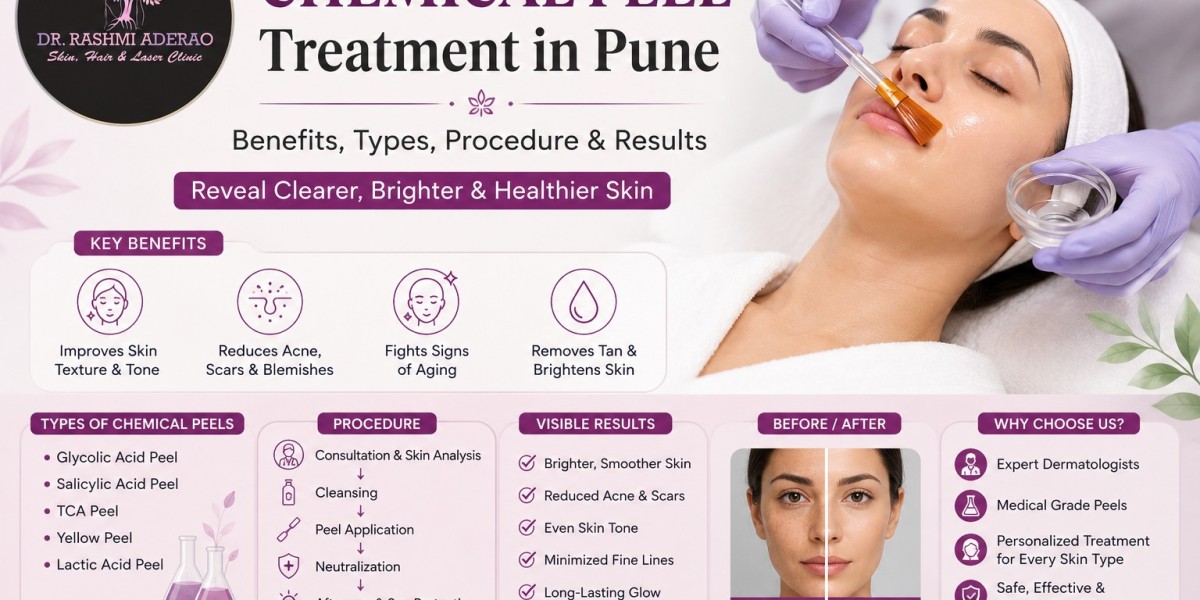


What Is a Chemical Peel and How Does It Work?
A chemical peel is a controlled exfoliation treatment where a dermatologist applies an acid-based solution to the skin. This solution removes the damaged outer layer of skin cells, triggering new, healthier skin to regenerate underneath. The strength and type of peel used depends on the skin concern being treated — ranging from light superficial peels for everyday glow to medium-depth medical peels for deeper scarring or pigmentation.
Why choose a clinic over at-home peels?
Medical-grade peels used in a dermatologist's clinic are formulated at controlled concentrations and applied under supervision, which allows for stronger, faster, and safer results than over-the-counter alternatives.
1. Chemical Peel Treatment in Pune: What to Expect
If you're searching for chemical peel treatment in Pune, here's what a standard consultation and session involves:
• Skin assessment: A dermatologist evaluates your skin type, concern, and medical history before recommending a peel.
• Patch test: Often done before the first session to rule out sensitivity.
• Application: The peel solution is applied evenly and left on for a specific duration based on peel strength.
• Neutralization & aftercare: The peel is neutralized, followed by soothing serums and sunscreen application.
• Downtime: Superficial peels have little to no downtime; medium-depth peels may cause 3–5 days of visible peeling.
How to Choose the Best Chemical Peel Clinic in Pune
When evaluating a chemical peel clinic in Pune, look for:
1. A qualified, registered dermatologist performing or supervising the procedure (not just an aesthetician).
2. Use of branded, medical-grade peel solutions with disclosed concentrations.
3. Transparent pre- and post-peel skincare guidance.
4. Before-and-after documentation and patient reviews specific to your concern (acne, pigmentation, aging).
5. A clinic that customizes peel strength rather than offering a one-size-fits-all protocol.
Consulting a dermatologist for chemical peel in Pune ensures the peel type and depth are matched precisely to your skin, reducing the risk of irritation, uneven peeling, or post-inflammatory pigmentation — a common risk with unsupervised or overly strong peels.
2. Chemical Peel for Acne and Acne Scars
Why Salicylic Acid Peel Works for Acne (Pune Patients' Most-Asked Question)
Salicylic acid is oil-soluble, meaning it penetrates deep into clogged pores to dissolve excess oil and dead skin buildup — the root cause of most acne breakouts. A salicylic acid peel in Pune is typically recommended for:
• Active inflammatory acne
• Blackheads and whiteheads
• Oily, acne-prone skin
• Reducing acne-related redness and clogged pores
Acne Scar Removal with Chemical Peels
For acne scar removal with chemical peels in Pune, dermatologists often use a multi-session approach combining:
• TCA CROSS technique for deep, pitted (ice-pick) scars
• Glycolic acid peels for surface-level texture and discoloration from old acne marks
• Combination peels to address both active acne and scarring simultaneously in appropriate candidates
Most acne scar peel protocols require 4–8 sessions spaced 2–4 weeks apart, with results building progressively rather than appearing after a single session.
3. Chemical Peel for Pigmentation and Skin Brightening
Chemical Peel for Tan Removal
Sun tanning is one of the most common walk-in concerns in Pune, given the region's climate. A chemical peel for tan removal in Pune typically uses milder peels (lactic or mandelic acid) applied in short cycles to lift surface tan without over-stripping the skin barrier.
Melasma Treatment with Chemical Peels
Melasma — stubborn, symmetrical facial pigmentation often triggered by hormonal factors and sun exposure — requires a more cautious, dermatologist-guided approach. Melasma treatment with chemical peels in Pune usually combines:
• Low-strength, frequent peel sessions (to avoid rebound pigmentation)
• Strict sun protection between sessions
• Adjunct topical treatments prescribed alongside the peel
Is "Skin Whitening Peel" the Right Term?
Many patients search for a skin whitening peel in Pune, but dermatologists typically describe this as skin brightening or pigmentation correction rather than whitening — the goal is to even out tone and reduce dark spots, not permanently alter natural skin color.
4. Anti-Aging and Skin Rejuvenation Peels
How Anti-Aging Peels Work
As skin ages, cell turnover slows and collagen production declines, leading to fine lines, dullness, and rough texture. An anti-aging chemical peel in Pune works by:
• Removing dull, dead surface cells to instantly improve radiance
• Stimulating fibroblast activity, which supports natural collagen renewal
• Improving the appearance of fine lines, uneven texture, and enlarged pores over a course of sessions
Chemical Peel for Glowing Skin
For patients without major concerns who simply want a chemical peel for glowing skin in Pune, a light monthly peel (often glycolic or lactic acid based) is commonly recommended as a maintenance treatment — comparable to a "skin rejuvenation treatment" that refreshes the skin's surface ahead of events or as part of an ongoing skincare routine.
Chemical Peel for Fine Lines
Early fine lines (around the eyes, forehead, and mouth) respond well to a series of low-to-medium strength peels combined with sunscreen use, rather than a single aggressive session — since collagen remodeling happens gradually over weeks.
5. Advanced Medical Chemical Peels
Glycolic Peel Treatment
Glycolic acid, derived from sugarcane, has the smallest molecular size among AHAs, allowing deep penetration. A glycolic peel treatment in Pune is versatile and used across acne, pigmentation, and anti-aging protocols, with strength adjusted (20%–70%) based on tolerance and concern.
TCA Chemical Peel
Trichloroacetic acid (TCA) peels penetrate deeper than AHAs and are used for:
• Moderate acne scarring
• Deeper pigmentation
• More visible signs of photoaging
A TCA chemical peel in Pune requires careful strength selection by a dermatologist, as higher concentrations move from superficial to medium-depth peeling with longer downtime.
Yellow Peel Treatment
The yellow peel is popular for patients wanting visible brightening and smoothing with relatively low irritation. A yellow peel treatment in Pune is often chosen for:
• Overall skin brightening
• Mild pigmentation and sun damage
• Prepping skin for special occasions, since results are often visible within days
Why This Category Needs a Medical Chemical Peel Clinic
Advanced peels like TCA and higher-strength glycolic formulations sit closer to medium-depth peeling, which carries a higher risk of complications (uneven peeling, prolonged redness, post-inflammatory pigmentation) if not administered correctly. This makes it especially important to choose a medical chemical peel clinic in Pune with an on-site or supervising dermatologist, rather than a general beauty salon.
Frequently Asked Questions
How many sessions of chemical peel are needed to see results?
Most concerns require 4–8 sessions spaced 2–4 weeks apart, though a single session can offer a mild, temporary glow.
Is chemical peel treatment safe for Indian skin tones?
Yes, when performed by a qualified dermatologist who selects the appropriate peel type and strength for your skin tone, as darker skin tones are more prone to post-inflammatory pigmentation if the wrong peel is used.
What is the difference between a superficial and medical peel?
Superficial peels (mild glycolic, lactic acid) affect only the outermost skin layer with no downtime. Medical peels (TCA, higher-strength glycolic, yellow peel) penetrate deeper for more pronounced results but require more careful aftercare.
Can chemical peels treat both acne and pigmentation together?
Yes, dermatologists often customize combination peels or alternate peel types across sessions to address multiple concerns in the same treatment plan.









