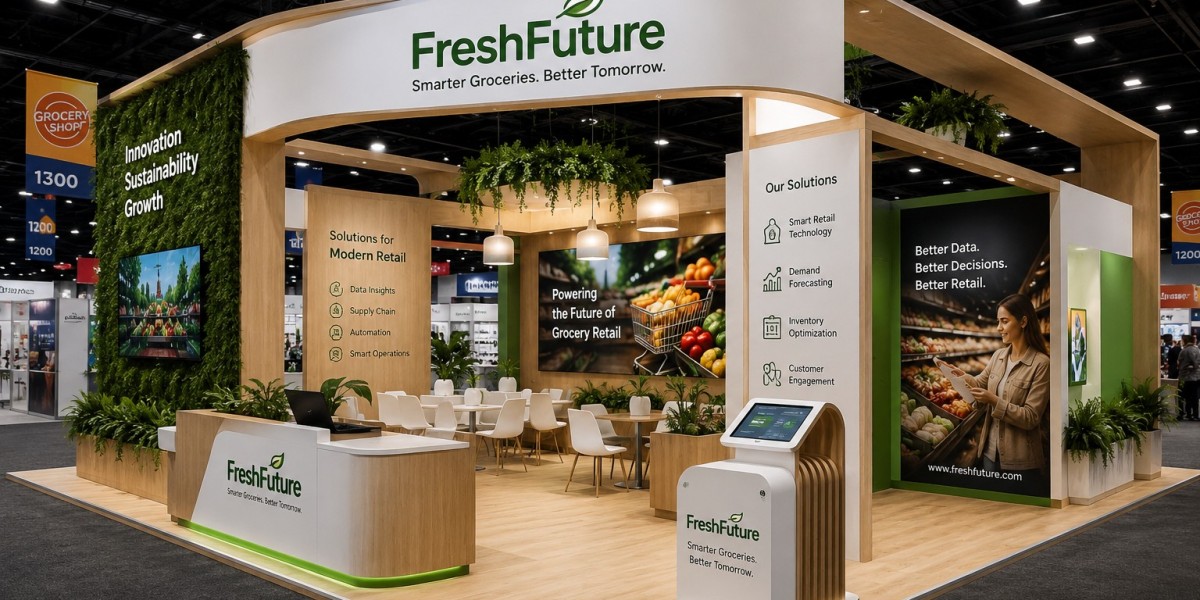


Exhibiting at Groceryshop for the first time can be an exciting opportunity to introduce your company, demonstrate products, meet retailers, and build valuable business relationships. However, preparing for a major trade show involves many decisions, from booth design and graphics to logistics and visitor engagement. Working with experienced Booth builders for Groceryshop can make the process easier by helping you turn your exhibition space into a professional and functional environment that supports your goals.
For first-time exhibitors, the process can feel overwhelming. What type of booth should you choose? How much space do you need? What should your graphics say? How do you attract the right visitors? And how can you make sure everything is ready before the event begins?
This guide walks through the key considerations you should know before exhibiting at Groceryshop.
Why Groceryshop Is an Important Exhibition Opportunity
Groceryshop provides a platform where companies can connect with professionals across grocery, retail, consumer brands, e-commerce, technology, and related industries.
For a first-time exhibitor, the event can provide opportunities to:
Introduce a new brand
Launch a product
Demonstrate technology
Meet prospective customers
Connect with retailers
Build partnerships
Generate leads
Increase industry visibility
But simply attending doesn't guarantee results.
Your exhibition strategy needs to give visitors a reason to notice, approach, and remember your company.
Start by Defining Your Goals
Before contacting a booth builder, decide what you want to accomplish.
Your objectives could include:
Brand Awareness
You may want to introduce your company to a new audience.
Lead Generation
You may want to generate qualified sales opportunities.
Product Launch
You may be introducing a new product or service.
Demonstrations
You may need space to demonstrate how your solution works.
Business Meetings
You may want to schedule meetings with retailers, investors, or partners.
Your booth design should support these goals.
If you don't define your objectives first, you may end up spending money on features that look impressive but don't contribute to your business strategy.
Understand Your Target Visitors
A first-time exhibitor should avoid designing a booth for "everyone."
Instead, identify the visitors you most want to attract.
Think about:
Retail buyers
Grocery executives
Technology decision-makers
Potential partners
Investors
Distributors
Existing customers
Industry professionals
Once you understand your target audience, you can create messaging and experiences that appeal specifically to them.
For example, a technology buyer may want to see a software demonstration, while a retail executive may be more interested in business outcomes and return on investment.
Choose the Right Booth Size
Your booth size should reflect your objectives and budget.
A larger space isn't automatically better.
A smaller, well-designed booth can be more effective than a large space that feels empty or poorly organized.
Consider how much room you need for:
Product displays
Demonstrations
Staff
Visitor movement
Meeting areas
Storage
Technology
Think about how many visitors you realistically expect to engage with at one time.
Your booth builder can help determine how to use the available space efficiently.
Decide Between Custom and Modular Booths
First-time exhibitors often wonder whether they should invest in a custom booth.
The answer depends on your goals and long-term exhibition plans.
Custom Booths
Custom booths provide greater design flexibility.
They can include unique structures, branded architecture, custom product displays, meeting rooms, and interactive elements.
They can be useful if you want a highly distinctive brand experience.
Modular Booths
Modular booths can provide flexibility and potential cost savings.
Components can often be adapted for different booth configurations and future events.
If your company plans to attend multiple trade shows, modular elements may provide long-term value.
Discuss both options with your booth builder before making a decision.
Create a Clear Brand Message
Visitors shouldn't have to study your booth to understand what your company does.
Your main message should be immediately visible.
A useful messaging structure is:
Who are you? → What do you offer? → Why does it matter? → What should visitors do next?
For example, instead of filling your booth with paragraphs about your company, use a strong headline that communicates your primary benefit.
Then support that message with product visuals, short statements, and demonstrations.
Design for the Visitor Journey
Your booth should guide visitors naturally.
Think of the experience as a sequence:
Attract → Enter → Explore → Engage → Discuss → Convert
Attract
Use branding, graphics, lighting, and architecture to capture attention.
Enter
Create an open and welcoming layout.
Explore
Give visitors products, displays, or content to discover.
Engage
Use demonstrations or interactive experiences.
Discuss
Provide opportunities to speak with your team.
Convert
Offer a clear next step, such as booking a meeting or requesting information.
This approach can turn your booth into a complete visitor experience.
Use High-Quality Graphics
Graphics are one of the most visible parts of your booth.
Poor-quality graphics can make even a well-designed booth look unprofessional.
Your graphics should be:
High resolution
Easy to read
Brand consistent
Visually attractive
Concise
Relevant to your target audience
Avoid using too much text.
A visitor walking through the exhibition hall may only have a few seconds to see your message.
Make those seconds count.
Use Lighting to Attract Attention
Lighting can help your booth stand out without requiring excessive decoration.
Use lighting strategically to highlight:
Logos
Products
Demonstrations
Key graphics
Architectural features
Accent lighting can create focal points and guide visitor attention.
Work with your booth builder to determine the best lighting approach during the design stage.
Include Interactive Experiences
Interactive features can encourage visitors to stay longer.
Depending on your company, you could include:
Touchscreens
Digital demonstrations
Product trials
Interactive quizzes
Virtual experiences
Live demonstrations
Product configurators
The experience should be simple and relevant.
Don't add technology simply because it looks impressive.
Ask whether it helps visitors understand your product or creates a useful conversation.
Plan Product Demonstrations Carefully
If your product requires explanation, demonstrations can be extremely valuable.
Your demonstration area should be:
Easy to see
Easy to access
Comfortable for visitors
Equipped with necessary technology
Large enough for staff and visitors
Try to keep demonstrations concise.
A five-minute demonstration may be more effective than a 30-minute presentation when visitors are moving between many exhibitors.
Create Comfortable Meeting Areas
First-time exhibitors sometimes focus so heavily on attracting visitors that they forget about business conversations.
If you expect to meet potential customers or partners, allocate space for meetings.
You can use:
Open tables
Lounge seating
Semi-private areas
Enclosed meeting rooms
The right choice depends on your objectives and booth size.
If confidentiality isn't important, open seating can help maintain a welcoming atmosphere.
Don't Forget Storage
Storage is essential for keeping your booth organized.
Your team may need space for:
Bags
Product samples
Marketing materials
Promotional items
Packaging
Personal belongings
Hidden storage can prevent these items from creating clutter.
Built-in cabinets and counters can provide useful storage without affecting the visitor experience.
Integrate Technology Carefully
Technology can make your booth more engaging, but it needs to be planned properly.
Potential options include:
LED displays
Touchscreens
Monitors
Interactive kiosks
Digital signage
Charging stations
Lead-capture systems
Make sure you consider power, internet, mounting, cables, and viewing angles.
Technical planning should happen before fabrication begins.
Choose a Booth Builder Carefully
One of the most important decisions for a first-time exhibitor is selecting the right booth builder.
Don't choose a provider based only on the lowest quote.
Instead, evaluate:
Relevant experience
Portfolio quality
Design capabilities
Customization
Materials
Project management
Installation
Dismantling
Technology integration
Customer service
Pricing transparency
Ask for examples of previous projects.
A strong portfolio should demonstrate that the builder can adapt its design approach to different brands and objectives.
Ask for 3D Booth Renderings
Before approving production, ask whether the builder provides 3D visualizations.
A rendering can help you see:
Booth layout
Branding
Product displays
Meeting areas
Lighting
Technology
Storage
Visitor pathways
It can also help your internal team approve the design.
Making changes before fabrication is much easier than making them after the booth has been built.
Understand the Pricing
Your booth budget may include much more than construction.
Ask whether your quotation includes:
Design
Fabrication
Graphics
Furniture
Lighting
Flooring
Technology
Transportation
Installation
Dismantling
Storage
Project management
Request a detailed proposal so you know what you're actually paying for.
Also ask about possible additional charges.
A transparent quote can make budgeting much easier.
Plan Installation and Dismantling
A booth isn't finished when the design is approved.
It needs to be transported, installed, inspected, and dismantled.
Ask your builder:
Who handles installation?
When will the booth be ready?
Who coordinates on-site work?
Who handles dismantling?
Where are materials stored afterward?
Having professional support for these stages can significantly reduce stress.
Start Planning Early
First-time exhibitors should avoid last-minute preparation.
A basic timeline could include:
Early Stage
Define your goals, budget, audience, and booth requirements.
Design Stage
Review concepts, renderings, graphics, and layouts.
Production Stage
Approve the final design and begin fabrication.
Pre-Show Stage
Confirm logistics, technology, staff schedules, and marketing materials.
Event Stage
Set up the booth, train staff, engage visitors, and capture leads.
Starting early gives you time to solve unexpected problems.
Prepare Your Booth Staff
Your booth design may attract visitors, but your staff determines what happens next.
Before the event, train your team on:
Your key message
Product benefits
Demonstration procedures
Common questions
Visitor qualification
Lead capture
Follow-up
Encourage staff to engage visitors naturally.
Avoid having everyone stand behind a counter looking at their phones.
A welcoming team can dramatically improve the visitor experience.
Create a Simple Lead-Capture Process
Don't make lead collection complicated.
Depending on your setup, you can use:
QR codes
Digital forms
Badge scanning
Tablets
Meeting booking systems
Make sure visitors understand why they are providing their information.
For example, you might offer a useful resource, product demonstration, consultation, or follow-up meeting.
Make Your Booth Accessible
An effective booth should be easy for a wide range of visitors to navigate.
Consider:
Clear pathways
Accessible counters
Readable graphics
Comfortable seating
Appropriate screen heights
Easy-to-use interactive features
Accessibility should be incorporated during the design stage rather than added later.
Consider Sustainable Booth Design
Sustainability can be incorporated without sacrificing visual impact.
Consider:
Reusable structures
Modular systems
Recyclable materials
Rental furniture
Energy-efficient lighting
Digital signage
If you participate in multiple events, reusable booth components may also provide long-term value.
Measure Your Groceryshop Results
After the event, review your performance.
Track metrics such as:
Booth visitors
Qualified leads
Demonstration participation
Meeting bookings
Sales opportunities
QR code scans
Visitor feedback
Social engagement
Don't focus only on total traffic.
A smaller number of highly qualified visitors can be more valuable than a large number of people who simply walk through your booth.
Common First-Time Exhibitor Mistakes
First-time exhibitors often make avoidable mistakes.
Trying to Say Everything
Too much information creates confusion.
Choosing Design Over Function
A beautiful booth still needs to work operationally.
Ignoring Storage
Visible clutter can hurt your professional image.
Waiting Too Long
Last-minute planning creates unnecessary stress.
Choosing Only Based on Price
The cheapest option may not provide the best overall value.
Forgetting Staff Training
A great booth needs an equally strong team.
No Follow-Up Plan
Leads have little value if your team doesn't follow up promptly.
A Practical First-Time Exhibitor Strategy
If this is your first Groceryshop exhibition, keep your strategy simple.
Focus on five priorities:
1. Clear Message
Make it obvious what your company does.
2. Strong Visuals
Use professional graphics and branding.
3. One Great Experience
Create a demonstration or interaction visitors will remember.
4. Meaningful Conversations
Give your team comfortable spaces to speak with prospects.
5. Strong Follow-Up
Have a plan for converting event conversations into business opportunities.
You don't need every possible feature.
You need the right features.
Final Thoughts
Exhibiting at Groceryshop for the first time can seem complicated, but careful preparation can make the experience much more manageable. Start by defining your goals, understanding your target visitors, choosing an appropriate booth size, developing a clear message, and creating a visitor-friendly layout.
From graphics and lighting to technology, product demonstrations, meeting spaces, storage, lead capture, and installation, every detail should support your broader exhibition strategy. Most importantly, choose an experienced booth partner that understands your requirements and can manage the project from concept through completion.
If you're preparing for your first Groceryshop exhibition and need help evaluating potential partners, exploring Booth builders for Groceryshop can help you compare options and identify a booth-building solution aligned with your brand, budget, and event objectives.