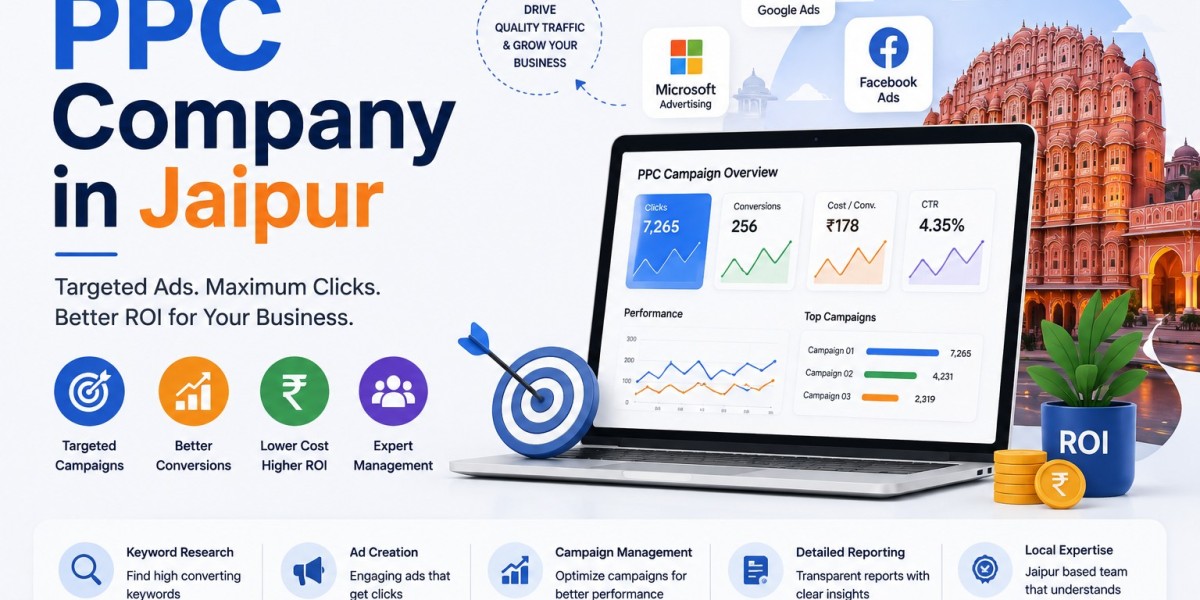


An advertising agency in Jaipur operates within a marketing environment that has changed significantly with the growth of search engines, social media, streaming platforms, and mobile devices. Advertising is no longer limited to newspapers, television, radio, and outdoor banners. Businesses can now reach audiences through highly targeted digital channels and measure how people respond to their messages.
Understanding how modern advertising works is useful for businesses that want to make informed decisions about budgets, audiences, creative communication, and campaign measurement.
How Advertising Has Changed
Traditional advertising generally focused on reaching large audiences through mass media. Digital advertising introduced a different approach by allowing businesses to target audiences based on factors such as:
- Location
- Search behaviour
- Interests
- Demographics
- Previous interactions
- Content preferences
This does not mean traditional advertising has become irrelevant. The appropriate channel depends on the audience, objective, budget, and type of product or service.
Start With the Advertising Objective
A campaign should have a clearly defined purpose before choosing a platform.
Common objectives include:
Awareness
Helping people become familiar with a business, product, or idea.
Consideration
Providing information to people who are researching potential options.
Conversion
Encouraging a specific action such as a purchase, enquiry, booking, or registration.
Retention
Maintaining communication with existing customers.
A campaign designed for brand awareness should not necessarily be measured using the same metrics as a campaign designed to generate sales.
Understanding the Target Audience
Effective advertising begins with understanding who the message is intended for.
Businesses can research:
- Customer needs
- Common problems
- Buying behaviour
- Search patterns
- Preferred communication channels
- Geographic location
- Decision-making factors
Audience research can also reveal that the actual target audience differs from the audience a business initially expected.
Understanding these differences helps prevent advertising budgets from being spent on people who are unlikely to find the offer relevant.
Choosing the Right Advertising Channel
Different platforms serve different purposes.
Advertising may appear through:
- Search engines
- Social media
- Display networks
- Video platforms
- Streaming services
- Mobile applications
- Digital publications
- Outdoor media
Search advertising can be useful when people are actively looking for something, while social advertising can help reach audiences based on interests, behaviour, or demographic characteristics.
The best channel depends on the campaign objective rather than popularity alone.
Creative Communication Still Matters
Targeting cannot compensate for an unclear message.
Effective advertising needs to communicate:
- What is being offered
- Why it may be relevant
- Who it is intended for
- What action the user can take
Creative elements such as headlines, images, videos, design, and storytelling influence how quickly people understand an advertisement.
However, creativity should support communication rather than distract from it.
Advertising and Landing Pages Must Work Together
An advertisement is only one part of the customer journey.
For digital campaigns, the experience often looks like:
Advertisement → Landing Page → Action
If the advertisement promises something that the landing page does not clearly provide, users may leave without taking action.
A useful landing page should generally have:
- Relevant information
- Clear navigation
- Fast loading
- Mobile compatibility
- Transparent pricing or details where appropriate
- A clear next step
The advertising message and website experience should therefore be planned together.
Measuring Advertising Performance
Advertising should be evaluated using metrics that match its objective.
Useful measurements can include:
Reach
How many people were exposed to the campaign?
Impressions
How frequently was the advertisement displayed?
Click-Through Rate
How often did people interact with the advertisement after seeing it?
Conversion Rate
How frequently did users complete the intended action?
Cost Per Acquisition
How much advertising expenditure was associated with acquiring a customer or lead?
Return on Advertising Spend
How much measurable revenue was generated relative to advertising expenditure?
Not every campaign needs to maximize every metric. The correct measurement depends on what the campaign is designed to achieve.
The Role of Data in Advertising
Digital advertising produces large amounts of performance data.
Businesses can use this information to understand:
- Which audiences respond
- Which messages perform better
- Which locations generate useful traffic
- Which platforms produce meaningful outcomes
- Where users leave the customer journey
Data should be used to improve decisions rather than simply create reports.
A high number of clicks, for example, does not necessarily indicate a successful campaign if those visitors are not relevant to the business.
Trust and Ethical Advertising
Modern consumers are increasingly exposed to advertising and can quickly recognize exaggerated claims.
Responsible advertising should avoid:
- Misleading information
- Fake testimonials
- Hidden costs
- False urgency
- Unverifiable guarantees
- Manipulative claims
Clear communication helps businesses build credibility.
Advertising should accurately represent what customers can expect rather than creating expectations that the product or service cannot meet.
E-E-A-T in Advertising Content
E-E-A-T stands for Experience, Expertise, Authoritativeness, and Trustworthiness.
These principles can be applied when creating and evaluating advertising-related information.
Experience involves understanding real consumer behaviour and campaign challenges.
Expertise requires accurate knowledge of advertising platforms, audience research, creative strategy, and analytics.
Authoritativeness can be supported by reliable data, credible industry information, and demonstrated knowledge.
Trustworthiness requires transparent communication and avoiding unsupported promises.
These principles are especially important because advertising influences purchasing decisions.
Common Advertising Mistakes
Businesses can waste advertising budgets through relatively simple mistakes.
Some common examples include:
- Targeting audiences too broadly
- Using unclear messaging
- Focusing only on impressions
- Ignoring landing-page performance
- Failing to track conversions
- Using the same creative for every audience
- Making frequent changes without enough data
- Ignoring negative customer feedback
- Making unrealistic claims
A structured testing and measurement process can help identify which parts of a campaign need improvement.
How Businesses Can Evaluate an Advertising Agency
Businesses considering an advertising agency in Jaipur can ask practical questions before beginning a campaign:
- How will the target audience be identified?
- Why is a particular advertising channel being recommended?
- What will success look like?
- How will conversions be tracked?
- What information will be included in performance reports?
- How will advertising creatives be tested?
- How will irrelevant traffic be handled?
- How will campaign decisions be supported by data?
- What assumptions are being made about the audience?
- How will the strategy change if the initial approach does not perform?
These questions encourage a focus on strategy and evidence rather than promotional promises.
Conclusion
An advertising agency in Jaipur can operate across traditional and digital advertising channels, but effective advertising ultimately depends on understanding people, choosing appropriate communication channels, creating relevant messages, and measuring meaningful outcomes.
Technology has made advertising more measurable, but it has not removed the importance of clear communication and customer understanding.
The strongest advertising strategies combine audience insight, relevant creative work, appropriate targeting, useful customer experiences, ethical communication, and continuous measurement. When these elements work together, advertising becomes more than simply gaining attention—it becomes a structured way of communicating value to the right audience.









