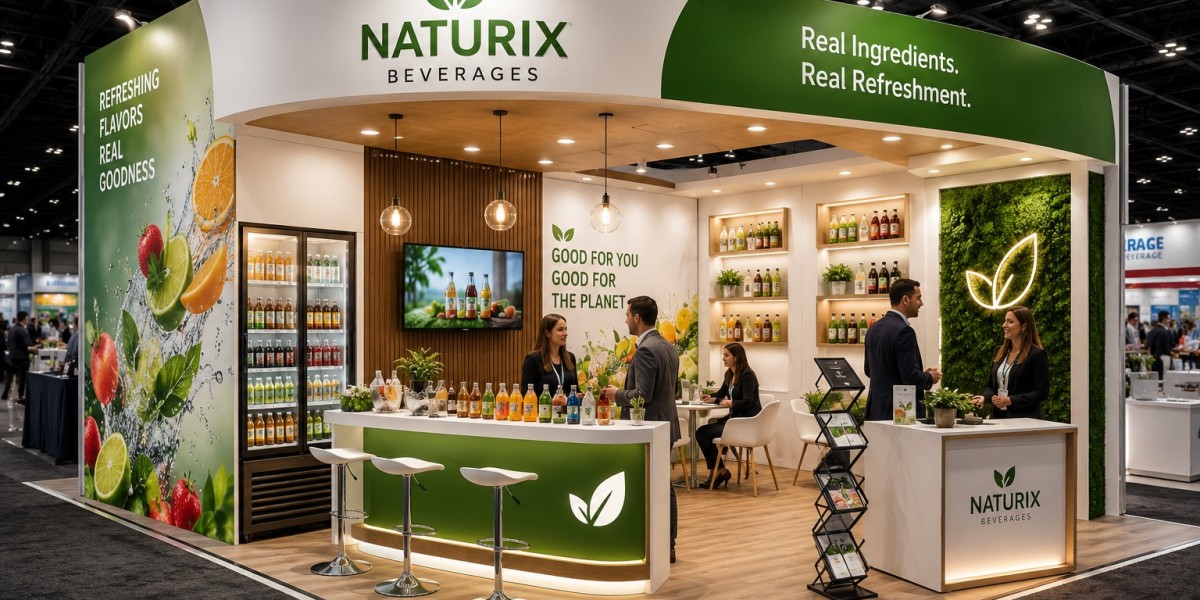


Choosing the right exhibit design can make a significant difference when your beverage brand is competing for attention at a busy trade show. Effective Beverage expo exhibits do more than showcase bottles, cans, or product samples. They create a branded environment that attracts visitors, communicates your value proposition, encourages conversations, and supports lead generation. The right design should reflect your brand identity while also matching your exhibition goals, audience, available space, and budget.
Why the Right Exhibit Design Matters
Your booth may be one of the first physical interactions potential customers have with your brand.
A visitor may know nothing about your company before walking past your exhibit. Within a few seconds, your booth needs to communicate something meaningful.
Does your brand look premium?
Innovative?
Natural?
Fun?
Sustainable?
Professional?
Your exhibit design can answer these questions before your sales team even starts a conversation.
Start With Your Brand Identity
Before choosing an exhibit style, understand what your brand represents.
Your booth should feel like a natural extension of your existing branding.
Look at your:
- Logo
- Packaging
- Website
- Brand colors
- Typography
- Photography
- Marketing messages
These elements should influence the exhibit's visual direction.
Create a Consistent Brand Experience
Imagine a visitor sees your product packaging in a store and later encounters your trade show booth.
They should immediately recognize the connection.
Consistent branding builds familiarity and makes your company easier to remember.
Avoid designing a booth that looks completely different from your other marketing materials simply because a particular style is currently popular.
Define Your Trade Show Objectives
Your exhibit design should support a specific purpose.
Ask yourself:
What do I want to accomplish at this event?
Your objectives might include:
- Generate qualified leads
- Launch a new beverage
- Find distributors
- Meet retail buyers
- Build brand awareness
- Demonstrate innovation
- Enter new markets
- Strengthen customer relationships
Each objective can require a different design strategy.
Match the Design to Your Target Audience
Knowing your audience is just as important as knowing your brand.
A retail buyer may want to see packaging, product variety, and commercial potential.
A distributor may want information about logistics, territories, and product support.
A restaurant buyer may care about serving formats and consistency.
A consumer-focused audience may respond better to sampling and interactive experiences.
Your booth should make the information most relevant to your audience easy to find.
Choose Between Open and Enclosed Designs
One of the first decisions you'll need to make is whether your booth should be open, partially enclosed, or more private.
Open Booths
Open designs make it easier for visitors to enter.
They can be ideal for brands focused on:
- High visitor traffic
- Product sampling
- Brand awareness
- Casual interaction
An open layout can make the booth feel inviting.
Semi-Private Booths
A semi-private design can provide a balance between accessibility and business discussions.
You might use partial walls, partitions, or strategically positioned furniture.
This can work well for companies that need both visitor engagement and meeting space.
Enclosed Booths
More enclosed designs can provide privacy for important business discussions.
They're particularly useful when the primary goal is meetings with distributors, buyers, investors, or strategic partners.
However, too much enclosure can make a booth feel inaccessible.
Consider Your Booth Size
The available floor space will influence your design choices.
A small booth needs efficiency.
A larger exhibit allows you to create distinct zones.
Small Booth Strategy
If you're working with limited space, focus on the essentials:
- Strong branding
- One primary product display
- Sampling
- Efficient storage
- A small conversation area
- Clear messaging
Don't try to include everything.
A clean, focused small booth can be more effective than an overcrowded larger one.
Large Booth Strategy
Larger spaces allow you to create dedicated areas.
You might include:
Product Zone
Showcase your beverage portfolio.
Sampling Zone
Let visitors taste your products.
Meeting Zone
Create space for business discussions.
Technology Zone
Provide interactive product information.
Reception Zone
Welcome visitors and capture leads.
Think About Visitor Flow
A good exhibit should guide people naturally.
Imagine walking through your booth for the first time.
What do you see?
Where do you go?
What do you interact with?
Where does the conversation happen?
A simple visitor journey might look like:
Attract → Enter → Discover → Taste → Discuss → Connect
Every design element should support this journey.
Prioritize Your Products
Your beverage products should be easy to see.
Don't let elaborate architecture overshadow what you're actually selling.
Use product displays that make your packaging visually prominent.
Possible options include:
- Illuminated shelving
- Product towers
- Refrigerated displays
- Floating shelves
- Backlit displays
- Tiered product walls
Create a Hero Product Display
If you're introducing a new beverage, make it the centerpiece.
Use a dedicated display and concise messaging to explain what makes it different.
This gives your sales team an obvious starting point for conversations.
Decide Whether Sampling Is Essential
For many beverage brands, sampling should be a major component of the exhibit.
Visitors can see your packaging online or in brochures.
But tasting the actual product creates a different experience.
A well-designed tasting area can help visitors understand:
- Flavor
- Quality
- Texture
- Ingredients
- Product positioning
Make Sampling More Interactive
Instead of simply handing out drinks, consider offering:
- Flavor comparisons
- Blind tasting
- Product pairings
- New product trials
- Ingredient demonstrations
- Visitor voting
Interactive tasting experiences can make your brand more memorable.
Choose the Right Graphics
Graphics are among the most visible components of your booth.
However, more graphics don't necessarily create more impact.
Use a hierarchy.
Your main message should be readable from the aisle.
Secondary information can be viewed after visitors enter.
Product details can be discussed by your staff or provided digitally.
Avoid Too Much Text
Visitors aren't likely to read long paragraphs while walking through an exhibition hall.
Use short headlines and supporting phrases.
For example:
"Refreshingly Natural."
Then use imagery and product displays to support the message.
Select Colors Carefully
Color can influence how people perceive your brand.
Bright colors may create energy.
Neutral tones can communicate sophistication.
Green and natural tones may support an organic or sustainability-focused identity.
Bold brand colors can increase recognition.
The most important thing is to remain consistent with your existing identity.
Use Lighting to Support the Design
Lighting can dramatically change how your exhibit looks.
Use it to highlight your most important elements.
For example:
- Product shelves can receive focused lighting.
- Logos can be illuminated.
- Key graphics can receive accent lighting.
- Meeting spaces can use softer lighting.
Avoid excessive lighting effects that distract visitors.
Consider Interactive Technology
Technology can enhance the visitor experience.
You could use:
- Touchscreens
- Digital catalogs
- Product videos
- Interactive games
- QR codes
- Product selectors
- Digital presentations
The technology should solve a communication or engagement problem.
If visitors can learn something faster through an interactive display, it may be worthwhile.
Create a Comfortable Meeting Area
If business development is a major objective, don't overlook seating.
A comfortable table and chairs can transform a quick booth visit into a longer conversation.
For larger exhibits, consider semi-private meeting spaces.
These areas can be used for discussions about:
- Distribution
- Pricing
- Partnerships
- Retail opportunities
- Product launches
- Market expansion
Don't Forget Storage
A beautiful exhibit can quickly look messy without sufficient storage.
Your team may need space for:
- Extra products
- Promotional materials
- Bags
- Personal belongings
- Cleaning supplies
- Printed literature
Whenever possible, integrate storage into the booth design so these items remain out of sight.
Consider Sustainability
If sustainability is important to your brand, reflect it in the exhibit.
You could consider:
- Reusable structures
- Modular components
- Recyclable materials
- Digital brochures
- Energy-efficient lighting
- Reusable graphics
You can also use the booth to explain your company's sustainability initiatives.
Make Your Exhibit Photogenic
A visually distinctive booth can encourage visitors to share photos online.
Consider creating a memorable visual element such as:
- An oversized beverage container
- A creative product wall
- A branded installation
- An illuminated logo
- An artistic backdrop
Social sharing can extend your brand visibility beyond the exhibition floor.
Set a Realistic Budget
Your budget should be determined before the design process becomes too advanced.
Break costs into categories such as:
- Exhibit construction
- Graphics
- Furniture
- Lighting
- Technology
- Shipping
- Installation
- Product sampling
- Promotional materials
A good booth builder should help you understand where your investment will have the greatest impact.
Compare Exhibit Builders Carefully
Choosing an exhibit builder is an important part of the process.
Don't evaluate companies solely on price.
Consider:
- Portfolio quality
- Beverage industry experience
- Design capabilities
- Customization options
- Project management
- Installation services
- Logistics support
- Communication
- Timeline reliability
Ask potential builders how they would approach your specific objectives.
Ask for Relevant Portfolio Examples
A builder may have impressive work, but you should look for examples relevant to your needs.
Ask to see exhibits featuring:
- Beverage products
- Food brands
- Product sampling
- Retail-focused displays
- Interactive technology
- Meeting spaces
This can give you a better understanding of what the builder can deliver.
Design for Post-Show Follow-Up
Your exhibit shouldn't exist only for the duration of the event.
Think about how visitors will continue interacting with your brand.
Use QR codes, digital catalogs, lead forms, and meeting requests to create a connection beyond the show.
Your sales team should also have a clear follow-up plan.
Measure Your Results
Once the event ends, evaluate the performance of your exhibit.
Track:
- Total visitors
- Qualified leads
- Meetings
- Product samples
- Product inquiries
- QR scans
- Distributor opportunities
- Follow-up conversations
These metrics can help you understand whether the design achieved its objectives.
Common Exhibit Design Mistakes
Avoid trying to communicate everything at once.
Other common mistakes include:
Overcrowding the Booth
Too many displays can make the space difficult to navigate.
Weak Branding
Visitors should be able to identify your company quickly.
Poor Lighting
Important products can become difficult to see.
Limited Storage
Visible clutter can reduce professionalism.
Untrained Staff
A great design cannot compensate for poor visitor interaction.
No Clear Call to Action
Visitors should know what to do next.
Final Thoughts
Choosing the right exhibit design is about finding the balance between brand identity, visitor experience, business goals, space, and budget. The most successful Beverage expo exhibits don't simply look impressive; they make products easier to discover, conversations easier to start, and leads easier to capture. Whether your priority is product sampling, distributor meetings, a new product launch, or stronger brand visibility, carefully selecting the right design approach can help you achieve better results. For the Americas Food & Beverage Show 2026, explore Beverage expo exhibits to compare booth builders and find an exhibit partner capable of creating a professional, engaging, and goal-focused booth for your beverage brand.