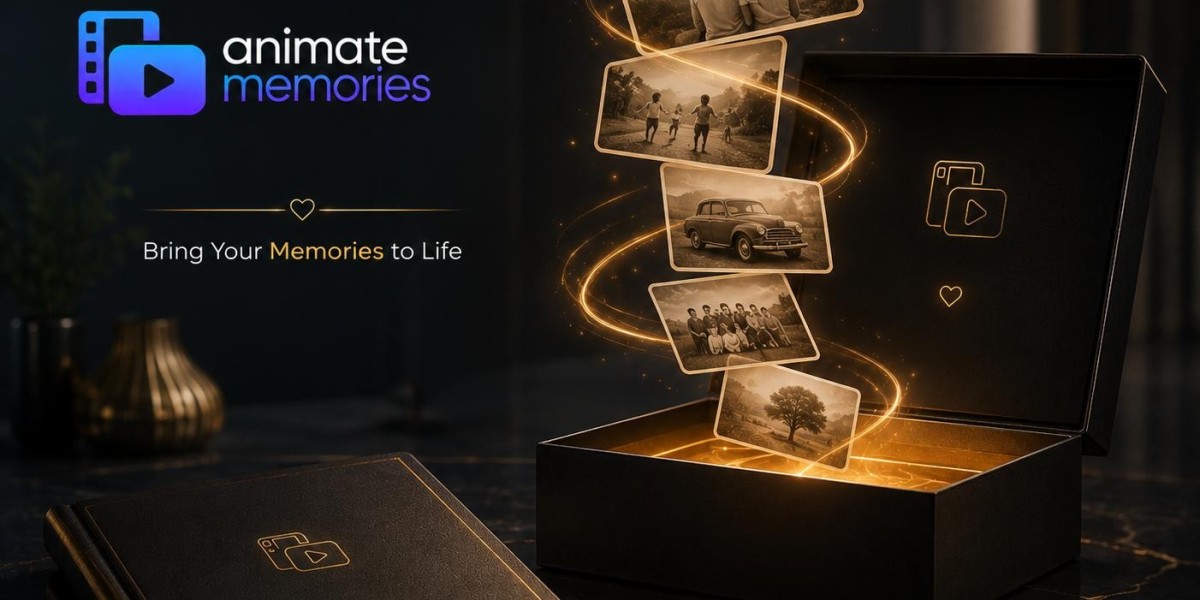


A photograph can capture a moment that might otherwise disappear with time. A childhood smile, an old family gathering, a wedding portrait, or a photograph of someone special can preserve memories for decades. Traditionally, photographs have always been still representations of these moments.
Artificial intelligence is changing that experience.
With AI photo animation, a static photograph can be transformed into a moving visual. Artificial intelligence analyzes the image, identifies important visual elements, and generates motion based on the available information. Depending on the technology, the result can include subtle facial movements, blinking, smiling, head movement, camera motion, or other visual effects.
The concept is simple, but the possibilities are extensive. Families can use AI to revisit old photographs, creators can develop engaging content, photographers can experiment with new formats, and businesses can use animated visuals in digital marketing.
As artificial intelligence continues to improve, AI photo animation is becoming an increasingly accessible way to combine photography, technology, and storytelling.
What Is AI Photo Animation?
AI photo animation is the process of using artificial intelligence to add realistic or creative movement to a still photograph.
A static photograph contains information about faces, objects, backgrounds, lighting, colors, and composition. However, it does not contain actual movement. AI models analyze these visual details and generate additional frames that create the appearance of animation.
For a portrait, AI may recognize facial landmarks and estimate how the eyes, mouth, head, or other features could move.
For a landscape or larger scene, AI may create effects such as camera movement, zooming, panning, or simulated depth.
The final result is usually a short video or animated image generated from the original photograph.
It is important to understand that AI-generated animation is an interpretation. The system cannot know exactly how the person or object moved when the original photograph was taken. Instead, it predicts plausible movement based on patterns learned by the AI model.
How Does AI Photo Animation Work?
Although the underlying technology can involve advanced machine learning, the process can be understood through a few simple stages.
Step 1: Choose a Photo
First, select a photograph you want to animate.
Suitable images can include:
- Portraits
- Childhood photographs
- Family pictures
- Wedding photos
- Vintage images
- Professional portraits
- Historical photographs
- Creative photographs
For better results, choose an image with clear subjects and sufficient visual detail.
Step 2: Upload the Image
The photograph is uploaded to an AI photo animation system.
The system prepares the image for analysis and determines which elements may be suitable for movement.
Step 3: Analyze the Photograph
AI examines the structure of the photograph.
For a portrait, it may identify the face, eyes, lips, head position, hair, and other facial features.
For a larger image, it may analyze the foreground, background, objects, depth, and overall composition.
This information helps the AI determine where motion can be introduced.
Step 4: Generate Movement
The AI generates movement according to the image and selected instructions.
Depending on the system, movement may include blinking, smiling, subtle head motion, facial expressions, camera movement, zoom effects, or simulated depth.
Step 5: Produce the Animation
The system generates a sequence of frames and combines them into an animated result.
The completed video can then be reviewed to determine whether the movement looks natural and suitable for the original image.
Why Is AI Photo Animation Becoming Popular?
The popularity of AI photo animation is closely connected to the emotional value of photographs and the growing importance of video content.
Emotional Storytelling
Photographs are connected to memories. When movement is added, people can experience familiar images in a different format.
A photograph that has been viewed hundreds of times can suddenly feel new when presented as an animation.
Accessibility
Traditional animation can require specialized knowledge. AI makes many animation processes more accessible to beginners.
Faster Content Creation
AI can automate tasks that would otherwise require manual editing, allowing users to produce animated visuals more efficiently.
Growing Video Consumption
People increasingly consume content through short videos and moving visuals. AI photo animation gives users a way to convert existing photographs into video-based content.
Benefits of AI Photo Animation
Bring Still Photos to Life
The primary benefit is the ability to add motion to static images.
Even a small amount of movement can make an image feel more dynamic and engaging.
Animate Old Photos
AI photo animation is especially interesting for old photographs. It provides a modern format for experiencing historical and family memories.
Save Time
Instead of manually creating every animation frame, AI can automate much of the process.
Easy to Experiment With
Users can try different photographs and animation approaches without needing advanced animation skills.
Create Engaging Content
Animated images can be used for social media, digital storytelling, presentations, short videos, and creative projects.
Repurpose Existing Images
Photographers, marketers, and content creators can turn existing photographs into new forms of visual content.
AI Photo Animation for Old Photos
One of the most emotional applications of AI photo animation is the animation of old photographs.
Families often have collections of photographs that document generations of memories. These can include pictures of grandparents, parents, children, weddings, birthdays, holidays, and other important events.
An old photograph can already tell a story, but animation offers another way to present it.
For example, a vintage portrait could receive subtle facial movement. A wedding photograph could become part of an animated memory video. A collection of childhood images could be combined into a visual timeline.
However, users should remember that AI animation is not a factual reconstruction of the original event. The movement is generated by artificial intelligence and should be understood as a creative interpretation.
What Types of Photos Work Best?
The quality of the original photograph can have a major impact on the final animation.
Clear Portraits
Portraits with clearly visible faces are often suitable for facial animation.
High-Resolution Images
Higher-quality photographs provide more visual information for AI to analyze.
Good Lighting
Images with visible facial details can make it easier for AI to identify important features.
Minimal Obstructions
A face that is heavily covered, blurred, or distorted may be more difficult to animate naturally.
Restored Old Photos
Old photographs with scratches, fading, stains, or damage may benefit from restoration before animation.
AI Photo Animation for Social Media
Social media is one of the most practical areas for AI animated photographs.
Creators can transform static photographs into engaging short-form content. Animated images can be used for memory posts, storytelling, educational content, historical discussions, creative campaigns, and personal projects.
For example, a creator could use an animated portrait to introduce a person in a storytelling video. A history-focused creator could use motion effects on archival photographs. A family member could create an animated memory video from old photographs.
The possibilities depend on the type of image and the story behind it.
AI Photo Animation for Families
Family photographs often contain emotional value that goes far beyond their visual appearance.
A photograph of a grandparent can represent an entire generation. A childhood picture can remind someone of a different stage of life. A wedding photograph can preserve one of the most important days in a family's history.
AI photo animation can provide a creative way to revisit these memories.
Animated photographs can be used in birthday videos, anniversary projects, family presentations, digital scrapbooks, and personal memory collections.
The best results are often created with subtle motion that respects the character of the original photograph.
AI Photo Animation for Content Creators
Content creators can use AI animation to make their existing photography more versatile.
Instead of using an image only as a static post, creators can transform it into a short video or animated visual.
This can be useful for:
- Storytelling
- Educational videos
- Historical content
- Photography portfolios
- Social media posts
- Short-form videos
- Personal projects
- Creative campaigns
AI photo animation can also help creators experiment with different visual styles without completely recreating their original content.
AI Photo Animation for Businesses
Businesses can use animated photographs in digital marketing and visual communication.
Potential applications include:
- Social media campaigns
- Brand storytelling
- Promotional videos
- Presentations
- Digital advertising
- Creative portfolios
- Historical brand content
- Marketing campaigns
Animation can help attract attention, but it should always support the overall marketing message.
A clean and subtle animation may appear more professional than an overly complicated effect.
AI Photo Animation vs. Traditional Animation
Traditional animation requires artists or editors to manually control movement. It can provide a high level of creative precision but may take significant time and expertise.
AI photo animation automates many of these processes.
Instead of manually creating every frame, the AI analyzes the photograph and generates movement automatically.
This makes AI particularly useful for simple photo animation projects, quick experiments, personal memories, and social media content.
Traditional animation remains valuable for complex professional productions where detailed control is required.
The two technologies can also complement each other, with AI creating an initial animation that can later be refined manually.
Tips for Creating Better AI Animated Photos
Use a High-Quality Original
Start with the clearest photograph available. Better image quality generally gives AI more useful information.
Select the Right Subject
For facial animation, choose a photograph where the face is visible and relatively sharp.
Keep Motion Subtle
Natural-looking movement is often more effective than exaggerated motion, especially with old or emotional photographs.
Try Multiple Images
If an animation looks unusual, try another photograph. Different images can produce very different results.
Review the Final Video
Always check the animation before sharing it. AI-generated visuals can occasionally contain unexpected artifacts or unnatural movements.
Consider Privacy
When working with photographs of real people, think carefully about privacy and consent, especially if the animation will be shared publicly.
The Future of AI Photo Animation
The future of AI photo animation is likely to include greater realism, customization, and user control.
As AI models improve, users may be able to control specific facial expressions, camera movements, depth effects, lighting, and animation intensity.
AI may also become better at understanding complex scenes containing multiple people and objects.
The combination of photo restoration and animation could be particularly useful for old photographs. Damaged images may first be enhanced and restored and then transformed into animated visuals.
These developments could create new applications in photography, family history, education, entertainment, digital archives, marketing, and social media.
Conclusion
AI photo animation is changing the way people interact with still photographs. By using artificial intelligence to generate movement, a static image can become a more dynamic and engaging visual experience.