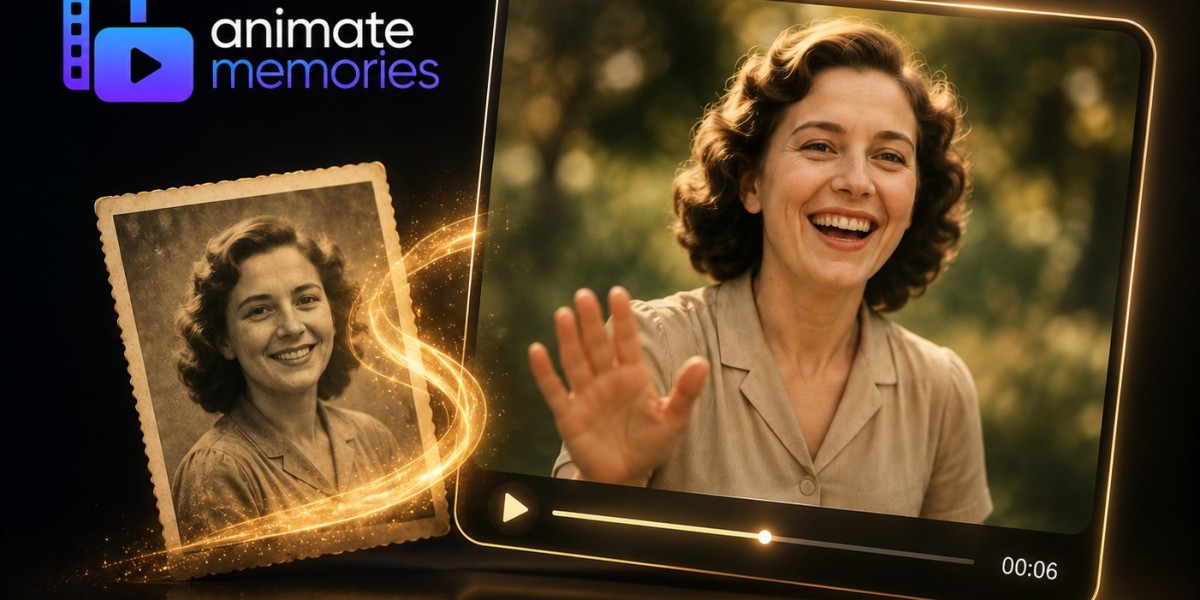


A photograph can preserve a moment forever. A smile captured at a family gathering, a childhood portrait, an old wedding picture, or a photograph of someone special can hold memories that words cannot easily describe. Traditionally, these photographs remain still, allowing us to look back at a particular moment in time.
Today, artificial intelligence is changing the way people interact with photographs.
AI photo animation makes it possible to transform a static image into a moving visual. Instead of simply viewing a photograph, users can create an animated version that introduces subtle movement, expressions, camera effects, or other visual changes. The result can feel more engaging while still being based on the original image.
This technology has become popular for personal memories, old photographs, social media content, creative projects, digital storytelling, photography, and marketing. What makes it especially interesting is that users can explore animation without necessarily having professional animation skills.
In this article, we will explore what AI photo animation is, how it works, its benefits, common uses, tips for better results, and what the future may hold for this growing technology.
What Is AI Photo Animation?
AI photo animation is the use of artificial intelligence to generate movement from a still photograph.
A normal image contains visual information but does not contain motion. AI analyzes that information and predicts how different parts of the image could move.
When working with a portrait, an AI system may identify facial landmarks such as the eyes, mouth, nose, and overall face shape. Based on this analysis, it can generate movements such as blinking, smiling, subtle head movement, or other facial expressions.
For photographs that show larger scenes, AI may create camera movements, depth effects, zooms, pans, or other visual effects.
The final result is typically a short animated video generated from the original photograph.
The important thing to understand is that AI-generated motion is a prediction. The system does not know exactly how a person or object actually moved when the photograph was taken. Instead, it creates a plausible visual interpretation based on the image.
How Does AI Photo Animation Work?
The technology behind AI photo animation involves sophisticated artificial intelligence models, but the general process can be understood through a few simple steps.
1. Choose a Photograph
The first step is selecting an image to animate.
You can choose a recent portrait, childhood photograph, family picture, wedding image, vintage photo, professional photograph, or another image with a clear subject.
The quality of the original image is important because AI relies on the visual details available in the photograph.
2. Upload the Image
The selected photograph is uploaded to an AI photo animation system.
The system prepares the image for processing and begins analyzing its visual characteristics.
3. AI Detects Important Features
Artificial intelligence examines the image to understand its structure.
For portraits, the system may identify facial features, head position, eyes, lips, hair, and other details. For scenes containing multiple objects, AI may analyze the foreground, background, depth, and composition.
This helps the system determine which areas can potentially be animated.
4. Motion Is Generated
The AI then generates movement based on the image and the selected animation instructions.
Depending on the technology, the animation may include:
- Eye movement
- Blinking
- Smiling
- Facial expressions
- Head movement
- Camera movement
- Zoom effects
- Depth effects
- Subtle scene motion
The goal is to create movement that feels visually connected to the original photograph.
5. The Animation Is Rendered
The AI generates a sequence of frames and combines them into an animated result.
Users can then review the finished video and determine whether the motion looks natural.
Why Is AI Photo Animation So Popular?
There are several reasons behind the growing interest in AI photo animation.
Emotional Connection
Photographs are deeply connected to human memories. When movement is introduced, the experience can feel more personal and engaging.
An old family photograph, for example, may become more interesting when presented as a short animated visual.
Easy Accessibility
Traditional animation can require specialized software and technical knowledge. AI simplifies much of the process.
This allows beginners to experiment with animation without spending a long time learning complicated tools.
Growing Demand for Video Content
Video has become an important format for websites, social media, advertising, and digital storytelling.
AI photo animation provides a way to transform existing photographs into video-style content.
Creative Possibilities
The technology gives users another way to present photographs. Instead of using an image only as a static visual, creators can experiment with motion and storytelling.
Benefits of AI Photo Animation
1. Turn Still Images Into Moving Visuals
The primary advantage is simple: AI can transform static images into dynamic content.
Even subtle movement can change the way an image is experienced.
2. Give Old Photos a New Life
Old photographs can have tremendous sentimental value. AI animation provides a creative way to revisit these memories.
A vintage portrait can become a short animated visual without changing the original photograph itself.
3. Save Time
Traditional animation may require manual editing and detailed movement adjustments. AI automates many of these tasks, making the process faster.
4. Beginner-Friendly
People without professional animation experience can experiment with AI-generated movement.
5. Create Social Media Content
Animated photographs can be used for short videos, stories, memory posts, creative campaigns, and other visual content.
6. Repurpose Existing Photography
AI photo animation allows users to create new content from images they already have.
This can be useful for creators, photographers, businesses, and families.
AI Photo Animation for Old Photos
One of the most meaningful uses of AI photo animation is animating old photos.
Many people have collections of photographs stored in albums, boxes, or digital folders. These images may show parents, grandparents, childhood moments, celebrations, weddings, and other important memories.
AI animation can provide a new way to present these photographs.
For example, an old portrait can be given subtle facial movement. A family photograph can become part of a short memory video. A historical image can be used in an educational story.
However, AI animation should be understood as a creative interpretation rather than an exact recreation of history. The technology predicts movement based on the visual information contained in the image.
What Makes a Good Photo for AI Animation?
Not every photograph will produce the same quality of animation. Selecting a suitable image can make a significant difference.
Clear Facial Features
If the goal is facial animation, choose an image where the face is visible and relatively sharp.
High Image Quality
Higher-resolution photographs generally provide more visual information for AI processing.
Good Lighting
Photographs with sufficient lighting can make facial details easier to analyze.
Suitable Composition
Images with a clear subject can be easier to animate than extremely crowded or complicated scenes.
Restored Old Photographs
If an old photograph contains scratches, stains, fading, or severe damage, improving its quality before animation may help produce a cleaner result.
AI Photo Animation for Social Media
Social media is one of the most practical applications of animated photographs.
Creators can use AI animated photos for:
- Short-form videos
- Story content
- Family memories
- Historical storytelling
- Tribute projects
- Creative photography posts
- Educational content
- Personal storytelling
- Digital albums
- Promotional campaigns
For example, a creator discussing an important historical event could use animated archival photographs to make the story more visually engaging.
Similarly, someone sharing a family memory could transform an old photograph into a short animated clip.
AI Photo Animation for Families
Family memories are particularly suitable for this technology.
Photographs of grandparents, parents, children, weddings, birthdays, holidays, and family gatherings can be transformed into moving visuals.
An animated family photo can become part of a birthday presentation, anniversary project, digital scrapbook, or personal memory collection.
The goal does not have to be dramatic animation. In many cases, subtle and natural movement can be enough to create a more engaging experience.
AI Photo Animation for Content Creators
Content creators can use AI photo animation to expand their visual content options.
A creator may turn a portrait into an animated introduction, transform historical photographs into storytelling elements, or use animated pictures as transitions within a video.
Photographers can also experiment with animation to present their work differently.
The ability to repurpose existing images can help creators develop new content without constantly needing to produce completely new photographs.
AI Photo Animation for Businesses
Businesses can explore AI photo animation for marketing and communication.
Animated photographs can be incorporated into:
- Social media campaigns
- Digital advertisements
- Brand storytelling
- Presentations
- Promotional videos
- Creative portfolios
- Historical brand content
- Marketing visuals
Motion can help capture attention, but it should support the message of the campaign.
A simple, professional animation can often be more effective than excessive movement.
AI Photo Animation vs. Traditional Animation
Traditional animation provides detailed creative control. Professional animators can manually adjust movement, timing, layers, expressions, and camera effects.
AI photo animation takes a more automated approach.
Instead of creating every movement manually, artificial intelligence generates motion based on the photograph and the instructions provided.
Traditional animation remains important for complex professional productions. AI animation is particularly useful when the goal is to create a quick, accessible animation from a photograph.
The two approaches can also work together. AI can generate an initial animation, while professional editing software can be used for additional refinements.
Tips for Creating Better AI Animated Photos
Start With a High-Quality Image
Always use the clearest photograph available.
Select a Suitable Face
For portrait animation, a clearly visible face is generally preferable to a face that is heavily covered or distorted.
Keep Movement Natural
Subtle movement can make an animation look more believable.
Experiment With Different Photos
If one photograph produces an unusual result, try another image with better lighting or a clearer subject.
Review the Final Animation
AI-generated content can sometimes contain unexpected visual artifacts. Always check the result before sharing it.
Think About the Story
The strongest animated photos are often those that already have emotional or narrative value.
The Future of AI Photo Animation
AI photo animation is likely to become more advanced as artificial intelligence continues to improve.
Future systems may provide greater control over facial expressions, body movements, camera angles, lighting, depth, and animation styles.
Users could eventually have more detailed control over exactly how a photograph moves while maintaining the original appearance of the subject.
AI image restoration may also become more closely integrated with animation, making it easier to work with extremely old or damaged photographs.
These developments could create opportunities across photography, family history, education, marketing, entertainment, digital archives, and social media.
Is AI Photo Animation Useful for Everyone?
AI photo animation can be useful for almost anyone interested in visual storytelling.
Families can use it for memories. Creators can use it for content. Photographers can use it for experimentation. Businesses can use it for marketing. Educators can use it for storytelling.
The best application depends on the image and the purpose behind the animation.
What matters most is that the animation adds value to the photograph rather than distracting from it.
Conclusion
AI photo animation provides a new way to experience photographs by transforming still images into moving visuals.