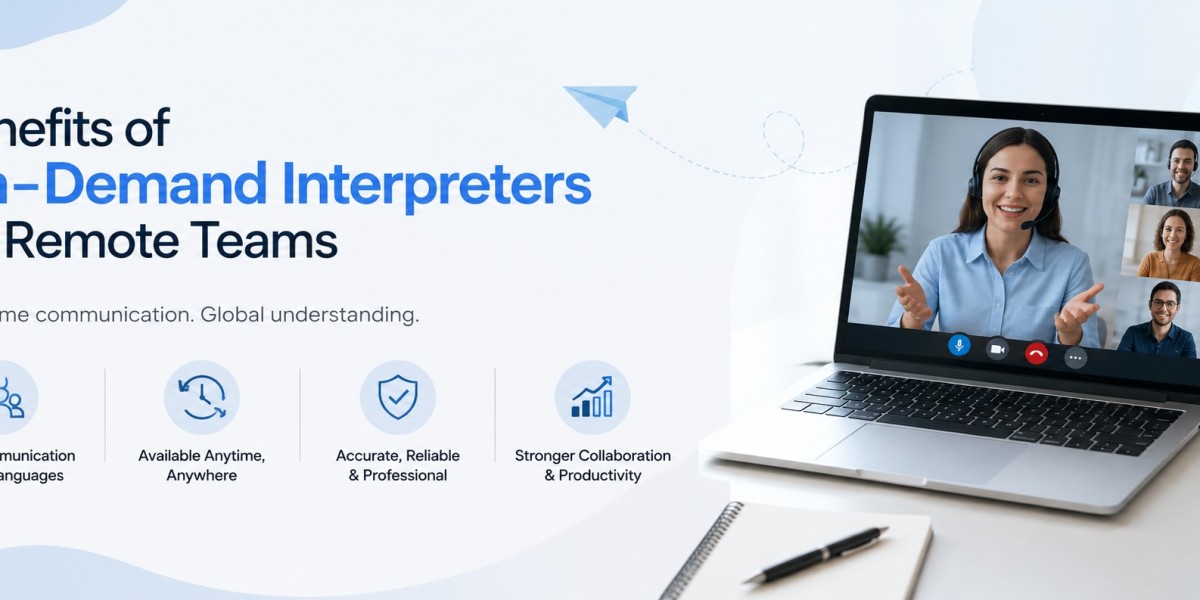


Remote work has made it easier for businesses to connect with employees, clients, and partners around the world. However, working across different languages can create communication challenges. Misunderstandings during meetings, presentations, negotiations, and training sessions can affect productivity and business relationships. This is where on-demand interpreters can provide valuable support.
1. Quick Access to Professional Language Support
One of the biggest benefits of on-demand interpretation is immediate access to professional language assistance. Businesses do not always know when they will need an interpreter. An international client may join a meeting unexpectedly, or a remote team may need help communicating with a foreign partner.
Platforms such as Hanioo make it easier for businesses to connect with professional interpreters for online and onsite communication. Instead of spending significant time searching for language support, companies can find an interpreter based on their specific requirements.
2. Better Communication in Virtual Meetings
Remote meetings often bring together participants from different countries and language backgrounds. Although English may be commonly used, some participants may feel more comfortable explaining complex ideas in their native language.
A professional interpreter can help participants understand discussions, questions, instructions, and responses more clearly. This can be particularly important during technical presentations, negotiations, client meetings, and international team discussions.
Businesses can also use on-demand interpreting services when they need flexible language support without arranging a long-term interpreting contract.
3. Reduced Travel and Operational Costs
Traditional onsite interpretation may involve travel expenses, accommodation, and additional scheduling requirements. For short meetings, these costs may not be practical.
Remote interpretation allows an interpreter to join a virtual meeting from another location. Businesses can therefore receive professional language support without requiring the interpreter to travel.
This can help organizations reduce unnecessary expenses while still maintaining professional communication standards.
4. Access to Multiple Languages
International companies may communicate with people who speak many different languages. Hiring full-time interpreters for every language would be expensive and difficult to manage.
On-demand interpretation provides greater flexibility. A business may require French interpretation for one meeting, German for another, and Spanish for a customer discussion. Having access to a broader interpreter network makes it easier to handle these changing requirements.
This flexibility is especially useful for companies with international customers, remote employees, and global suppliers.
5. Improved Productivity
Language misunderstandings can lead to repeated explanations, additional meetings, delayed decisions, and unnecessary emails. These issues can reduce productivity across remote teams.
Professional interpreters help participants understand conversations in real time. Team members can ask questions, exchange ideas, and make decisions without constantly worrying about language barriers.
Remote interpretation research also highlights benefits such as geographical flexibility and access to ad-hoc language support. Learn more about remote interpreting.
6. Flexible Support for Remote and Hybrid Teams
Modern businesses increasingly operate with employees working from different cities and countries. On-demand interpretation fits naturally into this flexible working environment.
Interpreters can support various types of communication, including:
- International business meetings
- Client presentations
- Online training sessions
- Webinars and conferences
- HR interviews
- Business negotiations
- Customer support calls
- Employee onboarding
This makes professional interpretation useful for both occasional and regular communication needs.
7. Helpful for Time-Sensitive Situations
Not every interpreting requirement can be planned in advance. Businesses may suddenly need to communicate with an international customer, resolve an urgent issue, or participate in an unexpected meeting.
On-demand interpreters provide a practical solution for these situations. Instead of waiting several days for a scheduled appointment, companies can look for language support when the need arises.
8. More Reliable Than Using Employees
Some companies depend on bilingual employees to interpret during meetings. While this may appear convenient, employees may not have professional interpreting experience.
Professional interpreters are trained to communicate meaning, context, terminology, and tone accurately between languages. For sensitive business discussions, negotiations, legal conversations, or healthcare communication, professional interpretation can provide greater confidence.
Organizations can also explore remote interpretation solutions for flexible multilingual communication.
Conclusion
On-demand interpreters offer remote teams a convenient way to overcome language barriers. They provide quick access to professional language support, reduce travel requirements, improve communication, and give businesses greater flexibility when working with international customers and partners.
As remote and hybrid work continues to expand, professional interpretation can become an important part of global business communication. With platforms such as Hanioo, businesses can find professional interpreters for online and onsite communication and keep international conversations moving smoothly.
For companies working across languages and borders, on-demand interpretation is more than a communication service—it is a practical tool for building stronger global relationships and supporting successful collaboration.






