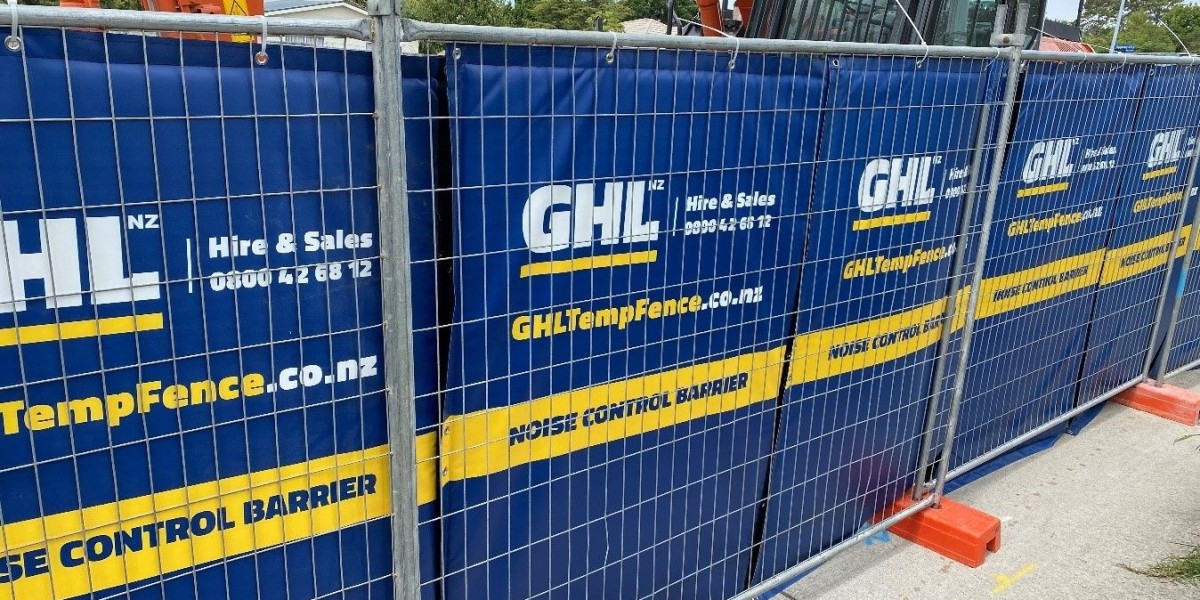


Construction sites are often associated with progress, but they can also bring unwanted noise to nearby homes, offices, schools, hospitals, and businesses. Heavy machinery, drilling, cutting, trucks, generators, and constant movement can quickly turn a peaceful neighborhood into a noisy environment. This is where construction fence soundproofing becomes an increasingly valuable solution.
Rather than simply marking a construction boundary, a properly designed soundproof fence can help contain and reduce noise while improving privacy, safety, and the overall appearance of a worksite. But how does it work, and what should project managers consider when choosing a solution?
Why Construction Noise Is Such a Serious Problem
Construction noise is more than an occasional inconvenience. Prolonged exposure to loud sounds can disrupt sleep, concentration, communication, and daily routines. For businesses operating close to a construction project, excessive noise may interfere with meetings, customer service, or productivity.
Furthermore, construction projects often take months or even years to complete. Because of this, managing noise from the beginning can make a significant difference to relationships between contractors, property owners, workers, and surrounding communities.
Consequently, noise control should be considered as part of the overall site-management strategy rather than treated as an afterthought.
What Is Construction Fence Soundproofing?
Construction fence soundproofing refers to the use of specialized barriers, acoustic materials, and fence systems designed to reduce the transmission of construction noise beyond the worksite.
A traditional temporary fence may provide security and visual separation, but it usually offers limited acoustic protection. Sound can pass through gaps, travel over lightweight panels, or move around the ends of a barrier.
Soundproof construction fencing addresses these weaknesses by creating a denser and more continuous barrier. Depending on the system, it may incorporate acoustic blankets, sound-absorbing materials, reinforced panels, or specially engineered membranes.
The goal is not necessarily to make a construction site silent. Instead, effective soundproofing aims to reduce the amount of noise reaching sensitive areas.
How Soundproof Construction Fences Work
The basic principle is relatively straightforward: sound travels through the air and follows available paths. A dense, continuous barrier interrupts that path.
An effective acoustic fence typically works through a combination of blocking, absorbing, and redirecting sound.
Dense materials can prevent sound waves from passing directly through the barrier. Meanwhile, acoustic layers can absorb some of the sound energy and reduce reflections. When the barrier is tall enough and properly installed, it can also create a quieter area behind the fence.
However, installation quality matters enormously. Even a high-performance acoustic material can lose effectiveness when there are large gaps beneath panels, between sections, or around gates.
For this reason, a soundproofing system should be planned as a complete barrier rather than as isolated pieces of acoustic material.
Key Benefits of Construction Fence Soundproofing
1. Reduced Noise for Nearby Communities
The most obvious benefit is noise reduction. By limiting the amount of construction sound escaping the site, acoustic fencing can make nearby environments more comfortable.
This can be particularly useful for projects located near residential neighborhoods, apartment buildings, schools, healthcare facilities, and busy commercial areas.
2. Better Community Relations
Construction projects can create tension when residents feel that their concerns are being ignored. Taking visible steps to control noise demonstrates that contractors and developers are considering the surrounding community.
As a result, proactive sound management can contribute to fewer complaints and better relationships throughout the project.
3. Improved Worker Conditions
Soundproof fencing is primarily installed to protect surrounding areas, but thoughtful noise management can also contribute to a more controlled work environment.
Reducing unnecessary noise reflections around a site may improve communication in certain areas and make the workplace feel less chaotic.
4. Greater Privacy
Acoustic construction fencing can also provide visual screening. This can conceal equipment, materials, debris, and active work areas from pedestrians and neighboring properties.
Therefore, one well-designed temporary barrier can address several concerns simultaneously: noise, privacy, security, and appearance.
Choosing the Right Soundproofing Material
Not every construction site has the same acoustic requirements. The best material depends on factors such as the type of noise, site layout, barrier height, project duration, weather conditions, and proximity to sensitive buildings.
For example, heavy equipment may generate low-frequency noise that requires a different approach from high-frequency sounds produced by cutting or drilling.
Acoustic blankets are often useful because they can be installed on temporary fencing and adapted to changing site conditions. More substantial projects may benefit from rigid acoustic panels or engineered barrier systems.
Before selecting a product, project managers should consider its acoustic performance, durability, installation method, fire characteristics, weather resistance, and compatibility with existing fencing.
Installation Matters More Than Many People Realize
One of the biggest mistakes in construction fence soundproofing is focusing entirely on the material while overlooking installation.
A barrier with gaps can allow sound to escape through the easiest available path. Similarly, a fence that is too short may allow sound to travel directly over the top.
For better performance, the fence should be positioned strategically between the primary noise sources and the sensitive areas being protected. Gaps should be minimized, panels should overlap where appropriate, and gates should be considered as potential weak points.
In addition, the barrier should remain stable in wind and changing weather conditions. A soundproof fence that becomes damaged or displaced will naturally provide less protection.
Combining Soundproofing With Other Noise-Control Measures
A fence should not be viewed as the only answer to construction noise. The strongest strategy combines several measures.
Contractors can schedule particularly noisy activities during appropriate hours, maintain machinery properly, use quieter equipment where practical, and place stationary generators or compressors away from sensitive boundaries.
Temporary acoustic enclosures can also be used around especially loud equipment. Together, these measures create a layered noise-control strategy.
In other words, construction fence soundproofing works best when it is part of a broader noise-management plan.
Is Soundproof Construction Fencing Worth the Investment?
For projects in isolated industrial areas, extensive acoustic fencing may not always be necessary. However, the calculation changes dramatically when construction takes place close to people.
The potential costs of uncontrolled noise include complaints, disrupted operations, strained community relationships, project restrictions, and reputational damage. Investing in appropriate sound control early may therefore be more economical than attempting to solve noise problems after they appear.
Moreover, temporary acoustic fencing can often be relocated or reused as construction phases change, adding flexibility to the investment.
The Future of Quieter Construction Sites
As cities become more densely populated, construction and communities will increasingly operate side by side. This makes effective noise management more important than ever.
The future of construction fence soundproofing is likely to involve smarter materials, improved acoustic engineering, modular systems, and better integration with digital monitoring technologies. These developments could allow contractors to identify problem areas faster and respond before noise becomes a major issue.
Ultimately, construction is a necessary part of growth and development, but progress does not have to come at the expense of the people living and working nearby. By treating noise control as an essential component of responsible construction, project teams can create safer, more considerate, and more sustainable worksites. The question is no longer simply how quickly a project can be built—it is how thoughtfully it can be built while respecting the environment and communities around it.






