

Embroidery digitizing is the process of converting artwork into a stitch-based file that an embroidery machine can read. While modern software can automatically create embroidery files, manual digitizing remains an important choice for businesses that need accuracy, clean stitching, and consistent results.
For simple designs, auto digitizing can save time. However, complex logos, small text, detailed artwork, and specialty embroidery often require more careful planning. Understanding the difference between auto and manual digitizing can help you choose the right option for your project.
What Is Auto Digitizing?
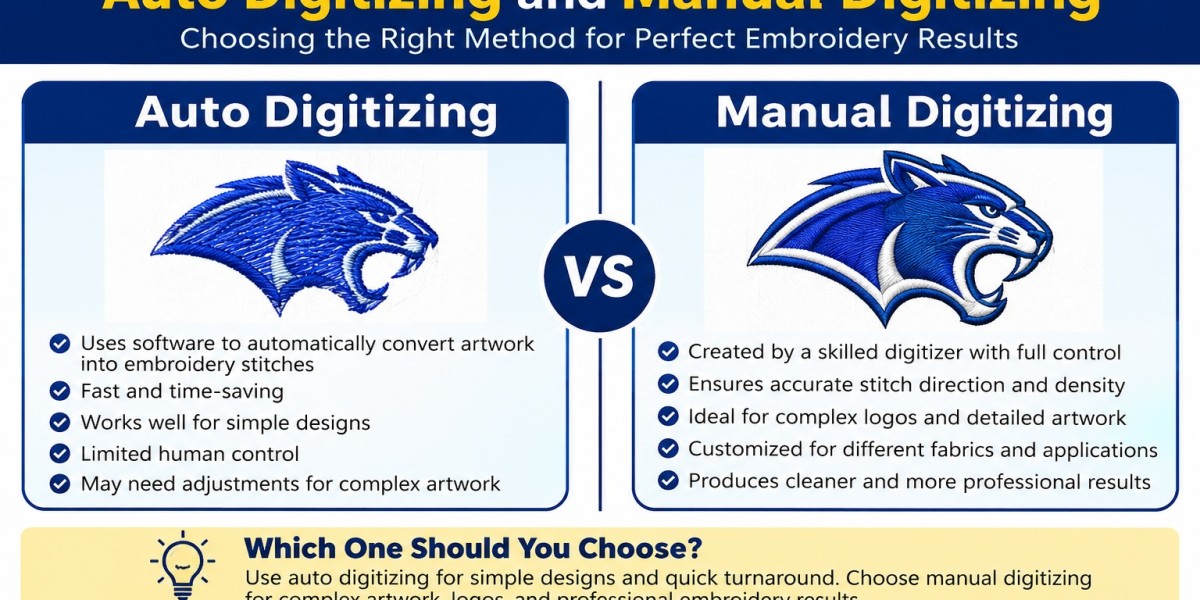
Auto digitizing uses embroidery software to analyze artwork and automatically convert it into stitches. The software identifies shapes, colors, and areas of the design and applies stitch types based on its programmed settings.
The biggest advantage of auto digitizing is speed. A simple design can be converted into an embroidery file within a short time. It can also be useful for basic shapes, large designs, and artwork with limited colors.
However, automatic software does not always understand how a design will behave on different fabrics. It may create incorrect stitch density, poor stitch direction, unnecessary jumps, or problems with small details. These issues can become noticeable when the design is actually embroidered.
What Is Manual Digitizing?
Manual digitizing is a more controlled process in which a skilled digitizer creates and adjusts the embroidery design element by element. The digitizer decides where stitches should begin and end, which stitch type should be used, and how the design should be sequenced.
Manual digitizing allows better control over important factors such as:
- Stitch density
- Stitch direction
- Underlay
- Pull compensation
- Stitch sequence
- Small text
- Fine details
- Fabric requirements
This level of control can help produce cleaner and more reliable embroidery, particularly when working with complicated logos, caps, jackets, or textured and stretchable fabrics.
Auto Digitizing vs. Manual Digitizing
The main difference is the level of human control.
| Feature | Auto Digitizing | Manual Digitizing |
|---|---|---|
| Speed | Very fast | Takes more time |
| Human control | Limited | High |
| Simple designs | Suitable | Excellent |
| Complex artwork | Can struggle | Better suited |
| Small text | Often challenging | More precise |
| Stitch direction | Software-generated | Carefully planned |
| Fabric adjustment | Limited | Customized |
| Fine details | May be lost | Better preserved |
Auto digitizing can be useful when speed is the main priority and the artwork is relatively simple. Manual digitizing is generally a better choice when the final embroidery needs to accurately represent a brand or detailed design.
Which Method Is Better for Logos?
For professional logos, manual digitizing is often the safer choice. A logo may contain small lettering, thin outlines, curved shapes, or multiple elements that require careful stitch planning.
For example, a business logo embroidered on a shirt may need different settings from the same logo embroidered on a cap. Caps have a curved surface, while shirts and jackets can have different fabric characteristics. A skilled digitizer can adjust the design according to its intended application.
Professional Embroidery Digitizing Services can help businesses prepare designs that are optimized for their specific embroidery requirements.
Why Manual Digitizing Can Produce Better Results
Manual digitizing gives the digitizer greater control over the final stitch file. Instead of simply accepting software-generated settings, the digitizer can modify individual sections of the design.
This can help reduce problems such as uneven stitching, excessive thread density, poor registration, and loss of small details. Proper stitch planning can also improve the overall appearance and performance of an embroidery design.
This is especially valuable for businesses that produce embroidered uniforms, promotional products, branded apparel, hats, patches, and other products regularly.
Choosing Professional Embroidery Digitizing Services in USA
If you need reliable embroidery files for commercial production, choosing an experienced provider is important. Look for a service that understands different embroidery applications and can provide machine-ready files in the formats you require.
Capital Digitizing provides professional embroidery digitizing services in USA, including custom embroidery digitizing, logo digitizing, cap and hat digitizing, 3D puff digitizing, jacket-back digitizing, and other specialized services. The company states that its team creates precision machine-ready files and supports different embroidery machine requirements.
The goal should not simply be to convert an image into stitches. The goal is to create a file that produces clean, consistent embroidery when it reaches the machine.
When Should You Choose Auto Digitizing?
Auto digitizing may be suitable when:
- Your design has simple shapes.
- The artwork contains few colors.
- There are no complicated details.
- You need a quick conversion.
- The design will be used on a straightforward embroidery project.
For simple artwork, automatic tools can provide a useful starting point. However, the resulting file should still be checked before production.
When Should You Choose Manual Digitizing?
Manual digitizing is recommended when:
- Your design contains small text.
- You have a detailed business logo.
- The design will be embroidered on caps.
- You need 3D puff embroidery.
- The artwork contains fine lines or complex shapes.
- You need consistent results for commercial production.
- The design will be used on different types of fabrics.
For these projects, the additional attention provided by manual digitizing can make a significant difference in the finished embroidery.
Conclusion
Auto digitizing and manual digitizing both have their place in modern embroidery. Auto digitizing is fast and can work well for simple designs, while manual digitizing provides greater control and customization for complex artwork.
If quality, accuracy, and professional presentation are important, working with an experienced digitizing provider can help you achieve better results. Capital Digitizing offers professional embroidery digitizing solutions designed to turn artwork and logos into machine-ready embroidery files for businesses and embroidery professionals.
FAQs
1. What is auto digitizing?
Auto digitizing uses embroidery software to automatically convert artwork into stitches with minimal human input.
2. What is manual embroidery digitizing?
Manual digitizing involves a skilled digitizer creating and adjusting stitch patterns based on the artwork, fabric, and intended embroidery application.
3. Is manual digitizing better than auto digitizing?
For complex designs, small text, logos, caps, and professional production, manual digitizing generally provides greater control and more reliable results.
4. Which digitizing method is best for business logos?
Manual digitizing is often the better choice for business logos because it allows detailed control over stitch direction, density, sequencing, and fine elements.
5. Where can I get professional embroidery digitizing services?
Capital Digitizing provides professional embroidery digitizing services, including logo, cap, 3D puff, jacket-back, and custom embroidery digitizing.