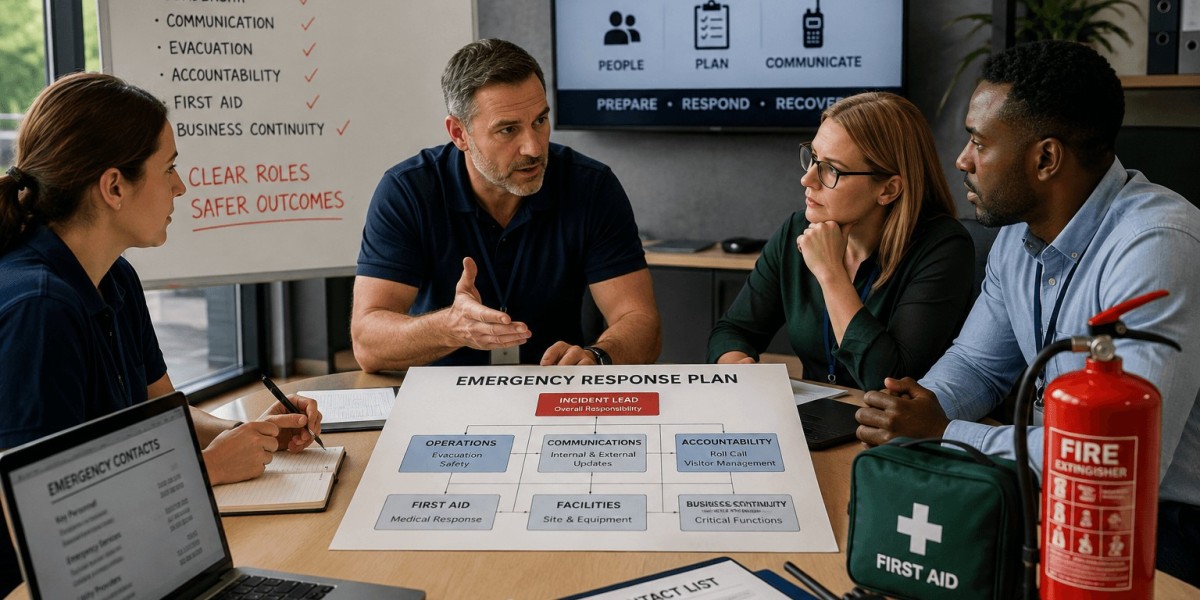


When an emergency occurs, there is little time to work out who should take charge.
Whether an organisation is responding to a fire, serious security incident, major power failure, cyber incident or another unexpected event, uncertainty can quickly create confusion. Employees may know that something is wrong, but without clear responsibilities, they may not know who should make decisions, who should communicate with others or what actions they are expected to take.
This is why clearly defined roles and responsibilities should be at the heart of any effective emergency response plan.
A well-designed plan does more than describe what could happen. It gives people clear guidance on what they need to do, who they report to and how different teams should work together.
Why Clear Responsibilities Matter
During an emergency, normal working arrangements can change very quickly.
Staff may be separated from their usual managers, key personnel may be unavailable and normal communication channels may become difficult to use. If responsibilities have not been agreed in advance, important decisions can be delayed.
Clear role allocation helps remove that uncertainty.
Employees should understand who has overall responsibility for coordinating the response, who is responsible for specific tasks and who has the authority to make decisions when circumstances change.
This creates a clear structure that people can follow even when the situation is stressful.
Establish An Emergency Leadership Structure
Every organisation should identify who will lead its emergency response.
Depending on the size and nature of the organisation, this could be one designated emergency co-ordinator or a wider response team.
The person or team responsible should have sufficient authority to make decisions, access relevant information and co-ordinate resources.
It is also important to identify deputies.
An emergency can happen at any time, and the primary person responsible may be unavailable. Having an alternative ensures the organisation does not suddenly lose its leadership structure when it is most needed.
Define Responsibilities For Key Tasks
Emergency response involves more than one activity, so assigning responsibilities to specific people or teams is essential.
Depending on the organisation, responsibilities could include:
• Raising the alarm and initiating emergency procedures
• Contacting emergency services where appropriate
• Managing evacuation arrangements
• Accounting for employees and visitors
• Providing first aid
• Communicating with employees
• Managing communication with customers, suppliers or other stakeholders
• Protecting critical equipment and information where safe to do so
• Coordinating business continuity arrangements
• Recording key decisions and actions
The exact structure will depend on the organisation's size, industry and risk profile. The important point is that responsibilities should be specific rather than vague.
"Assist during an emergency" does not provide much practical guidance. "Responsible for coordinating the visitor register during an evacuation" is considerably clearer.
Avoid Creating A Single Point Of Failure
One person should never be the only individual who understands an important emergency procedure.
If a particular employee is responsible for contacting key suppliers, managing a building access system or maintaining emergency contact information, someone else should know how to perform that role as well.
This is where deputies, cross-training and documented procedures become valuable.
Organisations should consider what would happen if a key person were on annual leave, working remotely or directly affected by the incident. Building resilience into the response structure reduces reliance on any single individual.
Make The Chain Of Command Clear
Employees need to know who they should report to during an emergency.
A simple chain of command can prevent conflicting instructions and help information move efficiently between different parts of the organisation.
For example, a designated incident lead might co-ordinate the overall response while department leads manage specific teams. Staff should understand how these roles interact and who has authority to make decisions.
The structure should remain straightforward. A complicated hierarchy may become difficult to follow when people are under pressure.
Communication Needs Its Own Responsibilities
Communication is one of the most important parts of emergency management.
Someone should be responsible for communicating with employees, while another designated person may manage external communications if appropriate.
Organisations should establish in advance:
• Who can issue official updates
• Which communication channels should be used
• How employees will be contacted if normal systems are unavailable
• Who communicates with customers or suppliers
• Who is responsible for liaising with emergency services or relevant authorities
Clear communication responsibilities can help prevent rumours, conflicting messages and unnecessary confusion.
Consider Different Emergency Scenarios
Not every emergency will require exactly the same response.
A building evacuation may require different responsibilities from a prolonged power outage or a serious IT disruption.
Organisations should therefore consider their most credible risks and identify how roles may change depending on the situation.
For example, a facilities manager may play a central role during a building-related incident, while IT leadership may take greater responsibility during a technology-related disruption.
The overall emergency management structure can remain consistent while specific responsibilities adapt to the circumstances.
Train People, Not Just Policies
A well-written emergency response plan is of limited value if employees have never used it. Training should make responsibilities familiar before an incident occurs.
Staff should understand what is expected of them, who they report to and where they can find relevant procedures. Key personnel should receive additional training appropriate to their responsibilities.
Exercises and simulations can also be valuable.
A practical exercise may reveal that contact details are outdated, responsibilities overlap or staff are unsure who has decision-making authority. These issues are much easier to address during a controlled exercise than during a real emergency.
Review And Update Responsibilities Regularly
Organisations change.
Employees leave, new sites open, departments are restructured and responsibilities move between teams. An emergency plan that was accurate two years ago may no longer reflect how the organisation operates.
Roles and contact details should therefore be reviewed regularly.
The plan should also be updated following significant incidents, exercises or organisational changes.
Keeping this information current ensures that employees can rely on the plan when they need it.
Turning Uncertainty Into Preparedness
An effective emergency response depends on people knowing what to do.
Clear roles and responsibilities provide structure when normal operations are disrupted. They help organisations make decisions more quickly, coordinate teams effectively and communicate with greater confidence.
The best emergency plans are not necessarily the longest or most complicated. They are the ones that people understand and can act upon.
By assigning clear responsibilities, identifying deputies, establishing communication arrangements and regularly testing the plan, organisations can be better prepared to respond when the unexpected happens.
When an emergency occurs, clarity matters. Knowing who does what before an incident begins can make all the difference when every second counts.