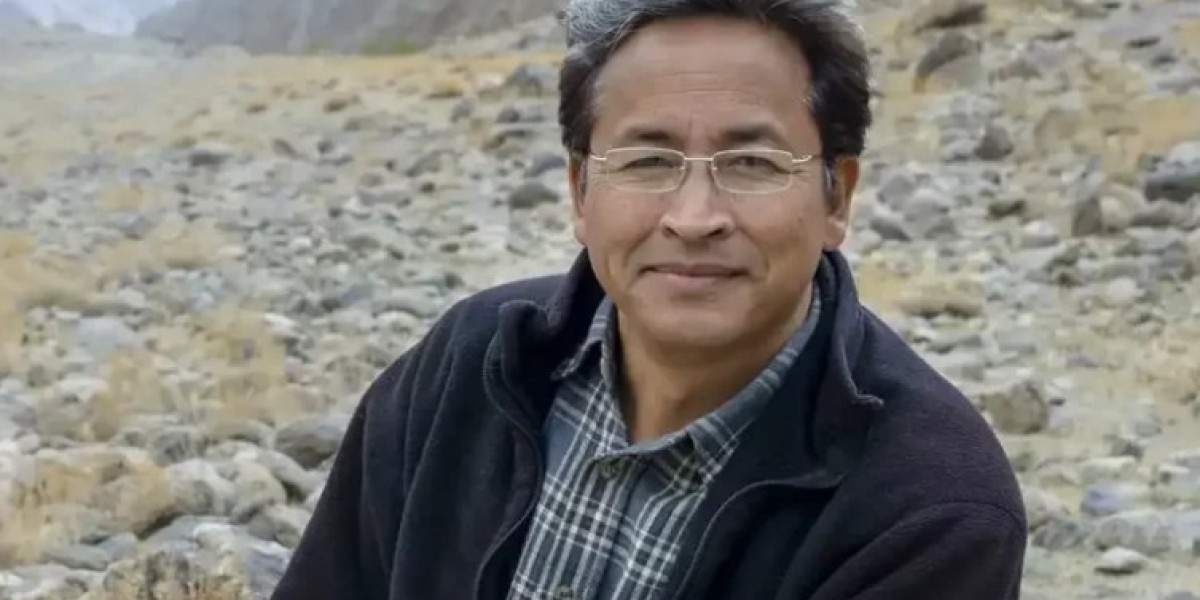


Sonam Wangchuk is an Indian engineer, educator, innovator, and environmentalist known for his work in Ladakh. Over the years, he has focused on finding practical solutions to social and environmental challenges faced by people living in the Himalayan region. His approach combines education, technology, sustainability, and community participation. Rather than treating development as something that comes only from large institutions, Wangchuk has promoted solutions that are closely connected to local needs and resources.
Revolutionising Education in Ladakh
Education has been one of the most important areas of Sonam Wangchuk’s social work. In 1988, he co-founded the Students’ Educational and Cultural Movement of Ladakh (SECMOL), an organisation established to address challenges faced by students in the region.
Wangchuk believed that education should prepare young people to understand and solve problems in their own communities. His educational approach places importance on practical learning, creativity, teamwork, and responsibility. Instead of focusing exclusively on conventional academic methods, the model encourages students to learn from their surroundings and develop useful skills.
SECMOL became an example of how education can be adapted to local conditions. Its campus also incorporates environmentally conscious practices, demonstrating that learning about sustainability can happen through everyday experience rather than only through textbooks.
The Ice Stupa and Water Conservation
Water scarcity is a serious challenge in many parts of Ladakh. Although the region receives snowfall and has frozen water during winter, farmers can face shortages during spring, when agricultural activity begins and natural water sources may not yet provide enough supply.
One of Wangchuk’s best-known innovations is the Ice Stupa concept. The idea involves creating large artificial ice formations during winter by directing water into the cold environment, where it freezes. The stored ice can then melt gradually during warmer months.
The innovation attracted international attention because it uses the region’s naturally cold climate to create a form of seasonal water storage. It demonstrates an important principle behind Wangchuk’s work: technology does not always have to be complicated or expensive to be useful. Sometimes, the most effective solutions come from understanding local geography and environmental conditions.
Promoting Sustainable Development
Environmental sustainability is another major part of Wangchuk’s social contributions. Ladakh has a fragile mountain ecosystem, and rapid development can create pressure on natural resources. Wangchuk has advocated development approaches that take local environmental conditions into account.
His work promotes ideas such as renewable energy, efficient use of resources, environmentally responsible construction, and reduced dependence on systems that may not suit the Himalayan environment. These ideas are particularly relevant in regions where water, energy, and other resources can be difficult to access.
His initiatives demonstrate that economic and social development do not necessarily have to come at the expense of the environment. Local innovation can help communities address practical needs while also considering long-term ecological sustainability.
Encouraging Young People to Become Problem Solvers
A central theme in Wangchuk’s work is empowering young people. He has encouraged students to look at problems around them and think creatively about possible solutions.
This approach changes the role of education. Instead of seeing students only as learners who need to pass examinations, it encourages them to become problem solvers and contributors to society. Such an approach can be especially valuable in remote communities, where local knowledge and practical skills can play an important role in development.
By connecting education with real-world challenges, Wangchuk’s initiatives have helped promote a culture of innovation and social responsibility.
Himalayan Institute of Alternatives
Wangchuk has also been associated with the Himalayan Institute of Alternatives, Ladakh (HIAL), an initiative aimed at developing an alternative model of higher education. The concept focuses on experiential learning and encourages students to work on real problems connected to the Himalayan region.
The broader idea behind such an institution is to create education that is relevant to local economic, environmental, and social conditions. Students can explore areas such as sustainable development, entrepreneurship, tourism, agriculture, and other fields while considering the needs of mountain communities.
This reflects Wangchuk’s larger belief that education should not be separated from society. Learning can become more meaningful when students are given opportunities to apply their knowledge to real challenges.
Community-Centred Innovation
Another significant aspect of Sonam Wangchuk’s contributions is his emphasis on community participation. His projects generally focus on problems that directly affect local people, including education, water availability, climate-related challenges, and sustainable development.
This community-centred approach is important because solutions designed without understanding local conditions may not always work effectively. Wangchuk’s work highlights the value of combining modern engineering with traditional knowledge and local experience.
His example also shows that social innovation does not necessarily require enormous resources. A clear understanding of a problem, combined with creativity and community involvement, can sometimes lead to practical solutions.
Inspiring Wider Discussions
Sonam Wangchuk’s work has attracted attention beyond Ladakh because it connects several important global issues. Education reform, climate change, water conservation, sustainable development, and youth empowerment are challenges faced by communities around the world.
His initiatives provide an example of how local experimentation can contribute to broader conversations about sustainable development. The Ice Stupa, for instance, has encouraged discussions about using nature-based approaches to address water shortages in cold regions.
Similarly, his educational initiatives have raised questions about whether conventional education systems can do more to develop creativity, practical skills, and social responsibility among students.
Conclusion
Sonam Wangchuk’s contributions to social causes extend across education, environmental conservation, water management, innovation, and community development. His work in Ladakh demonstrates the value of creating solutions that are practical, locally relevant, and environmentally responsible.
From helping develop alternative approaches to education through SECMOL to promoting water conservation through the Ice Stupa concept and supporting new models of learning through HIAL, Wangchuk has consistently focused on connecting ideas with real-world problems.
His journey illustrates how education and innovation can become powerful tools for social change. More importantly, his work encourages communities and young people to look at local challenges not simply as obstacles, but as opportunities to develop creative and sustainable solutions.






