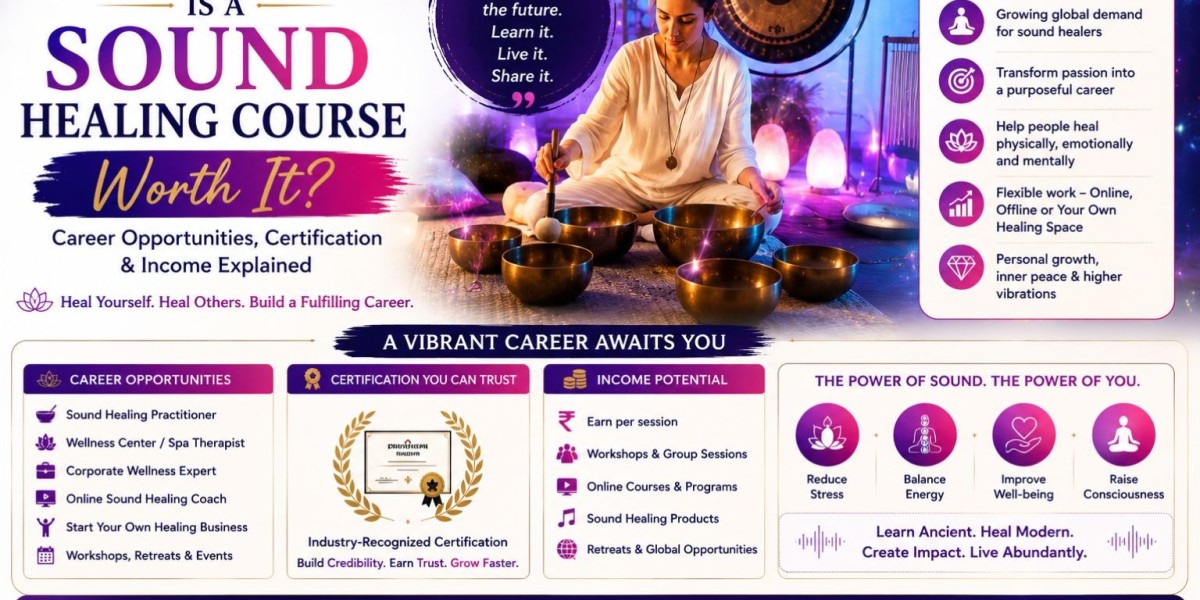


If you are looking for the best sound healing course in India, focus on the quality of training rather than choosing a program only because of its title, certification, or price. A strong course should explain sound-based wellness practices, introduce different instruments, provide practical learning, and teach students how to structure sessions responsibly.
For beginners, structured education can make it easier to understand singing bowls, gongs, tuning forks, meditation, sound vibrations, and relaxation techniques without relying on scattered online information.
How Do You Choose the Best Sound Healing Course?
Before enrolling, check whether the program includes:
Sound healing fundamentals
Singing bowl techniques
Crystal bowl practices
Gong basics
Tuning fork techniques
Meditation and relaxation practices
Session preparation
Practical demonstrations
Guided exercises
Client communication
Ethical boundaries
Assessment and certification
The exact curriculum differs between institutes, so review the course syllabus carefully.
What Is Sound Healing?
Sound healing is a complementary wellness practice that uses sound, rhythm, vibration, focused listening, and instruments as part of relaxation and meditation practices.
Commonly used instruments include Tibetan singing bowls, crystal singing bowls, gongs, tuning forks, drums, and other sound-producing tools.
Sound healing should be understood as a wellness practice rather than a replacement for medical diagnosis or treatment. Responsible training should also teach practitioners to communicate its scope appropriately.
What Do You Learn in Sound Healing Training?
A comprehensive program generally progresses from basic concepts to practical application.
Sound and Vibration Fundamentals
Students are introduced to concepts related to sound, resonance, rhythm, vibration, and focused listening within the context of sound-based wellness practices.
Singing Bowls
Training may cover how to hold, strike, and play singing bowls, as well as how different techniques can be incorporated into meditation sessions.
Crystal Singing Bowls
Students may learn basic playing methods and ways to incorporate crystal bowls into guided relaxation or sound meditation practices.
Gongs
Gong training can introduce different playing techniques and how practitioners can use sound layers within a structured session.
Tuning Forks
Courses may explain how tuning forks are traditionally incorporated into sound-based exercises and meditation practices.
What Makes the Best Sound Healing Training?
The best sound healing training should provide more than theoretical information.
Look for a program that offers:
Practical Exposure: Students should have opportunities to learn and practice instrument techniques.
Structured Curriculum: Topics should progress logically from fundamentals to practical sessions.
Instructor Guidance: Learners should be able to ask questions and clarify techniques.
Demonstrations: Visual demonstrations can make instrument-based learning easier.
Assessment: A clear assessment process helps learners understand whether they have completed the course requirements.
Ethical Awareness: Training should explain the boundaries of sound healing as a complementary wellness practice.
Why Consider Sound Therapy Courses Online?
Sound therapy courses online can be convenient for students who cannot attend regular classroom sessions.
Depending on the institute, online programs may offer:
Live classes
Recorded sessions
Demonstrations
Digital study materials
Guided exercises
Assignments
Instructor interaction
Assessments
However, practical subjects require hands-on learning. Before choosing an online program, confirm how demonstrations and practice are handled.
What Should Sound Healing Certification Programs Include?
When comparing sound healing certification programs, don't judge them only by the certificate.
Check whether the program explains:
Sound healing principles
Instrument selection
Playing techniques
Session structure
Meditation methods
Practical applications
Professional communication
Ethical boundaries
Assessment criteria
A certificate can document completion of training, but it does not automatically guarantee professional expertise or specific client outcomes.
How Much Does a Sound Healing Course Cost?
Fees vary according to the institute and program structure.
Factors that can influence the cost include:
Course duration
Number of classes
Live or recorded format
Instruments covered
Practical training
Study materials
Faculty interaction
Assessment
Certification
Rather than selecting the cheapest option, compare what you actually receive for the course fee.
Always check the latest fee information directly with the institute because course structures and pricing may change.
How Long Does Sound Healing Training Take?
There is no standard duration for every program.
A short introductory workshop may provide basic knowledge, while a comprehensive certification program can require several weeks or months of learning and practice.
Before enrolling, ask about:
Total course duration
Number of sessions
Class frequency
Practical training
Assignments
Assessment
Certification requirements
Completing training is only the beginning. Regular practice is important for developing confidence with instruments and session planning.
Who Can Enroll in Sound Healing Training?
Many beginner-level programs are designed for learners without previous experience.
Sound healing may interest:
Beginners
Meditation practitioners
Yoga professionals
Wellness enthusiasts
Energy-work learners
Holistic wellness practitioners
People interested in complementary practices
Check the institute's eligibility requirements because advanced programs may have additional prerequisites.
Why Is IIVS a Good Option for Sound Healing?
For learners comparing institutes that offer education in traditional and complementary disciplines, IIVS can be considered as one option.
Structured Learning
A structured curriculum can help students understand sound healing progressively rather than learning disconnected techniques from different sources.
Practical Approach
Sound-based learning requires familiarity with instruments. Demonstrations and guided practice can help learners develop practical confidence.
Expert Guidance
Access to instructors allows students to clarify techniques, understand instrument use, and receive guidance during their learning journey.
Certification
Learners interested in documenting their training can review the current IIVS certification requirements and assessment structure before enrolling.
Flexible Learning
Students can check the currently available learning format and choose an option that fits their schedule and learning preferences.
Can Sound Healing Become a Career?
Some learners study sound healing for personal development, while others incorporate it into wellness-related professional activities.
Potential directions may include:
Sound meditation sessions
Group wellness sessions
Workshops
Retreat activities
Complementary wellness services
Educational content
There is no fixed salary or guaranteed income after completing a sound healing course. Earnings can depend on experience, location, audience, pricing, reputation, and business skills.
Be cautious of programs promising guaranteed income simply because you obtain certification.
What About an Astrology Certificate Course Online?
Learners interested in traditional Indian knowledge may also encounter an astrology certificate course online while researching complementary educational programs.
Astrology and sound healing are different subjects and should be evaluated separately. If you are considering both, compare the curriculum, faculty, practical learning, duration, and certification requirements for each program.
Similarly, when researching an Indian institute of astrological sciences, focus on the actual educational curriculum and faculty rather than relying solely on the institute's name or promotional claims.
Start Today
Finding the best sound healing course in India requires looking beyond marketing claims. A quality program should combine sound healing fundamentals, instrument techniques, demonstrations, practical learning, ethical awareness, assessment, and appropriate certification.
When comparing sound healing certification programs and sound therapy courses online, consider curriculum depth, faculty experience, practical training, duration, fees, and learner support.
Begin your learning journey with IIVS to gain expert guidance, practical experience, flexible online learning, and recognized certification that supports your personal and professional development.
Click Here for Free Counseling
Or call +91 79826 57336.
Frequently Asked Questions
1. What is the best sound healing course in India?
The best course depends on your goals. Look for comprehensive curriculum, practical training, experienced faculty, suitable duration, assessment, certification, and learner support.
2. Can I study sound healing online?
Yes. Online programs can provide theoretical lessons and demonstrations. Check how practical training is delivered before enrolling.
3. Are sound therapy courses online suitable for beginners?
Many are designed for beginners, but eligibility varies. Review the course prerequisites and syllabus.
4. What instruments are taught in sound healing?
Depending on the program, students may learn singing bowls, crystal bowls, gongs, tuning forks, drums, and other sound instruments.
5. Is sound healing a medical treatment?
No. Sound healing should be approached as a complementary wellness practice and should not replace qualified medical diagnosis or treatment.
6. How long does it take to become a sound healing practitioner?
There is no universal timeline. Training duration varies, and practical confidence develops through continued learning and practice.









