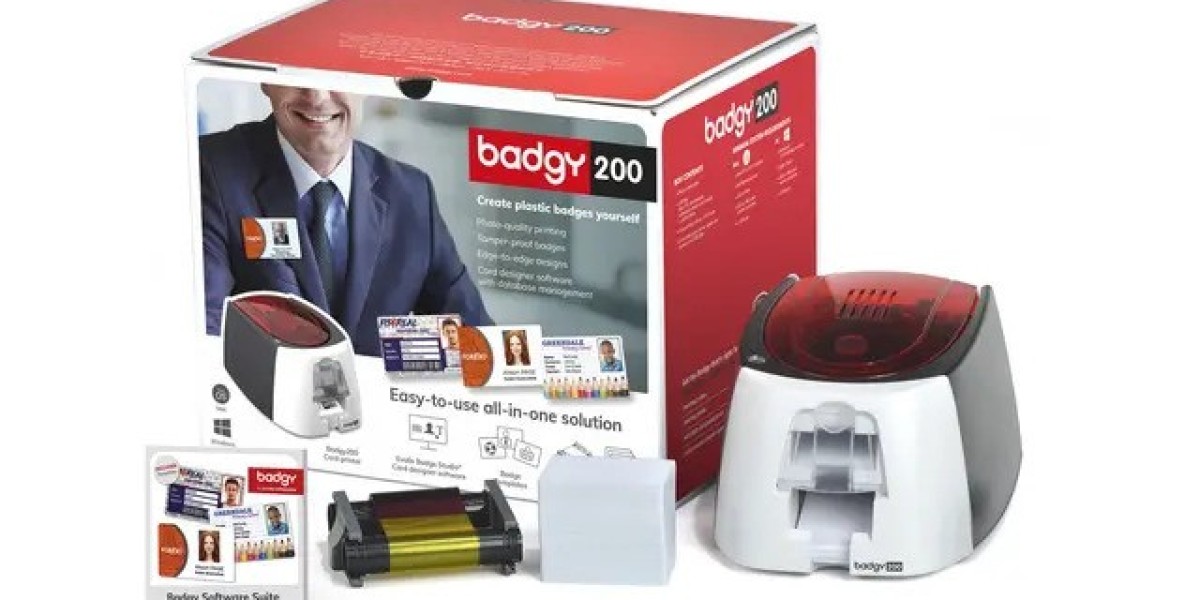


As organisations grow, card printing can move from an occasional administrative task to a regular part of daily operations. Membership organisations add new members, schools enrol students, workplaces recruit employees and events issue personalised passes. Waiting for externally printed cards each time can become inconvenient.
The badgy 200 is designed for organisations that want to print individual cards and small batches on demand. Badgy Australia positions the model specifically for small runs of personalised badges, while Evolis describes it as an economical turnkey solution for instant card production.
For users who need more than occasional one-at-a-time printing, the model combines desktop simplicity with faster batch capability.
Why Faster Card Printing Matters
Printing speed does not matter simply because a larger number looks impressive on a specification sheet.
It matters when several people are waiting for cards.
Imagine a training provider registering a new intake, a club enrolling members before a new season or a company preparing identification for multiple new starters. Saving several seconds on each card can make the overall process smoother when repeated across an entire batch.
Badgy Australia lists Badgy 200 at approximately 38 seconds per colour card, or up to 95 cards per hour.
Suitable Uses for Badgy 200
Badgy 200 can support a wide variety of personalised plastic card applications.
Potential uses include:
Employee identification
Membership cards
Student ID cards
Visitor badges
Loyalty cards
Event identification
Branded cards
Evolis specifically highlights staff badges, school ID cards, membership cards, loyalty cards, event badges and visitor badges among Badgy 200 applications.
The ability to use one printer for several applications may also help organisations achieve more value from their equipment.
Print Individual Cards or Small Batches
One of the strongest advantages of in-house production is that you do not have to decide between printing one card and ordering a large batch.
Sometimes a single replacement ID is required. On another day, twenty membership cards might need to be prepared.
A desktop printer that supports both situations allows the organisation to respond according to actual demand.
This can also reduce the need to maintain large inventories of pre-personalised cards that may become outdated when information or branding changes.
Edge-to-Edge Colour Printing
Presentation becomes particularly important when cards are customer-facing.
Badgy 200 supports edge-to-edge printing, allowing colour designs to extend across the printable card surface rather than leaving a significant border around the design.
This can be useful for organisations wanting a more polished visual identity across membership, staff or loyalty cards.
Good design still matters, however. Use strong contrast between text and background, avoid overcrowding and make photographs large enough to recognise easily.
Software for Personalised Batch Production
The badgy 200 plastic card printer is supplied with the Plus version of Evolis Badge Studio. Badgy Australia notes that this version supports database importing, while its listed specifications include Excel connectivity.
This becomes valuable when producing multiple cards with the same overall design but different personal information.
Instead of manually creating an entirely new layout for every employee or member, a standard card design can be paired with individual records.
Create a Consistent Template First
Before importing a list of records, prepare an approved card template.
Determine:
Logo size and location
Photograph dimensions
Name formatting
Job title or membership field
Identification number position
Brand colours
Expiry information
Required legal or organisational wording
A consistent template reduces mistakes and gives cards a uniform appearance.
Compact Enough for Everyday Workspaces
Speed does not require a large production room.
Badgy 200 is designed as a compact desktop device. Evolis describes it as smaller than an A4 sheet of paper and suitable for space-conscious work environments.
That means production can potentially remain close to the person issuing the card.
For example, an administration team can produce employee IDs within the office instead of sending details to a separate printing department.
Plan Consumables Before Busy Periods
Fast printing is only helpful when the necessary supplies are available.
Badgy 200 uses compatible colour and monochrome ribbons as well as blank PVC cards. The package listed by Badgy Australia includes 100 blank white PVC cards and a colour ribbon for 100 prints.
After the initial supply is used, organisations need replacement consumables.
If you know a new school term, membership period or recruitment drive is approaching, check supplies beforehand.
Maintain the Printer Properly
Plastic card printers work with precise print surfaces, so regular maintenance should be treated as part of the printing process rather than an optional extra.
Badgy Australia offers cleaning pens and cleaning cards for the Badgy range and recommends regular cleaning to support good print quality.
It is also sensible to keep unused blank cards in clean storage and avoid touching printable surfaces unnecessarily.
Choose Based on Workflow, Not Specifications Alone
Badgy 200 will not automatically be the right printer simply because it is faster than a lower-volume model.
Ask how cards are actually issued.
If your organisation prints only a few cards every month, a simpler model could be sufficient. If batches are common, faster output and database-assisted personalisation can become much more valuable.
Matching the printer to the workflow generally produces better long-term value than choosing according to one specification.
Why Choose Badgy Australia?
Badgy Australia provides access to Badgy models, compatible card and ribbon consumables, downloadable designs and technical support information in one dedicated card-printing environment. Organisations considering a faster badgy 200 id card printer can therefore evaluate not only the device itself but also the software, ongoing supplies and support resources required to keep an in-house card program operating smoothly.
Conclusion
Badgy 200 is best understood as a practical small-batch card production solution rather than simply a faster printer. Its combination of on-demand printing, compact desktop design, personalisation software and support for professional plastic cards can suit organisations whose identification requirements have moved beyond occasional printing. By planning templates, card data and consumables properly, teams can create a much more efficient in-house identification workflow.






