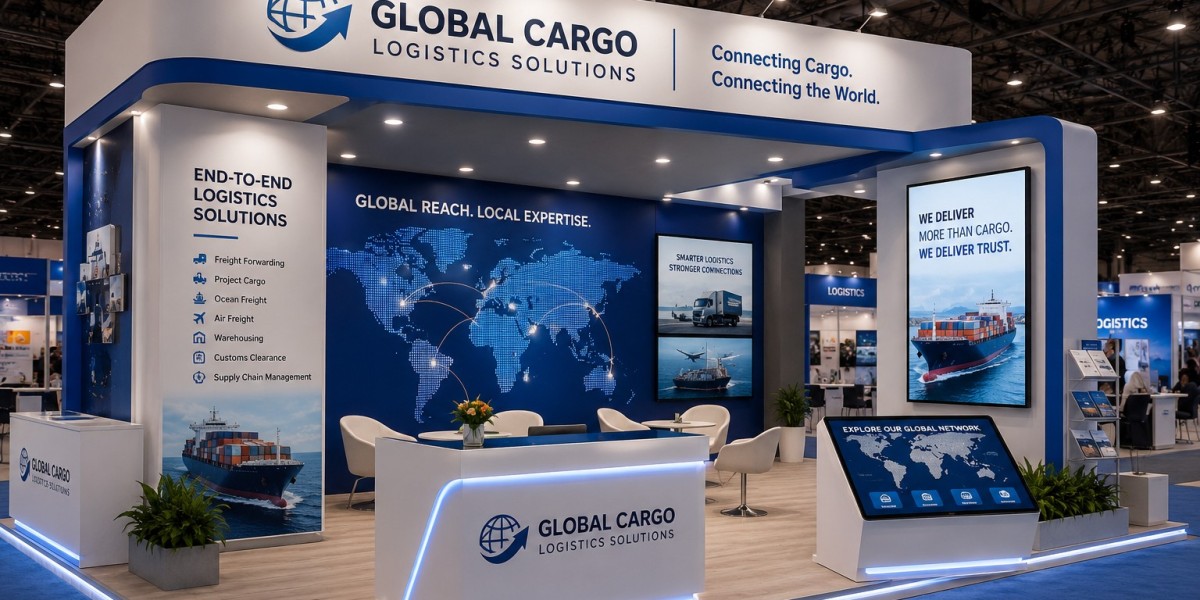


Trade shows are important business-development platforms for cargo, freight, transportation, and supply chain companies. Yet attracting visitors is only the first step. The real challenge is turning exhibition traffic into meaningful conversations and qualified opportunities. A strategically planned Cargo logistics trade show booth design can support this goal by combining strong visual communication, purposeful visitor flow, interactive demonstrations, comfortable meeting areas, and an effective lead-capture strategy. When booth design and lead generation work together, an exhibition stand becomes more than a branded space—it becomes a structured business-development environment.
Why Lead Generation Should Influence Booth Design
Many companies treat lead generation as something that happens after a visitor enters the booth.
That approach misses an important opportunity.
The physical environment can influence whether visitors:
- Stop
- Enter
- Explore
- Interact
- Speak with staff
- Share their requirements
- Schedule meetings
- Request follow-up information
Therefore, lead generation should be considered during the earliest stages of booth planning.
Every design element should contribute to the visitor journey.
Start With the Right Lead-Generation Goal
Before deciding on graphics, furniture, or technology, define what a successful exhibition outcome looks like.
Possible objectives include:
Generate New Sales Opportunities
Identify businesses with active logistics requirements.
Promote a New Service
Introduce a new transportation, warehousing, or technology solution.
Schedule Business Meetings
Encourage decision-makers to book consultations.
Qualify Existing Prospects
Use the exhibition to move prospects further through the sales process.
Strengthen Customer Relationships
Provide existing customers with a comfortable environment for discussions.
A clear objective makes booth design decisions easier.
Understand What Makes a Qualified Lead
Not every visitor should be treated equally.
A qualified logistics lead may have:
- A current transportation requirement
- A defined cargo type
- A specific geographic need
- Purchasing authority
- An upcoming project
- An interest in a particular service
Booth staff should therefore focus on understanding visitor requirements rather than simply collecting contact information.
Create a Strong First Impression
Visitors often make quick judgments when walking through a crowded exhibition hall.
Your booth should communicate three things immediately:
Who are you?
What do you offer?
Why should I care?
A clear headline and concise service categories can answer these questions.
For example:
GLOBAL CARGO SOLUTIONS
Freight | Project Logistics | Warehousing | Digital Visibility
This is easier to understand than a large block of corporate text.
Make the Booth Visible From a Distance
Lead generation begins before visitors enter.
Strong visibility can be created with:
- High-level branding
- Vertical signage
- Large headlines
- Strategic lighting
- Digital displays
- Distinctive architectural elements
The goal is not to make every surface visually busy.
Instead, create one or two recognizable visual anchors.
Use an Open Layout
An open booth reduces psychological barriers.
Visitors should be able to see:
- Staff
- Demonstrations
- Meeting areas
- Brand messaging
from the aisle.
Avoid creating an entrance that feels like visitors need permission to enter.
A welcoming layout encourages spontaneous conversations.
Build a Natural Visitor Journey
An effective booth can guide visitors through several stages:
Attract → Discover → Engage → Discuss → Qualify → Connect
Each stage should have a physical or visual component.
Attract
Use branding and strong visuals.
Discover
Present core services.
Engage
Offer an interactive demonstration.
Discuss
Provide staff expertise.
Qualify
Understand the visitor's requirement.
Connect
Capture contact details and establish a next step.
This structure turns booth traffic into a process.
Use Clear Service Categories
Cargo logistics can involve numerous services.
Visitors should be able to identify relevant offerings quickly.
Possible categories include:
- Ocean Freight
- Air Freight
- Road Transportation
- Rail Logistics
- Project Cargo
- Warehousing
- Customs Support
- Supply Chain Technology
Avoid presenting every service with equal visual weight.
Highlight the offerings most important to the exhibition audience.
Design Around Visitor Questions
A strong lead-generation booth anticipates common questions.
For example:
Can you handle oversized cargo?
Create a project cargo display.
Can I track shipments?
Provide a digital tracking demonstration.
Where do you operate?
Use an interactive global map.
Can you manage warehousing?
Show a warehouse process.
This approach makes the booth useful rather than purely promotional.
Create an Interactive Lead Magnet
A valuable experience can encourage visitors to provide contact information.
For example, offer a:
Supply Chain Route Assessment
Visitors enter basic information about their route and cargo requirements.
The booth team can then discuss possible considerations.
Other ideas include:
- Logistics planning checklist
- Route-planning consultation
- Supply chain visibility demonstration
- Project cargo assessment
- Digital logistics consultation
The key is to provide genuine value.
Use Interactive Technology
Technology can attract attention and create engagement.
Potential tools include:
- Touchscreens
- Interactive maps
- Digital dashboards
- 3D models
- Large LED displays
- Tablets
- Digital product selectors
However, technology should always support the visitor journey.
A touchscreen that simply displays a digital brochure may not create meaningful engagement.
Demonstrate Real-Time Tracking
Shipment tracking can be an excellent conversation starter.
A simulated dashboard can show:
- Current shipment location
- Route
- Status
- Estimated arrival
- Delays
- Milestones
Once a visitor interacts with the system, staff can ask about their current visibility challenges.
This can transition naturally into a business conversation.
Use a Global Network Map
A map can quickly communicate international capabilities.
Highlight:
- Major ports
- Service regions
- Warehouses
- Offices
- Trade routes
- Distribution centers
An interactive map can allow visitors to select their region.
This makes the experience more relevant to individual prospects.
Showcase Real Customer Challenges
Case studies can help qualify visitors.
Instead of saying:
“We manage complex logistics.”
Show a real-world example.
Challenge
A manufacturer needed to move oversized equipment internationally.
Solution
A coordinated multimodal transportation plan was developed.
Outcome
The cargo was transported according to the project's operational requirements.
Visitors with similar challenges may recognize themselves in the story and initiate a conversation.
Create Industry-Specific Content
Visitors respond better when they can immediately see how a service applies to their sector.
Consider dedicated content for:
Manufacturing
Machinery and raw material movement.
Energy
Large-scale equipment and project cargo.
Automotive
Components and production supply chains.
Retail
Distribution and inventory management.
Technology
High-value and time-sensitive shipments.
Industry-specific content can help staff identify relevant prospects faster.
Use Physical Displays to Start Conversations
Physical objects can create natural interaction.
Depending on the company's specialization, consider displaying:
- Container models
- Packaging examples
- Cargo equipment
- Scale models
- Industrial components
A visitor may approach because they are curious about the object.
That curiosity gives staff an opportunity to begin a conversation.
Make Meeting Areas Visible
If meeting areas are hidden at the back of the booth, visitors may not realize that consultations are available.
Instead, create visible but comfortable meeting spaces.
Options include:
- Open consultation tables
- Lounge seating
- Semi-private meeting areas
- Private conference rooms
The appropriate combination depends on the size and purpose of the booth.
Separate Quick Conversations From Formal Meetings
Not every lead requires a 30-minute meeting.
Create different interaction areas.
Quick Conversation Area
For initial questions and discovery.
Demonstration Area
For technology or service presentations.
Meeting Area
For qualified prospects.
Private Room
For confidential or detailed discussions.
This prevents one visitor group from disrupting another.
Train Staff to Ask Better Questions
Lead generation depends heavily on staff behavior.
Instead of immediately giving a company presentation, staff can ask:
“What type of cargo are you currently moving?”
“Which regions are most important to your supply chain?”
“Are you currently looking for transportation, warehousing, or technology support?”
“Do you have any upcoming logistics projects?”
These questions help identify business needs.
Use a Simple Qualification Framework
Staff can categorize prospects based on factors such as:
Need
Does the visitor have a relevant requirement?
Authority
Can they influence or make purchasing decisions?
Timeline
Is the requirement immediate, upcoming, or long-term?
Fit
Does the company's service match the requirement?
This creates a more useful lead database.
Make Lead Capture Fast
Visitors do not want to spend several minutes filling out forms.
Use:
- Badge scanning
- Tablets
- QR codes
- Digital forms
- Business card scanning
Keep the process simple.
If additional information is needed, collect it through conversation rather than a long registration form.
Personalize Lead Capture
Instead of asking only for:
Name + Email + Phone
consider capturing:
Service Interest
Industry
Current Requirement
Project Timeline
This information can make follow-up significantly more relevant.
Use QR Codes Strategically
QR codes can extend the booth experience.
Create specific destinations such as:
Explore Project Logistics
View Global Network
Watch Shipment Tracking Demo
Download Case Study
Book a Consultation
Avoid using one QR code for everything.
Offer Valuable Digital Resources
A useful resource can encourage visitors to connect.
Examples include:
- Logistics planning checklist
- Supply chain visibility guide
- Project cargo preparation checklist
- International shipping checklist
- Industry report
- Case study collection
The resource should genuinely help the target audience.
Use Data Visualization
Statistics can establish credibility quickly.
For example:
Global Network
Multiple Transportation Modes
Extensive Industry Experience
Specialized Cargo Capabilities
Only use verified company statistics.
Data should support the message rather than overwhelm visitors.
Make the Brand Consistent
Every part of the booth should communicate the same identity.
Maintain consistency across:
- Architecture
- Graphics
- Digital displays
- Staff clothing
- Printed materials
- Presentation screens
A consistent visual identity improves recognition.
Use Lighting to Highlight Lead-Generation Areas
Lighting can subtly guide visitors.
Highlight:
- Main reception
- Interactive displays
- Product demonstrations
- Meeting zones
- Key messages
A visitor's eye should naturally move toward the most important elements.
Keep the Booth Comfortable
Comfort affects how long visitors stay.
Provide:
- Comfortable seating
- Appropriate temperature
- Clear pathways
- Convenient charging
- Refreshments when appropriate
A visitor who feels comfortable is more likely to continue a conversation.
Incorporate Hospitality Carefully
Hospitality can encourage visitors to pause, but it should support the business objective.
Coffee or refreshments can create an opportunity for conversation.
However, avoid turning the booth into a hospitality lounge where visitors consume refreshments without engaging with the brand.
Design for Accessibility
A lead-generation environment should be accessible to as many visitors as possible.
Consider:
- Clear paths
- Accessible entrances
- Readable signage
- Appropriate furniture heights
- Comfortable circulation space
Accessibility improves the overall visitor experience.
Use Authentic Visuals
Real images of operations can strengthen trust.
Use photographs of:
- Cargo handling
- Warehouses
- Transportation
- Ports
- Employees
- Equipment
- Completed projects
Authentic imagery can be more persuasive than generic stock photography.
Build a Strong Digital Presentation
If your company uses digital screens, create short presentation segments.
For example:
Segment 1: Company network
Segment 2: Services
Segment 3: Technology
Segment 4: Case studies
Segment 5: Customer outcomes
Each segment should work independently because visitors may arrive at any point.
Create a Memorable Feature
One distinctive feature can help people remember the booth.
Possible concepts include:
- Interactive world map
- 3D cargo model
- Digital shipment journey
- Miniature port
- Interactive logistics dashboard
The feature should connect to the company's expertise.
Make Sustainability Part of the Design
Sustainable booth construction can support the company's broader environmental messaging.
Potential choices include:
- Reusable modular structures
- Recyclable materials
- Digital brochures
- Energy-efficient lighting
- Reusable furniture
Sustainability claims should be accurate and supported by genuine practices.
Hide Operational Clutter
Lead generation can be negatively affected by an untidy environment.
Provide hidden storage for:
- Bags
- Brochures
- Personal belongings
- Technical equipment
- Supplies
A clean booth communicates professionalism.
Connect Pre-Show Marketing With Booth Design
Lead generation should begin before the event.
Promote:
- Booth location
- Demonstrations
- New services
- Meeting opportunities
- Special presentations
Visitors who already know what they can experience are more likely to seek out the booth.
Schedule Meetings Before the Event
Pre-booked meetings can provide a strong foundation for exhibition success.
Use email, social media, sales outreach, and event platforms to invite prospects.
Provide a simple reason to meet:
Discuss a Current Logistics Challenge
Explore Project Cargo Solutions
See Our Digital Visibility Platform
Review Your Supply Chain Requirements
Create a Meeting Calendar
Once meetings are scheduled, use the booth layout to support them.
Ensure staff know:
- Who is arriving
- When they are arriving
- Their company
- Their area of interest
- Which representative should meet them
This creates a more professional experience.
Connect Booth Technology With CRM Processes
If appropriate, lead information can be transferred into the company's customer relationship management system.
This reduces manual data entry and can improve follow-up speed.
However, data quality is essential.
Only capture information that is useful and accurate.
Follow Up Quickly
The value of a lead can decline if there is no timely follow-up.
After the exhibition:
- Review the lead.
- Confirm the visitor's requirement.
- Assign the appropriate sales contact.
- Send relevant information.
- Schedule the next conversation.
Avoid sending identical generic messages to every contact.
Segment Leads After the Exhibition
A useful system might categorize leads as:
Hot
Immediate or active business requirement.
Warm
Relevant opportunity with future potential.
Nurture
Longer-term interest.
Partner
Potential strategic or industry relationship.
This allows sales teams to prioritize appropriately.
Measure More Than Visitor Count
A crowded booth is not necessarily a successful booth.
Measure:
- Qualified leads
- Meetings
- Demonstrations
- Lead-to-meeting conversion
- Meeting-to-opportunity conversion
- Follow-up appointments
- New business opportunities
These metrics provide a clearer picture of exhibition performance.
Evaluate Which Design Elements Worked
After the show, ask:
- Which message attracted visitors?
- Which display generated the most questions?
- Which demonstration produced qualified conversations?
- Were meeting spaces adequate?
- Did visitors understand the services?
- Was lead capture easy?
- Which areas remained unused?
Use these insights to improve the next event.
Common Booth Design Mistakes That Hurt Lead Generation
Too Much Information
Visitors cannot identify the key message.
Weak Branding
People cannot remember who they spoke with.
Poor Traffic Flow
Visitors struggle to enter or move through the booth.
No Clear Call to Action
Interested visitors do not know what to do next.
Excessive Technology
Digital features distract from the business message.
Untrained Staff
Potential prospects receive inconsistent information.
Slow Follow-Up
Good leads lose momentum.
Create a Booth That Encourages Conversation
The strongest lead-generation environments do not force visitors into a sales pitch.






