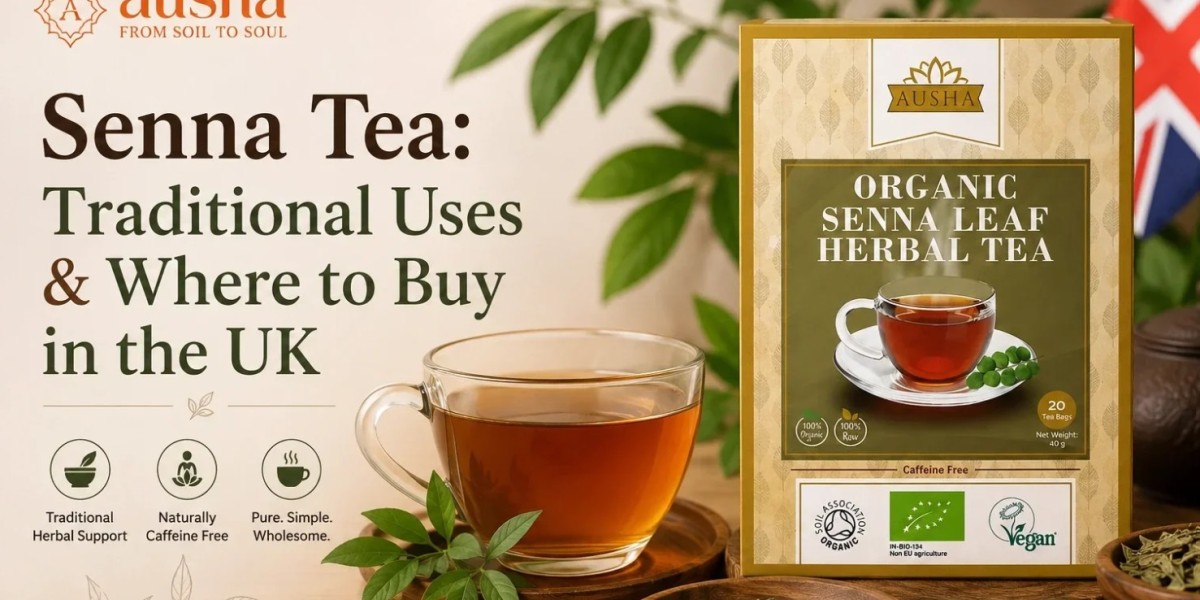


Senna tea is a herbal infusion made from the dried leaves of the senna plant. The botanical name most commonly associated with true senna is Senna alexandrina. You may also see older botanical names such as Cassia senna and Cassia angustifolia.
Senna has a long history in traditional herbal practices across North Africa, the Middle East and South Asia. The dried leaves create an amber-coloured infusion with a naturally earthy and distinctly bitter flavour.
Today, senna can be found in different forms, including dried leaves, tea bags and products formulated for specific purposes.
The Long Herbal History of Senna
Senna has been used in traditional herbal preparations for centuries. It became particularly well known across regions of Africa, the Middle East and the Indian subcontinent before eventually becoming familiar throughout Europe.
Its long history has helped make senna one of the better-known herbal plants. However, traditional use should not automatically be interpreted as a recommendation for everyday consumption.
Because senna has a recognised laxative effect, it's important to understand how it differs from ordinary herbal teas.
What Is Senna Known For?
Senna is widely recognised for its laxative action and is used as an ingredient in licensed medicines in the UK.
However, not every senna product belongs to the same regulatory category. How a product is presented, formulated and marketed can affect how it is regulated.
Ausha Senna Leaf is sold as an organic herbal product without medicinal claims. It should not be regarded as a replacement for licensed medicines or professional healthcare advice.
If you're thinking about using senna for a particular health concern, consult a pharmacist, GP or another suitably qualified healthcare professional. They can help you determine whether senna is appropriate for your circumstances.
Senna vs Cassia: What's the Difference?
The names associated with senna can sometimes cause confusion.
Senna alexandrina is the botanical name commonly used for true senna. Older botanical classifications include Cassia senna and Cassia angustifolia, which explains why the word "cassia" may still appear in herbal descriptions.
However, senna is not cassia cinnamon.
Cassia cinnamon belongs to the Cinnamomum genus and is an entirely different plant. If you're purchasing dried herbs, checking the botanical name on the packaging is a useful way to identify exactly what you're buying.
How Senna Is Used Around the World
Senna has a long-standing place in herbal traditions across North Africa, the Middle East and South Asia.
Traditional preparations can differ between regions, households and cultures. Senna may be prepared on its own or combined with other botanicals.
Modern senna products can also vary depending on their formulation, intended purpose and the regulations that apply in the country where they're sold.
Ausha keeps its senna product straightforward, offering organic dried senna leaf without unnecessary added ingredients.
What Does Senna Tea Taste Like?
Senna has a distinctive herbal flavour that isn't particularly sweet or delicate.
Its taste can be described as:
- Earthy
- Herbal
- Slightly bitter
- Quite strong compared with many mild herbal teas
The bitterness is a natural characteristic of the dried leaf.
Important Things to Know Before Using Senna
Although senna is a plant-based ingredient, being natural doesn't automatically mean that it's suitable for everyone.
Because senna has a laxative effect, it is generally associated with short-term use rather than prolonged, everyday use. Frequent or excessive use can lead to unwanted effects, including disturbances in electrolyte balance.
It's especially important to seek advice from a healthcare professional before using senna if you:
- Are pregnant, trying to become pregnant or breastfeeding
- Are considering giving it to a child or teenager
- Have ongoing or unexplained abdominal symptoms
- Have a bowel, kidney or heart condition
- Take regular medicines
- Feel that you need to use senna frequently
This isn't a complete list of precautions. A pharmacist or GP can provide advice based on your individual circumstances.
How to Choose Quality Senna Leaf in the UK
If you're looking to buy senna leaf in the UK, consider the following factors.
Look for Organic Certification
If organic sourcing is important to you, look for recognised organic certification rather than relying only on an "organic" claim in a product description.
Check the Botanical Name
A clear botanical name can help you identify the plant you're purchasing. This is particularly useful with senna because several historical names have been associated with the plant.
Consider Traceable Sourcing
Knowing where herbs come from can provide greater confidence in the product. Look for suppliers that provide clear information about their sourcing and ingredients.
Read the Ingredients List
If you're looking specifically for senna leaf, check the ingredients carefully. A simple ingredients list can make it easier to understand exactly what you're purchasing.
Where to Buy Organic Senna Leaf in the UK
Ausha offers a range of organic herbs, spices and superfoods for customers in the UK.
Our Senna Leaf is Soil Association-certified organic and contains dried senna leaf without unnecessary added ingredients.
You can explore the senna product alongside Ausha's wider collection of traditional herbs, spices and natural superfoods.
Frequently Asked Questions About Senna Tea
What is senna traditionally used for?
Senna has been used for centuries in herbal traditions, particularly throughout North Africa, the Middle East and South Asia. It is also widely recognised today for its laxative action and is used in licensed medicines.
If you're considering senna for a health-related reason, speak with a pharmacist or healthcare professional rather than relying solely on traditional use.
Is senna the same as cassia?
Not exactly. Cassia senna and Cassia angustifolia are older botanical names associated with senna. However, senna should not be confused with cassia cinnamon, which comes from a different genus of plants.
Can you drink senna tea every day?
Senna is generally intended for short-term use rather than continuous daily use. If you feel that you need to use senna regularly, speak with a GP or pharmacist for appropriate guidance.
Can children use senna?
Senna should not simply be given to children as an ordinary herbal tea. Children and teenagers should only use senna when advised or recommended by an appropriate healthcare professional.
Can you use senna during pregnancy or breastfeeding?
If you're pregnant, planning a pregnancy or breastfeeding, speak with your doctor, midwife or pharmacist before using senna. A healthcare professional can help you decide whether it is appropriate for your circumstances.
Where can I buy organic senna leaf in the UK?
Ausha offers Soil Association-certified organic senna leaf as part of its range of traditional herbs, spices and superfoods.
Is Ausha Senna Leaf organic?
Yes. Ausha Senna Leaf is certified organic by the Soil Association and is made from dried senna leaf.
Final Thoughts
Senna is a traditional botanical with a long history of use across several regions of the world. Its distinctive flavour and recognised laxative properties make it different from everyday herbal infusions.
If you're interested in purchasing senna leaf in the UK, choosing a product with clear botanical information, recognised organic certification and a straightforward ingredients list can help you make a more informed choice.
Explore Ausha's organic Senna Leaf Tea Bags and discover our wider range of organic herbs, spices and superfoods.






