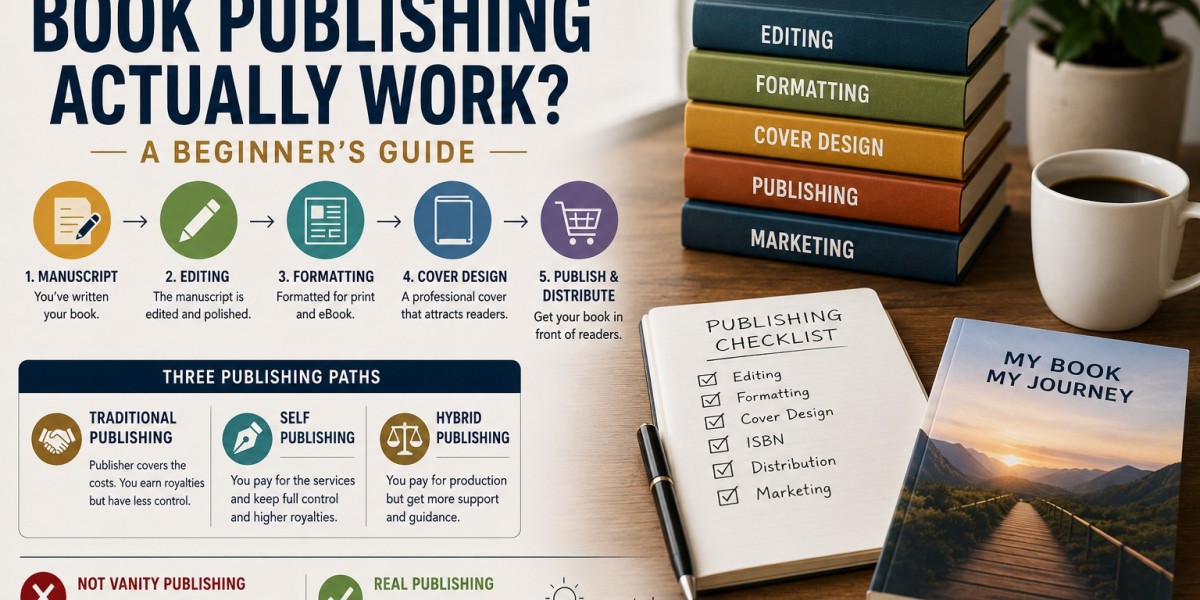


Short answer, no fluff: publishing a book means turning your finished manuscript into something people can actually buy. That means editing, formatting, a cover, an ISBN, and some way of getting it in front of readers. You can do that through a traditional publisher, a self publishing company, or something in between. Which one you pick changes who pays, and how much say you get. Right, let's actually get into it.
So you've finished writing. Now what?
Congrats, honestly. Finishing a manuscript is the bit most people never actually get to. But nobody warns you about this part... finishing the book is maybe forty percent of the job. The rest? That's everything that happens after. And that's where a lot of first-time authors get a bit stuck.
A raw manuscript isn't a book. Not yet. It's a document sitting on your laptop. Turning it into an actual book, one people can find, buy, and enjoy, involves a few steps most writers have never had to think about. Not until they're staring at their own finished draft wondering what on earth comes next.
The bit between "finished manuscript" and "published book"
Editing comes first. Always. Doesn't matter how clean you think the draft is. There's usually a few layers here too, developmental editing for structure and pacing, line editing for the actual sentences, then proofreading for the last of the typos. Skipping straight to proofreading because the manuscript "feels done"? Classic mistake. Don't do it.
Then formatting. This is the difference between a Word doc that looks fine on your screen and a book that actually reads properly on a Kindle, or sits right on a printed page. Print and ebook formatting aren't even the same job, so that's usually two separate passes.
Cover design matters more than people expect, too. Readers judge books by their covers, whether that's fair or not, and a cover that looks a bit amateur will cost you sales. Doesn't matter how good the writing inside is.
After all that you need an ISBN, basically your book's ID number for retailers and libraries. Then distribution, actually getting it somewhere people can buy it. Online, in stores, or both.
The three paths, and how they're not the same
This is where a lot of beginners get lost, because publishing isn't one process. It's really three different ones wearing the same name.
Traditional publishing means a publishing house covers editing, printing, and distribution. In exchange, they take a bigger cut of royalties and you give up a fair bit of creative control. Getting picked up this way usually means finding an agent first, and a lot of patience, since most manuscripts don't make it through.
Self publishing flips that. You pay for the services yourself, editing, cover, formatting, distribution, and you keep full ownership plus a much bigger share of whatever the book earns.
Hybrid publishing sits somewhere in the middle. You still cover the costs, but you get more support and vetting along the way without handing over control of your own book.
None of these is "the right one." Honestly it comes down to how much control you want, and how hands-on you're prepared to be.
Why we won't go near vanity publishing
Worth flagging this one clearly, because vanity publishing gets confused with real self publishing all the time. And the difference matters. A lot.
Vanity publishers usually charge a big, inflated fee upfront. Then... not much happens after that. Barely any editorial input, little to no quality control, and often zero real effort to help the book actually sell. You end up with a garage full of printed books and not a lot else.
We're firmly against that at Australian Publishing Press. Here's why, plainly. A book deserves real editorial care. An honest conversation about what things cost. And support that doesn't just stop the second you've paid. Taking someone's money and handing back a badly edited, poorly formatted book with no plan for distribution isn't publishing. It's just printing, dressed up. We'd rather be upfront about the cost and the process so authors know exactly what they're getting.
FAQ
Do I need an agent to publish a book?
Only for traditional publishing. Self publishing and hybrid publishing skip that requirement entirely.
How long does it take to publish a book after finishing the manuscript?
Depends a lot on the path. For self publishing or hybrid, a few months is realistic once editing, design and formatting are done.
What's the difference between self publishing and vanity publishing?
Self publishing means fair pricing for real services and you keep control. Vanity publishing usually means an inflated fee for very little in return.
Can I publish a book without paying anything?
Sort of. Some platforms let you upload for free. But skip the professional editing and formatting, and it usually shows.
Which publishing path is best for a first-time author?
No single right answer here. Depends how much control you want versus how much you're willing to spend upfront. Hybrid tends to suit a lot of first-timers, guidance without losing ownership.






