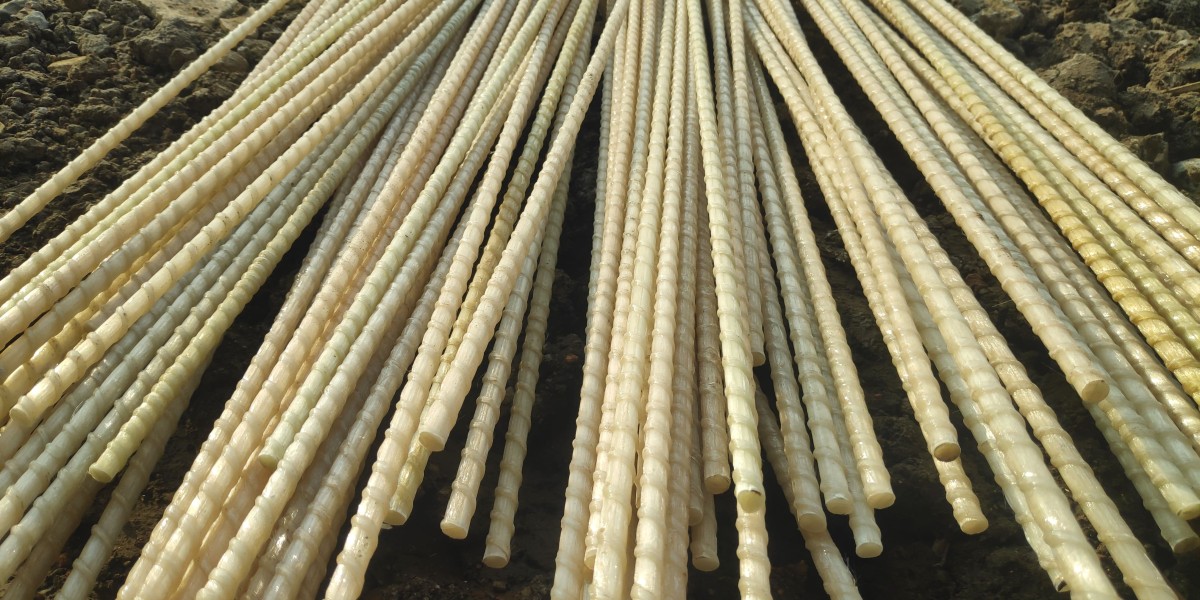


GFRP rebar manufacturers play an important role in the shift toward stronger, lighter, and more durable reinforcement solutions. But with more companies entering the market, choosing the right manufacturer is not simply about finding the lowest price. The quality of materials, manufacturing technology, testing, product consistency, and technical support can make a major difference to the performance of a project.
So, what actually sets the best manufacturers apart? Here are the key factors construction companies, engineers, contractors, and developers should consider.
1. Quality of Raw Materials Comes First
A reliable manufacturer starts with reliable raw materials. GFRP rebars are composite reinforcement products, so their performance depends heavily on the quality of the glass fibers, resin, and manufacturing process used to combine them.
High-quality GFRP material should be engineered for the required mechanical and environmental conditions rather than produced simply to meet a price point.
When evaluating a manufacturer, look for:
Consistent fiber content and resin quality
Proper bonding between fibers and resin
Controlled production processes
Clearly documented product specifications
Batch-level quality checks
This attention to raw material quality helps ensure that the reinforcement performs consistently from one project to another.
2. Advanced Manufacturing Technology Makes a Difference
Not every manufacturer uses the same production methods or level of process control. Advanced manufacturing technology can improve dimensional accuracy, surface quality, fiber alignment, and overall product consistency.
This becomes particularly important when rebars are being used across large projects where thousands of meters of reinforcement may be required.
A strong manufacturer should have a clearly defined production process and the technical capability to produce:
Straight Rebars → Custom Lengths → Bent Elements → Application-Specific Solutions
3. Testing and Standards Build Confidence
Construction materials need to perform in real-world conditions, so claims about strength or durability should be supported by testing and technical documentation.
A manufacturer that takes quality seriously should provide information about relevant standards, mechanical properties, tolerances, and test results. This gives engineers and project teams a reliable basis for evaluating the product.
4. Technical Support Should Go Beyond Selling Rebars
The best manufacturers understand that reinforcement is part of a larger structural system. Customers may need help with bar selection, quantity estimation, applications, detailing, installation, and project-specific requirements.
That is where technical support becomes an important differentiator.
A capable manufacturer should be able to help customers understand:
Where should GFRP be used?
GFRP can be particularly useful in applications where corrosion, weight, or electromagnetic interference is a concern. RebarX lists applications including slabs, retaining walls, foundations, bridge decks, drainage infrastructure, pavements, chemical facilities, power infrastructure, and water-treatment applications.
Where should engineers be more cautious?
Material selection should always be based on structural design and project requirements. For example, RebarX currently recommends TMT steel for column sections in RCC construction while positioning GFRP for a range of surface and subsurface applications.
This application-specific approach shows why technical guidance matters just as much as product availability.
Is GFRP Rebar Better Than Steel for Every Project?
The answer depends on the application. Comparing GFRP rebar vs steel rebar only on one parameter, such as tensile strength or price per kilogram, can give an incomplete picture.
GFRP offers several characteristics that can be valuable in the right environment. According to RebarX, its rebars are up to 80% lighter than TMT steel, non-corrosive, non-magnetic, and non-conductive, with a stated design service life of 80–100+ years.
However, the right reinforcement should always be selected according to structural design, application, detailing requirements, local standards, and project conditions.
Why Does Manufacturer Experience Matter in GFRP Construction?
A manufacturer with experience in GFRP construction is more likely to understand that successful implementation involves more than supplying the bars.
Product Knowledge
Experienced manufacturers can provide clearer guidance on sizes, shapes, handling, installation, and application suitability.
Project Understanding
They can also work more effectively with contractors, developers, engineers, and consultants to address project-specific requirements instead of offering a one-size-fits-all product.
Final Thoughts
The best GFRP manufacturers stand out because they focus on much more than selling reinforcement bars. They combine quality raw materials, advanced manufacturing, product testing, consistent specifications, technical expertise, and customer support to provide a dependable solution for modern construction.
For buyers, understanding gfrp sariya kya hai is only the beginning. The next step is understanding who manufactures it, how it is tested, where it can be used, and whether the product is suitable for the specific project.
Choosing a manufacturer based on quality and technical credibility rather than price alone can help construction professionals make a more informed reinforcement decision and build infrastructure designed for long-term performance.






