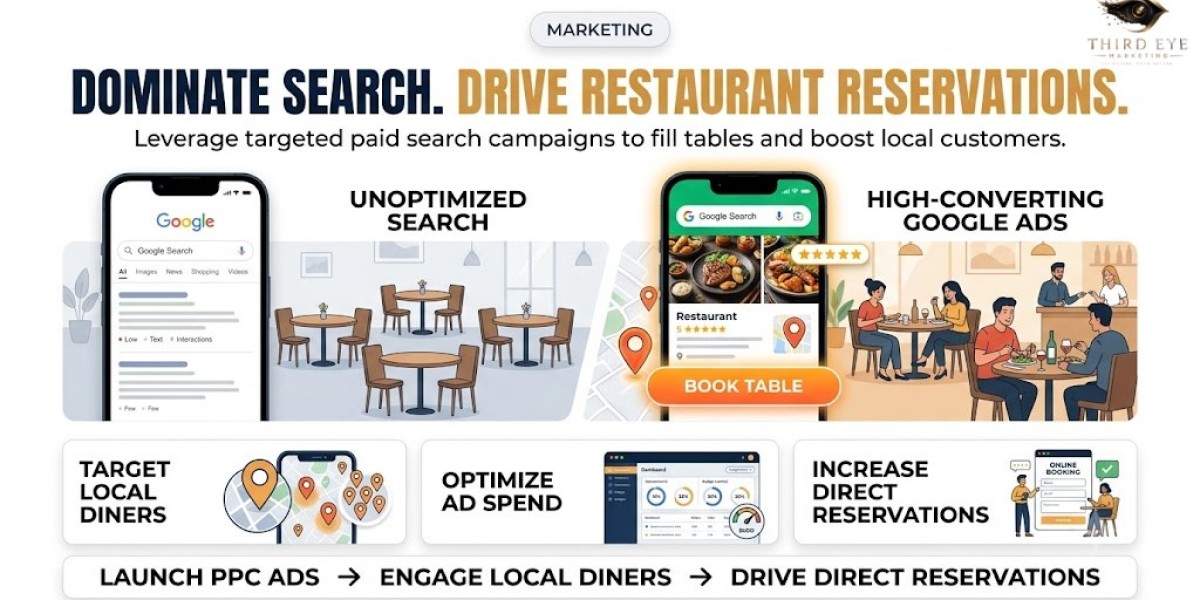


Google Ads for Restaurants: How Paid Search Can Drive More Reservations and Local Customers
Restaurants operate in one of the most competitive local markets. Customers have countless options, and many make dining decisions within minutes.
When someone searches “restaurants near me,” “best Italian restaurant in Vancouver,” “restaurant for date night,” or another high-intent query, appearing at the right moment can directly influence where that customer spends their money.
This is where Google Ads can become a powerful customer-acquisition channel.
Unlike organic search, which can take time to build, paid search allows restaurants to appear prominently for relevant searches almost immediately. When campaigns are structured around high-intent keywords, strong landing pages, accurate conversion tracking, and continuous optimization, paid search can help generate reservations, calls, online orders, catering inquiries, and local customers.
For restaurants in Vancouver, Surrey, Chilliwack, and British Columbia, the goal shouldn't simply be more clicks.
It should be:
High-Intent Search → Qualified Traffic → Reservation/Order → Customer → Revenue.
TL;DR: How Google Ads Can Help Restaurants
Google Ads can help restaurants:
Reach customers actively searching for food and dining options
Increase reservations
Generate phone calls
Drive online orders
Promote seasonal offers
Attract catering and event inquiries
Reach customers within specific locations
Retarget previous website visitors
Test high-performing offers
Measure customer acquisition costs
Complement organic SEO
Build a stronger local digital presence
However, successful restaurant advertising isn't about simply increasing the advertising budget.
It requires targeting + messaging + creative + landing pages + tracking + optimization + profitability.
Why Paid Search Matters for Restaurants
Search intent is one of the biggest advantages of Google Ads.
Someone scrolling casually through social media may not currently want to visit a restaurant.
But someone searching:
“best restaurant near me”
has already demonstrated potential intent.
Similarly:
“Vancouver steakhouse reservation”
or
“restaurant catering Surrey”
can indicate a much stronger commercial opportunity.
This makes paid search particularly useful for capturing customers who are already looking for something a restaurant offers.
1. Target High-Intent Restaurant Searches
Not every keyword deserves advertising budget.
A strong campaign should prioritize searches connected to the restaurant's actual products, location, and customer intent.
Examples can include:
Restaurants near me
Restaurant reservations
Vancouver restaurants
Surrey restaurants
Chilliwack restaurants
Italian restaurants Vancouver
Family restaurants Surrey
Restaurant catering
Private dining
Dinner reservations
Keyword selection should reflect the restaurant's actual positioning.
A premium restaurant shouldn't necessarily compete for every generic food-related search.
The objective is qualified traffic, not maximum traffic.
2. Local Targeting Helps Reduce Wasted Spend
Restaurants generally serve a defined geographic market.
A restaurant in Vancouver may not benefit from paying for clicks from people hundreds of kilometres away.
Google Ads can therefore be structured around relevant service areas.
Campaigns can target:
Specific cities
Neighbourhoods
Areas around the restaurant
Local customers
Visitors searching within the market
For businesses targeting Vancouver, Surrey, Chilliwack, and British Columbia, campaigns should be structured according to actual customer behaviour and delivery/service areas.
This helps improve budget efficiency.
3. Restaurant Ads Need Strong Offers
A restaurant advertisement needs to answer a simple question:
Why should the customer choose you?
Depending on the business, the message could emphasize:
Signature cuisine
Convenient location
Private dining
Family-friendly dining
Seasonal menu
Catering
Weekend brunch
Special events
Online ordering
Reservations
The message should match the search intent.
Someone searching for catering shouldn't land on a generic homepage without any catering information.
4. Landing Pages Turn Clicks Into Customers
One of the biggest mistakes businesses make is sending every Google Ads visitor to the homepage.
A better strategy is to match the landing page with the advertisement.
For example:
Restaurant Catering Ad → Catering Landing Page
Private Dining Ad → Private Dining Page
Restaurant Reservation Ad → Reservation Page
Online Ordering Ad → Ordering Page
The landing page should make the next action obvious.
For restaurants, important conversion actions can include:
Reserve a Table
Call Now
Order Online
Get Directions
Book Catering
Request Event Information
5. Conversion Tracking Is Essential
Running Google Ads without reliable tracking makes optimization difficult.
Restaurants should track meaningful actions such as:
Reservations
Phone calls
Online orders
Catering inquiries
Event inquiries
Menu interactions
Direction requests
Contact forms
The objective is to understand which campaigns, keywords, advertisements, and audiences are producing actual business outcomes.
A campaign generating thousands of clicks isn't necessarily successful.
A campaign generating fewer clicks but more profitable customers may be far more valuable.
6. Google Ads and SEO Should Work Together
Paid search and SEO aren't competing strategies.
They can complement each other.
SEO builds long-term organic visibility.
Google Ads captures paid demand immediately.
For example, a restaurant may rank organically for:
“best restaurants in Vancouver”
while also running paid campaigns around high-intent searches such as:
“Vancouver restaurant reservations.”
The data from paid campaigns can also provide useful insights into search behaviour, messaging, and customer intent.
This can inform broader restaurant SEO and content strategies.
7. Combine Paid Search With Google Business Profile
A restaurant's Google presence extends beyond advertisements.
Customers may interact with:
Google Search + Google Ads + Google Maps + Google Business Profile + Website + Reviews.
This creates an integrated local customer journey.
If someone clicks an advertisement and later checks the restaurant's Google Business Profile, inconsistent information can create friction.
Restaurants should therefore keep:
Hours
Address
Phone number
Website
Menu
Photos
Reservation information
accurate across important digital platforms.
8. Use Social Advertising Alongside Search
Google captures active intent.
Social advertising can help create and stimulate demand.
This is where a social media ad agency or paid social media agency can complement paid search campaigns.
For restaurants, social campaigns can promote:
New menu items
Food photography
Restaurant atmosphere
Events
Seasonal promotions
Special offers
Video content
Brand stories
A potential customer may discover a restaurant on Instagram and later search its name on Google.
That means:
Social Discovery → Branded Search → Website → Reservation
can become part of the overall customer journey.
9. Social Media Advertising for Restaurants
Social media advertising for restaurants can be particularly effective because food is highly visual.
Creative formats can include:
Short-form video
Food photography
Chef videos
Customer experiences
Restaurant tours
Seasonal campaigns
Event promotions
Restaurants can also test different creative angles.
For example:
Food-focused creative
versus
Experience-focused creative
versus
Offer-focused creative.
The winning creative should ultimately be judged by meaningful business outcomes rather than likes alone.
10. Retarget Customers Who Didn't Convert
Not every customer books a table during their first visit.
Someone might:
Click a restaurant advertisement
Browse the menu
Leave the website
Compare competitors
Return later
Retargeting can help bring those visitors back.
Depending on platform policies and applicable privacy requirements, restaurants can use remarketing strategies to reconnect with relevant audiences.
This is where Google Ads and paid social can work together.
11. Use Performance Marketing to Measure Profitability
Restaurant advertising should be treated as a business investment.
A performance marketing agency focuses on measurable outcomes rather than vanity metrics.
Important metrics can include:
Cost per reservation
Cost per qualified lead
Customer acquisition cost
Conversion rate
Average order value
Revenue from advertising
Return on ad spend
Repeat customer value
For restaurants, profitability matters.
A campaign with a low cost per click isn't necessarily good if it produces customers who don't generate enough revenue.
Choosing a Paid Ads Marketing Agency
Restaurants comparing a paid ads marketing agency should ask how the agency approaches:
Keyword research
Geographic targeting
Ad copy
Landing pages
Conversion tracking
Budget allocation
Search-term analysis
Negative keywords
Creative testing
Retargeting
Reporting
A strong paid search marketing agency should focus on high-intent customer acquisition rather than simply increasing impressions.
Similarly, a paid media marketing agency should understand how Google, Meta, and other channels can work together.
What Does a Paid Ad Agency Do?
A professional paid ad agency can manage the complete advertising process.
This may include:
Research
Understand customers, competitors, location, offers, and search intent.
Campaign Structure
Separate campaigns based on services, locations, and customer intent.
Creative
Develop relevant advertisements and social creatives.
Landing Pages
Match landing experiences to customer searches.
Tracking
Measure calls, bookings, orders, and inquiries.
Optimization
Adjust budgets, keywords, audiences, advertisements, and bidding based on performance.
Reporting
Connect advertising metrics to business outcomes.
This creates a continuous optimization cycle.
Performance Marketing Services for Restaurants
Restaurant-focused performance marketing services can include:
Google Search Ads
Performance Max where appropriate
Local advertising strategies
Meta advertising
Retargeting
Lead generation
Conversion optimization
Analytics
Creative testing
Landing page optimization
A performance digital marketing agency should connect these activities to the restaurant's economics.
The goal is not to maximize ad spend.
It is to maximize profitable customer acquisition.
Choosing the Best Performance Marketing Agency
When comparing the best performance marketing agency, restaurants should avoid selecting based purely on promises of low CPC or cheap leads.
Instead, ask:
Can they track real conversions?
Do they understand restaurant economics?
Can they identify high-intent customers?
Can they optimize for profitable outcomes?
Do they understand Google and Meta?
Can they improve landing pages?
Do they provide transparent reporting?
The right agency should be able to explain not only how many people clicked, but what happened after they clicked.
Why Third Eye Marketing?
Third Eye Marketing approaches restaurant advertising as part of a complete growth ecosystem.
Paid search can work alongside:
SEO + Local SEO + Google Business Profile + Social Media + Paid Social + Content + AEO + GEO + AIO + Brand Visibility + Conversion Optimization + Analytics.
This creates multiple opportunities for customers to discover and interact with a restaurant.
For restaurants in Vancouver, Surrey, Chilliwack, and British Columbia, the focus should be on building a system that captures high-intent demand while strengthening long-term organic visibility and brand recognition.
The objective is:
Search → Click → Trust → Reservation/Order → Customer → Repeat Customer.
Common Google Ads Mistakes Restaurants Should Avoid
Targeting overly broad keywords
Generic searches can consume budgets without generating qualified customers.
Sending every visitor to the homepage
Landing pages should match the customer's intent.
Ignoring negative keywords
Irrelevant searches can waste advertising budget.
Tracking only clicks
Clicks don't pay the bills. Customers do.
Running campaigns without testing
Ad copy, landing pages, offers, audiences, and keywords should be tested continuously.
Ignoring mobile users
Many restaurant searches happen when customers are away from home and using mobile devices.
Focusing only on CPC
Cheap clicks aren't necessarily valuable clicks.
The Restaurant Paid Search Growth Funnel
A strong campaign can follow this journey:
High-Intent Search
↓
Relevant Advertisement
↓
Optimized Landing Page
↓
Trust Signals
Reviews + Photos + Menu + Information
↓
Conversion
Reservation / Order / Call / Inquiry
↓
Customer
↓
Repeat Visit
↓
Customer Lifetime Value
This is how paid advertising becomes a business-building system instead of simply an advertising expense.
Final Takeaway
Google Ads can give restaurants the ability to reach customers when they are actively searching for dining options.
But successful restaurant advertising requires more than launching a campaign.
It requires:
High-Intent Keywords + Local Targeting + Strong Creative + Relevant Landing Pages + Accurate Tracking + Continuous Optimization.
For restaurants in Vancouver, Surrey, Chilliwack, and British Columbia, combining paid search with SEO, local SEO, social advertising, AEO, GEO, AIO, brand visibility, and conversion optimization can create a stronger customer acquisition ecosystem.
The ultimate goal isn't more clicks.
It's:
More Qualified Customers → More Reservations → More Orders → More Revenue → Sustainable Restaurant Growth.
If your restaurant wants to build a performance-focused advertising strategy across Google and social platforms, Third Eye Marketing can help.
Book a FREE consultation with Third Eye Marketing.
Third Eye Marketing
? +1 236-880-3783
? thirdeyemarketing.ca
High-Intent FAQs
1. Is Google Ads effective for restaurants?
Google Ads can be effective for restaurants because it allows businesses to reach people actively searching for restaurants, cuisine, reservations, catering, and other high-intent services. Performance depends on targeting, budget, offers, landing pages, tracking, and campaign optimization.
2. What keywords should restaurants use for Google Ads?
Restaurants should prioritize relevant, high-intent keywords related to their cuisine, location, services, reservations, catering, ordering, and other commercial searches. Keyword selection should be based on actual customer intent rather than search volume alone.
3. How much should a restaurant spend on Google Ads?
There is no universal budget. The appropriate amount depends on the restaurant's market size, competition, average customer value, margins, conversion rate, and acquisition goals. Restaurants should start with a measurable budget and scale based on profitable performance.
4. Should restaurants use Google Ads and social media advertising together?
Often, yes. Google Ads can capture existing search demand, while social advertising can build awareness, promote visual content, and create demand. Using both can create a broader customer acquisition funnel.
5. How can restaurants measure whether Google Ads are generating customers?
Restaurants should track meaningful conversions such as reservations, calls, online orders, catering inquiries, and event bookings. Connecting advertising platforms with analytics and conversion tracking allows businesses to evaluate cost per acquisition, revenue, and overall advertising profitability.






