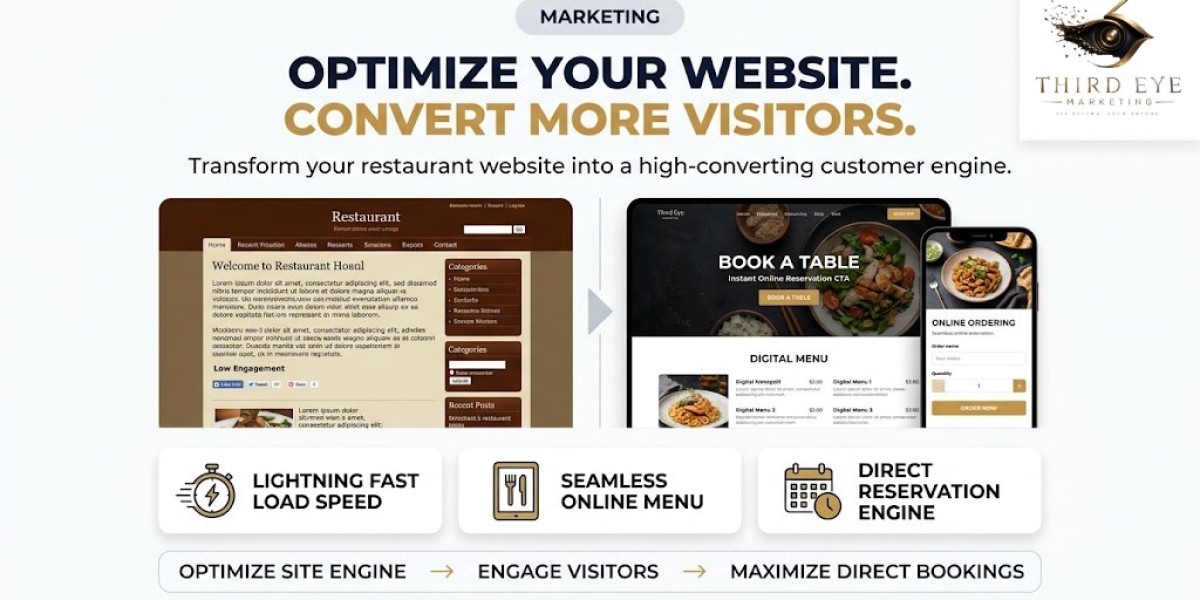


Restaurant Website Optimization: How to Turn More Website Visitors Into Customers
A restaurant website should do more than look attractive.
It should help customers quickly answer important questions, build trust, explore the menu, find the location, and take action—whether that means making a reservation, ordering online, calling the restaurant, or requesting catering.
Many restaurants invest in advertising and social media but overlook what happens after a customer reaches their website.
If the website is slow, confusing, difficult to navigate, poorly designed for mobile, or missing clear calls to action, valuable traffic can leave without converting.
This is why restaurant website optimization should be treated as part of the complete customer-acquisition strategy.
For restaurants in Vancouver, Surrey, Chilliwack, and British Columbia, the objective is simple:
More Relevant Visitors → Better Website Experience → More Conversions → More Customers → More Revenue.
TL;DR: How Restaurant Website Optimization Increases Conversions
A conversion-focused restaurant website should:
Load quickly
Work perfectly on mobile
Display the menu clearly
Make reservations easy
Provide obvious calls to action
Show accurate location and hours
Use professional food photography
Build trust with reviews and social proof
Have clear contact information
Support local SEO
Answer common customer questions
Track meaningful conversions
Connect with Google Business Profile
Support paid advertising and social media campaigns
The objective isn't simply to increase website traffic.
It is to turn existing and future traffic into customers.
Why Restaurant Website Optimization Matters
Imagine someone searches Google for a restaurant in Vancouver.
They click the website.
But the page takes too long to load.
Or they can't find the menu.
Or the reservation button is hidden.
Or the website isn't mobile-friendly.
Or the restaurant's hours are unclear.
That customer may simply return to Google and choose another business.
The restaurant didn't necessarily lose the customer because of its food.
It lost the customer because of digital friction.
Website optimization removes those barriers.
1. Make the Website's Main Action Obvious
A restaurant website should immediately communicate:
What you offer + Where you are + Why customers should choose you + What they should do next.
Important calls to action can include:
Reserve a Table
Order Online
View Menu
Call Now
Get Directions
Book Catering
The most important CTA should be easy to find, particularly on mobile devices.
Don't make customers search for the action you want them to take.
2. Build a Mobile-First Experience
A significant portion of restaurant discovery happens on mobile devices.
Customers may search for a restaurant while:
Walking around a neighbourhood
Travelling
Looking for dinner
Planning a date
Searching for lunch
Looking for a café
Trying to place an order
The mobile website should therefore make important information immediately accessible.
A customer should be able to quickly find:
Menu
Hours
Location
Phone number
Reservations
Ordering
Directions
A beautiful desktop website doesn't compensate for a frustrating mobile experience.
3. Improve Website Speed
Slow websites create unnecessary friction.
Restaurant websites often contain large food photographs, videos, animations, maps, and third-party booking systems.
These elements can affect performance if they aren't implemented properly.
Optimization can include:
Compressing images
Using modern image formats
Reducing unnecessary scripts
Improving hosting performance
Optimizing code
Limiting unnecessary plugins
Improving caching
Monitoring Core Web Vitals
The goal is simple:
Make it easy for customers to access the information they need.
4. Make the Menu Easy to Use
The menu is often one of the most important pages on a restaurant website.
Customers want to know:
What food is available?
What does it cost?
Are vegetarian options available?
Are there gluten-free options?
What are the signature dishes?
Are drinks available?
Can they order online?
Avoid hiding the menu behind an unnecessarily complicated PDF experience.
Where appropriate, provide an easy-to-read HTML menu while maintaining a downloadable version if customers need one.
Clear menus can improve both usability and search visibility.
5. Use Professional Restaurant Photography
People eat with their eyes first.
High-quality photography can communicate:
Food quality
Presentation
Atmosphere
Restaurant style
Dining experience
Images should be optimized for performance without sacrificing quality.
Use relevant descriptive filenames and alt text where appropriate, but avoid keyword stuffing.
Strong visuals can support both conversion optimization and brand building.
6. Add Social Proof
Customers want reassurance before choosing a restaurant.
Useful trust signals include:
Customer reviews
Testimonials
Awards
Press mentions
Media features
User-generated content
High-quality photographs
Social media presence
For example:
“Featured by local food publications”
can provide credibility when the claim is genuine and verifiable.
Social proof should be authentic.
Never manufacture testimonials or reviews.
7. Strengthen Local SEO
Website optimization should work alongside local SEO.
A restaurant website should clearly communicate:
Business name
Address
Phone number
Opening hours
Service areas
Cuisine
Menu
Reservation information
Location-specific pages or content can be useful when they provide genuine value.
For businesses targeting Vancouver, Surrey, Chilliwack, and other BC communities, local relevance should be naturally incorporated into the website.
The goal isn't to repeat city names excessively.
It's to demonstrate genuine relevance to the communities being served.
8. Connect Your Website With Google Business Profile
A customer's journey may look like:
Google Search → Google Business Profile → Website → Menu → Reservation.
If information differs between the website and Google Business Profile, customers may become confused.
Keep important details consistent:
Hours
Address
Phone
Website
Menu
Reservation options
The website should complement the restaurant's broader Google presence.
9. Build Pages Around Customer Intent
Different customers have different needs.
A restaurant website may benefit from dedicated pages for:
Dining
Catering
Private events
Weddings
Corporate events
Brunch
Takeout
Delivery
Private dining
These pages can target specific search intent while giving customers the information needed to convert.
For example:
“Restaurant Catering Vancouver”
should ideally lead to a dedicated catering page—not a generic homepage.
10. A Website Development Company Can Improve Technical Performance
A professional web development company can help restaurants build and maintain technically sound websites.
Technical work may include:
Website architecture
Responsive development
Performance optimization
Integrations
Security
CMS implementation
Booking systems
Ordering systems
Analytics
The best development strategy should begin with business objectives rather than technology alone.
11. Work With a Web Development Agency That Understands Marketing
A web development agency should understand that restaurant websites aren't simply digital brochures.
The website is part of the customer acquisition funnel.
Development should therefore consider:
SEO + UX + Conversion + Analytics + Content + Performance.
A technically impressive website that generates no bookings isn't achieving its business objective.
12. Website Development Services Should Support Growth
Professional website development services may include:
Website design
Development
Mobile optimization
SEO foundations
Speed optimization
Third-party integrations
Analytics
Conversion tracking
Ongoing maintenance
For restaurants, integrations with reservation, ordering, CRM, and analytics systems can be particularly important.
13. Combine Website Design With Marketing
Website design and marketing should work together from the beginning.
Design determines how customers experience the brand.
Marketing determines how customers discover it.
Conversion optimization connects the two.
For example:
Google Ad → Landing Page → Menu → Reservation
or:
Instagram → Website → Signature Dish → Order Online
A website should be designed around these customer journeys.
14. UX Design Can Reduce Customer Friction
A UX design agency can help identify problems in how users interact with the website.
Important UX questions include:
Can customers find the menu immediately?
Is the reservation button visible?
Is the website easy to navigate?
Are forms simple?
Can users find the address?
Is the site easy to use on mobile?
Are important pages accessible within a few clicks?
Good UX often means making things simpler.
15. Website Optimization Should Be Data-Driven
A website optimization company should not rely only on opinions.
Use analytics to understand:
Where visitors come from
Which pages they visit
Where they leave
Which devices they use
Which CTAs they interact with
Which pages generate conversions
Then test improvements.
For example:
Version A: “Book a Table”
Version B: “Reserve Your Table”
Measure which produces more completed reservations.
This is the foundation of conversion optimization.
16. Use Conversion Optimization
A conversion optimization agency focuses on turning more existing traffic into meaningful actions.
Restaurant conversion optimization can involve:
CTA placement
Landing page design
Forms
Menu layout
Trust signals
Page speed
Mobile UX
Booking flows
Offer presentation
The objective is:
More conversions from the traffic you're already paying for or earning organically.
17. Connect the Website With Digital Marketing
A restaurant website should support every major marketing channel.
For example:
SEO → Website
Google Ads → Website
Social Media → Website
Email → Website
Google Business Profile → Website
Content Marketing → Website
This is why a website digital marketing agency can provide value beyond website development alone.
The website becomes the central conversion hub.
18. Use AEO, GEO and AIO Principles
Modern restaurant websites should also consider how customers discover information through search engines and AI-powered systems.
AEO
Create clear answers to common questions:
What cuisine does the restaurant serve?
Is parking available?
Do you offer vegetarian options?
Do you accept reservations?
Do you offer catering?
GEO
Build a consistent digital entity through accurate business information, relevant local content, trusted mentions, and authoritative sources.
AIO
Structure important information clearly so search engines and AI systems can better understand the business.
These approaches support the broader goal of:
Search Visibility → Brand Visibility → Trust → Conversion.
19. Choose the Right Online Marketing Agency
An online marketing agency can connect website optimization with:
SEO
Local SEO
Content
Google Ads
Social media
Reputation management
Analytics
Conversion optimization
This integrated approach helps prevent the website from becoming disconnected from the rest of the marketing strategy.
20. Work With a Digital Marketing Service Provider
A digital marketing service provider should focus on measurable business outcomes.
Ask:
How will you increase qualified traffic?
How will you improve conversion rates?
How will you track reservations?
How will you measure leads?
How will you improve organic visibility?
How will the website support paid campaigns?
The answer should go beyond:
“We'll make your website look better.”
The real objective is:
Make the website work better for the business.
Choosing the Best Website Design Companies
When comparing the best website design companies, restaurants should look beyond visual design.
Consider:
Mobile UX
Website speed
SEO foundations
Conversion strategy
Content structure
Analytics
Integrations
Ongoing optimization
A visually impressive website is valuable.
A visually impressive website that consistently generates reservations and orders is much more valuable.
Why Third Eye Marketing?
Third Eye Marketing approaches restaurant websites as part of a complete digital growth system.
Instead of treating website development as an isolated project, the strategy can connect:
Website + SEO + Local SEO + Google Business Profile + Content + Social Media + Paid Advertising + AEO + GEO + AIO + Reputation + Conversion Optimization.
For restaurants in Vancouver, Surrey, Chilliwack, and British Columbia, the objective is to build a website that attracts relevant visitors and gives them a clear path toward becoming customers.
The focus is:
Visibility → Traffic → Trust → Conversion → Customer → Repeat Business.
Common Restaurant Website Mistakes
Hiding the menu
Customers shouldn't have to hunt for basic information.
No clear CTA
Every important page should provide a logical next action.
Poor mobile experience
A restaurant website must work well on smartphones.
Slow-loading images
Beautiful photography shouldn't make the website unusable.
Outdated information
Incorrect hours or menus can immediately damage trust.
Sending paid traffic to the homepage
Relevant advertising campaigns should use relevant landing pages.
Not tracking conversions
Without tracking, it's difficult to measure website performance.
Designing only for aesthetics
The website should look good and generate business.
The Restaurant Website Conversion Funnel
A high-performing restaurant website can guide visitors through:
Search / Social / Advertisement
↓
Website
↓
Clear Value Proposition
↓
Menu / Services / Experience
↓
Reviews & Trust Signals
↓
CTA
↓
Reservation / Order / Call / Inquiry
↓
Customer
↓
Repeat Visit
This is the foundation of a conversion-focused restaurant website.
Final Takeaway
Restaurant website optimization is not simply about changing colours, fonts, or images.
It's about removing friction between discovery and purchase.
A strong website should help customers quickly understand the restaurant, trust the brand, explore the menu, and take action.
For restaurants in Vancouver, Surrey, Chilliwack, and British Columbia, the strongest approach combines:
Website Optimization + UX + SEO + Local SEO + AEO + GEO + AIO + Content + Paid Advertising + Social Media + Conversion Optimization.
The ultimate goal isn't:
More Website Visitors.
It's:
More Qualified Visitors → More Reservations → More Orders → More Leads → More Customers → More Revenue.
If your restaurant website is attracting visitors but not converting enough of them, Third Eye Marketing can help identify the gaps and build a more conversion-focused digital strategy.
Book a FREE consultation with Third Eye Marketing.
Third Eye Marketing
? +1 236-880-3783
? thirdeyemarketing.ca
High-Intent FAQs
1. What is restaurant website optimization?
Restaurant website optimization is the process of improving a restaurant website's speed, usability, content, SEO, mobile experience, trust signals, and conversion paths so more visitors take meaningful actions such as reservations, orders, calls, or inquiries.
2. How can a restaurant website generate more customers?
A restaurant website can generate more customers by providing clear menus, strong food photography, visible CTAs, easy reservation or ordering systems, accurate business information, customer reviews, mobile-friendly UX, fast loading speeds, and conversion-focused landing pages.
3. Why is mobile optimization important for restaurant websites?
Customers frequently search for restaurants and make dining decisions using mobile devices. A mobile-optimized website makes it easier to access menus, call the restaurant, get directions, make reservations, and place orders.
4. Should restaurants invest in SEO and website optimization together?
Yes. SEO helps attract relevant visitors, while website optimization helps convert those visitors into customers. Combining the two creates a stronger path from search visibility to revenue.
5. How can a digital marketing agency improve a restaurant website?
A digital marketing agency can combine website optimization with SEO, local SEO, paid advertising, social media, AEO, GEO, AIO, analytics, and conversion optimization to help increase qualified traffic and turn more website visitors into reservations, orders, inquiries, and customers.






