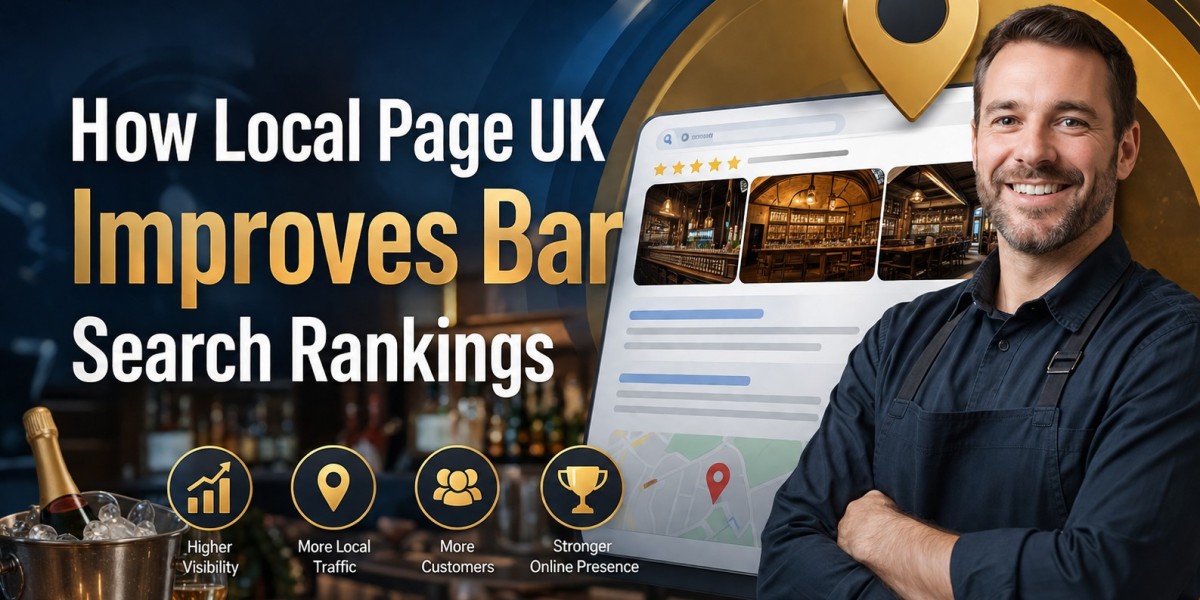


The Digital Front Door to the British Pub and Bar Scene
In the United Kingdom, pubs and bars are far more than business establishments—they are the social hubs of our towns, cities, and villages. Yet, the way patrons discover these venues has fundamentally shifted. Gone are the days when a chalkboard sign on the pavement was enough to draw in passersby.
Today, the journey to a pint of craft beer, a signature cocktail, or a Sunday roast begins on a smartphone screen. When someone types "cocktail bars near me" or "best pub garden in Bristol" into their phone, Google acts as the digital concierge. If your venue doesn't appear in those top local search results, you are effectively invisible to a massive segment of your potential market.
This comprehensive guide breaks down actionable, proven local SEO strategies tailored specifically for UK bar and pub owners. Whether you manage a historic tavern in Edinburgh, a chic rooftop bar in London, or a cozy craft beer bottle shop in Manchester, these techniques will help you dominate search engine results pages (SERPs) and turn online searches into physical footfall.
Why Local SEO Matters for UK Bars and Pubs
Local SEO (Search Engine Optimization) is the practice of optimizing your online presence to attract more business from relevant local searches. For the hospitality industry, the stakes are incredibly high.
According to search engine insights, mobile queries containing "open now" and "near me" have grown exponentially over the last few years. Furthermore, research from the Office for National Statistics (ONS) and various hospitality trade bodies indicates that a significant percentage of pub visits are spontaneous, decided entirely by on-the-go searches.
Consider this search scenario:
If your bar is listed in that coveted "Local 3-Pack" (the map section at the top of Google search results), your chances of securing that customer skyrocket. Local SEO is not about driving global traffic to your website; it is about driving local feet through your physical doors.
Optimizing Your Google Business Profile (GBP) for Maximum Footfall
Your Google Business Profile (formerly Google My Business) is the single most important asset in your local SEO toolkit. It serves as your secondary homepage.
Step 1: Claim and Verify Your Profile
If you haven't already, claim your profile through Google. Ensure that you go through the verification process (usually via phone, email, or video verification) to secure full editing rights.
Step 2: Choose the Correct Categories
Do not just list your business as a "Bar." Google allows you to select one primary category and several secondary categories. Be precise:
Primary Category:Cocktail Bar, Pub, Irish Pub, Wine Bar, or Gastropub.
Secondary Categories:Live Music Venue, Restaurant, Beer Garden, Sports Bar.
Selecting specific categories helps Google understand exactly what type of experience you offer, matching you with highly targeted user searches.
Step 3: Publish Your Live Menus and Drink Offerings
One of the most common mistakes UK bars make is uploading their menu as a flat PDF file or, worse, an outdated image. Google cannot easily read images, and PDFs offer a poor user experience on mobile devices.
Use the built-in menu editor in GBP to list your drinks, cocktails, and food items.
Add clear pricing, detailed descriptions, and high-quality photos for each signature item.
Keep your menu updated seasonally, especially during holidays or major sporting events.
Step 4: Actively Manage Attributes
Attributes tell potential patrons what to expect before they arrive. Be sure to select all relevant attributes for your venue:
Offerings:Great cocktails, Happy hour drinks, Late-night food.
Amenities:Toilets, Free Wi-Fi, Dog-friendly.
Atmosphere:Casual, Cosy, Trendy, Historic.
Outdoor Seating:Heated beer garden, Rooftop terrace.
The Power of NAP Consistency and Citations in Local Directories
To rank your bar highly in local searches, search engines need to trust that your business is real, active, and located exactly where you claim it is. They establish this trust by scanning the web for references to your business.
This is known as NAP consistency: Name, Address, and Phone Number.
If one website lists you as "The Rusty Anchor Pub" and another lists you as "Rusty Anchor Bar Ltd", search engines get confused. This minor discrepancy can dilute your local authority and lower your rankings.
Where to Build Your Local Citations
Building citations involves listing your venue on reputable directory sites. When search engines crawl a major uk service providers directory, they find your business details, verifying your physical presence.
While general platforms like Google and TripAdvisor are essential, you should also look to register your business on curated uk service listings to ensure search engines can cross-reference your geographic footprint.
When establishing your business across these platforms, you can start by building a foundation on a trusted company directory uk to make sure your name, address, and phone number are indexed correctly. To take control of your citation footprint, make it a priority to register company directory uk profiles that offer clean, structured data for search crawls.
| Citation Category | Platform Examples | Purpose |
| Search Engines | Google Maps, Apple Maps, Bing Places | Core navigation and search visibility. |
| General Directories | Yell, Yelp, Local Page UK | Establishes foundational domain authority. |
| Industry Specific | TripAdvisor, DesignMyNight, CAMRA | Reaches high-intent food and drink searchers. |
| Social Networks | Facebook, Instagram, Foursquare | Captures social signals and casual discovery. |
Crafting a Localized Content Strategy that Pulls in Patrons
Your website shouldn’t just be a static digital leaflet; it should be a dynamic resource that reflects your local community. Localized content signals to search engines that you are an active player in your specific geographic area.
Incorporate Hyper-Local Keywords
Instead of targeting generic terms like "best bar", focus on hyper-local variations that reflect how locals actually talk and search.
Instead of:"Cocktail Bar"
Target:"Cocktail bar in [Neighbourhood Name]", "Late night drinks near [Local Landmark]", or "Pre-theatre drinks in [City Centre]".
Create Neighbourhood Guides and Event Content
If your bar is near a major concert hall, football stadium, or theatre district, create content targeting those crowds.
Write a blog post titled: "The Ultimate Guide to Pre-Show Drinks Near [Local Theatre Name]".
Build an events page that highlights what you are doing during local festivals, bank holidays, or national sporting events (like the Six Nations or the Premier League).
Optimizing for these events helps capture search traffic from out-of-town visitors looking for a place to drink before or after an event.
Leveraging Reviews and Social Proof to Build Local Trust
Customer reviews are a direct ranking signal for local search algorithms. Google wants to recommend venues that are highly rated and actively engaged with their clientele.
The Anatomy of a Perfect Review Strategy
Remove Friction: Generate a direct Google review link and turn it into a QR code. Place this QR code on your menus, table talkers, or receipts with a friendly prompt: "Enjoyed your drinks? Scan to leave us a quick review!"
Respond to Every Single Review: Do not just reply to the 5-star ratings. When you receive a negative review, respond professionally, calmly, and offer to resolve the issue offline. This shows prospective customers (and Google's algorithms) that you care about customer experience.
Encourage Keyword-Rich Reviews: While you cannot force patrons what to write, you can guide them. For example: "If you loved our espresso martinis or our heated beer garden, let us know in your review!" When users naturally mention specific drinks or features, it helps your bar rank for those specific terms.
Mobile Optimization and Core Web Vitals for On-the-Go Searchers
The majority of searches for bars are conducted on mobile phones while people are actively walking the streets of UK cities. If your website takes more than three seconds to load on a 4G connection, users will tap the back button and visit your competitor instead.
Key Technical Adjustments for Mobile
Fast Loading Speeds: Compress all images (especially high-resolution photos of your drinks and interiors). Use modern image formats like WebP.
Click-to-Call and Click-to-Map: Ensure your phone number and address are prominent and clickable. A user should be able to tap your address and have it instantly load in Google Maps or Apple Maps.
Thumb-Friendly Navigation: Make sure buttons (like "Book a Table" or "View Menu") are large enough to be easily tapped with a thumb on a small screen.
Local Link Building and Community Partnerships for British Venues
In traditional SEO, getting links from high-authority global sites is the gold standard. In Local SEO, getting links from relevant, local websites is far more valuable. A link from a local neighbourhood association, a regional food blogger, or a nearby sports club sends a massive geographical relevancy signal to search engines.
How to Acquire Local Backlinks
Sponsor Local Sports Teams: Sponsor a local Sunday league football team or rugby club. They will usually link to your venue from their official website.
Collaborate with Local Food & Drink Bloggers: Invite local influencers and bloggers for a complimentary tasting of your new menu. In exchange, ask for an honest review and a link back to your website.
Partner with Nearby Businesses: If you don't serve food but partner with a local food truck, make sure they list your venue on their website. Conversely, if you are near a boutique hotel, ask to be featured on their "Where to Drink" recommendation page.
Directory Optimization: Ensure you add company listing uk profiles on premium business directories. Taking the step to list company online uk on high-quality web properties helps build a natural, local backlink profile that search crawlers trust.
Schema Markup: Speaking Google’s Language to Stand Out
Schema markup is a form of structured data code that you add to your website's backend. It helps search engines understand the exact context of your content, allowing them to display rich snippets in search results (like star ratings, event dates, and menu prices).
For a bar or pub, you should implement Bar or Pub Schema, which looks like this in JSON-LD format:
By adding this structured data to your website, you clarify your physical location and offerings to search engine crawlers, which can lead to higher visibility and cleaner presentation on the SERPs.
A Complete Local SEO Checklist for UK Bars and Pubs
Use this actionable checklist to keep your local search strategy on track:
[ ] Claim and Verify your Google Business Profile.
[ ] Select Primary and Secondary Categories accurately (e.g., Gastropub + Live Music Venue).
[ ] Build out your menu items directly within Google's native interface.
[ ] Enforce NAP consistency across your website, social media, and third-party sites.
[ ] Acquire citations by submitting your venue to a reputable uk service providers directory.
[ ] Publish local-focused content, targeting nearby landmarks and local events.
[ ] Set up a feedback system to consistently secure fresh, positive customer reviews.
[ ] Implement 'Bar' or 'Pub' Schema Markup on your homepage.
[ ] Optimize your mobile experience for speedy loading on cellular data connections.
Conclusion: Elevating Your Venue’s Digital Presence
Optimizing your bar or pub for local search isn't a one-time chore; it is an ongoing marketing pipeline that bridges the digital world with your physical bar stools. By cleaning up your Google Business Profile, securing your spot on a verified local firms directory uk, and consistently gathering reviews, you create a digital presence that actively pulls customers off the street and into your establishment.
Don't let nearby competitors capture the weekend crowds simply because they are easier to find on a map. Start taking action today by auditing your NAP data, reaching out to your regulars for review support, and submitting your details to reputable platforms to ensure your venue is firmly on the local map.
Frequently Asked Questions (FAQs)
1. How long does it take to see results from Local SEO for a bar?
Typically, you can expect to see noticeable shifts in your local rankings, map views, and search actions within 4 to 8 weeks of implementing GBP optimizations, correcting citation discrepancies, and acquiring initial reviews.
2. Can I use a PO Box or virtual address for my bar’s Local SEO?
No. Google’s guidelines strictly prohibit using PO boxes or virtual addresses for local profiles. You must use a physical address where your customers are greeted in person during your stated operating hours.
3. What is the most important ranking factor for local search?
While search algorithms are complex, the three primary pillars of local ranking are Relevance (how well your business matches the search query), Distance (how far your venue is from the searcher's location), and Prominence (how well-known your business is, measured by reviews, links, and directory citations).
4. Should I pay for listing submissions?
Paid listing options can speed up verification and offer additional features like featured branding. However, you can start establishing your authority using free resources. High-authority platforms make it easy to list your details when you submit company uk directory profiles without upfront costs.
Suggested Images for Publication
Header Image: A warm, inviting photo of a busy British pub interior or stylish cocktail bar with a smartphone placed on a table displaying a map application.
Infographic: A step-by-step visual map showing how a mobile search translates to a physical visit.
Screenshot Example: A mockup of a well-optimized Google Business Profile showing clear categorization, active menu buttons, and clear attributes.
Schema Recommendations
LocalBusiness / Bar / Pub Schema: Embed JSON-LD structured data on your homepage to define your business type, operating hours, geolocation, menu URL, and contact details.
Event Schema: For bars that host live music, quiz nights, or food festivals, apply Event schema to make sure Google pulls these dates directly into search results.
Internal Links Used
company directory uk
register company directory uk
add company listing uk
uk service providers directory
local firms directory uk
list company online uk
submit company uk directory
External References
UK Hospitality Industry Insights: Office for National Statistics (ONS)
Structured Data Standards: Schema.org
Final Summary
This guide offers a complete, actionable strategy for UK bar and pub owners looking to improve their local SEO. By establishing profile optimization habits, cleaning up NAP citation inconsistencies on key directories, and curating active customer reviews, venues can secure their place in the competitive hospitality landscape and ensure their taps keep flowing.
READ MORE - UK Professionals listing
READ MORE - Reviewed Companies directory uk








