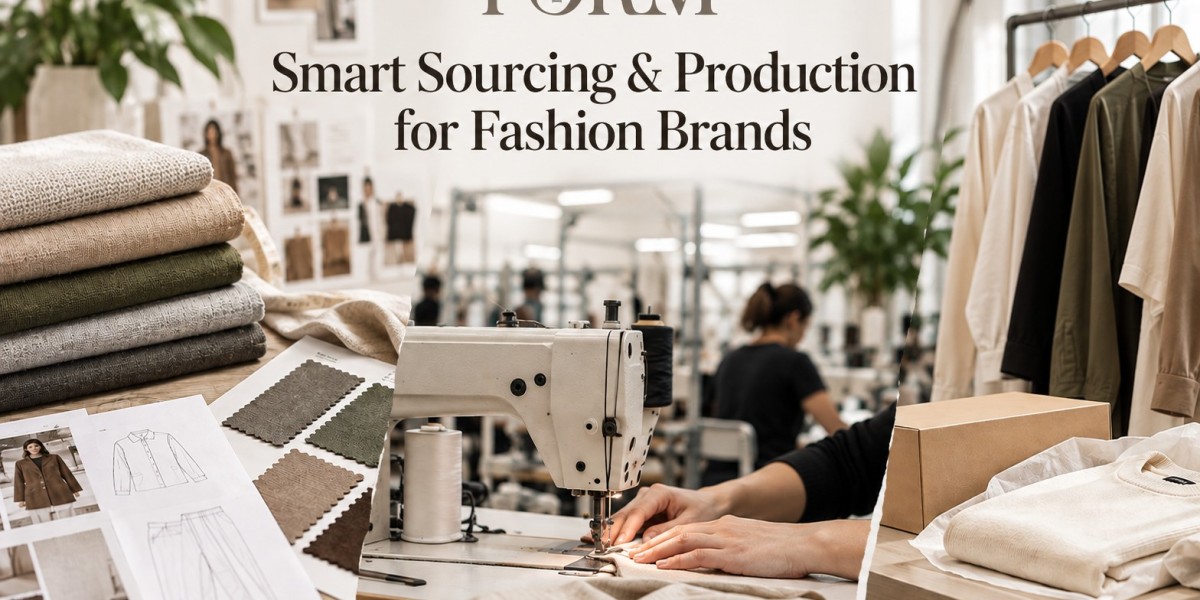


Building a fashion brand is exciting, but turning a creative idea into a high-quality finished garment requires much more than a great design. Fabric selection, supplier relationships, sampling, production planning, quality control, and communication all play an important role. This is why professional clothing sourcing and manufacturing services can make a significant difference for brands that want to develop products efficiently while reducing unnecessary production challenges.
A successful collection is built through a connected process rather than a series of separate decisions. When sourcing and manufacturing work together, brands can make smarter choices about materials, construction, costs, timelines, and scalability. The result is a clearer path from an initial concept to a product that is ready for customers.
The Connection Between Sourcing and Product Quality
The quality of a garment often begins long before production starts. The fabric influences how a product feels, fits, performs, washes, and maintains its shape over time. Choosing materials based only on appearance can create problems later during sampling or manufacturing.
A thoughtful sourcing process considers factors such as:
Fabric composition and weight
Stretch and recovery
Drape and structure
Durability and wash performance
Sustainability requirements
Cost and supplier availability
Compatibility with the garment design
Form Department emphasizes understanding how materials behave in the finished garment, rather than simply selecting fabric from a swatch. Its sourcing network includes domestic and international options, with access to specialty and eco-conscious materials designed to support different product needs.
This approach is particularly valuable because the wrong material can increase development costs and create delays. A fabric that looks perfect on a table may behave very differently once it is cut, sewn, washed, and worn.
Why Supplier Relationships Can Save Brands Time
Finding reliable suppliers is one of the most time-consuming parts of building a clothing brand. New founders often spend weeks researching factories and material vendors without knowing which suppliers are dependable or appropriate for their specific product.
Working with an established network can simplify this process considerably. Form Department states that its platform provides access to a network of more than 1,000 vetted factories and material suppliers, along with centralized sourcing support and expert guidance.
Reliable supplier relationships can help brands:
Reduce the risk of inconsistent materials
Compare domestic and overseas options
Improve communication throughout production
Find solutions that fit different budgets
Access specialized fabrics and components
Plan production more strategically
For a growing brand, this can mean spending less time searching for suppliers and more time refining the actual product and business strategy.
Sampling Is Where Ideas Become Real Products
A sketch or digital design is only the beginning. Sampling allows a brand to see how an idea performs in the real world. During this stage, fit, proportions, construction, stitching, finishes, and materials can all be reviewed and improved.
This is also where many important production questions are answered. Is the fabric suitable for the intended silhouette? Does the construction support durability? Are trims functioning correctly? Can the design be manufactured efficiently at scale?
Form Department's development process includes concept development, prototyping, material sourcing, pre-production planning, production oversight, and quality assurance. The company's process also highlights continuous communication and feedback throughout development.
Expert insight is especially important here because sampling is rarely a one-step process. Small adjustments are often necessary before a product is ready for full production. Treating samples as a refinement stage rather than expecting perfection immediately helps brands make more informed decisions.
Manufacturing Requires More Than Choosing a Factory
A factory can manufacture a product, but successful manufacturing requires planning before production begins. Brands need to consider quantities, construction complexity, materials, timelines, quality expectations, and cost targets.
Form Department explains that manufacturing location can be selected based on priorities such as price point, minimum order quantities, timeline, and garment complexity. Its FAQ notes that production options include domestic manufacturing in Los Angeles as well as trusted overseas partners.
This flexibility matters because there is no single manufacturing solution that works for every brand. A startup producing a limited collection may have different needs from an established company scaling an existing product.
The best manufacturing strategy is one that aligns production capabilities with the brand's actual business goals.
Working With a Custom Clothing Manufacturer in Los Angeles
For brands that value close communication and domestic production oversight, working with a custom clothing manufacturer in Los Angeles can offer meaningful advantages. Los Angeles remains an important center for apparel development, pattern making, sampling, and production.
Local development can make collaboration easier during critical stages of a project. It may also provide brands with greater access to hands-on support when refining fit, construction, and product details.
Form Department is based in Los Angeles and specializes in helping emerging and established brands move from creative concepts toward structured development and scalable production. Its approach combines product development expertise with manufacturing guidance and supply chain support.
However, domestic production is not automatically the right answer for every project. The ideal choice should always depend on the product, budget, timeline, and volume requirements.
Quality Control Should Be Built Into the Process
Quality is easier to manage when it is considered throughout development rather than only at the end of production. Checking a finished garment after all units have been produced may reveal issues too late.
A stronger process includes quality reviews during:
Material selection
Sample development
Fit approval
Pre-production planning
Manufacturing
Final product review
According to Form Department's FAQ, quality control includes construction reviews, fit evaluation, stitch and seam integrity checks, and material performance assessment during development and production stages.
This structured approach helps brands identify potential issues earlier, when changes are generally easier to manage.
FAQs About Clothing Sourcing and Manufacturing
What are clothing sourcing and manufacturing services?
These services help fashion brands identify suitable materials and suppliers while supporting the process of developing and producing finished garments. Depending on the provider, support may also include sampling, product development, production planning, quality control, packaging, and fulfillment.
How do I choose the right fabric for my clothing brand?
The right fabric should be selected based on the product's purpose, fit, performance requirements, durability, cost, and visual appearance. Testing materials during sampling can help confirm whether a fabric performs as expected in the finished garment.
Should I manufacture locally or overseas?
Both options can be effective. Local manufacturing may provide closer communication and development oversight, while overseas production may offer different capabilities or cost structures. The best choice depends on your product complexity, quantity, budget, and timeline.
Why is sampling important before full production?
Sampling allows brands to evaluate fit, construction, materials, and functionality before committing to larger production quantities. It provides an opportunity to refine the product and identify potential issues early.
Final Thoughts
Creating a successful clothing collection requires more than finding a factory or selecting a fabric. The strongest brands connect sourcing, product development, sampling, manufacturing, and quality control into one organized process.
With the right support, fashion entrepreneurs can spend less time navigating supplier uncertainty and production challenges and more time building products that reflect their vision. Whether you are developing your first collection or preparing to scale, a structured approach can create greater clarity at every stage.
Form Department provides resources and expert support across sourcing, development, production, packaging, and fulfillment, helping brands move from concept toward a market-ready collection. If you are ready to launch clothing brand ideas with a more organized and confident approach, professional guidance can help turn the journey from overwhelming to achievable.