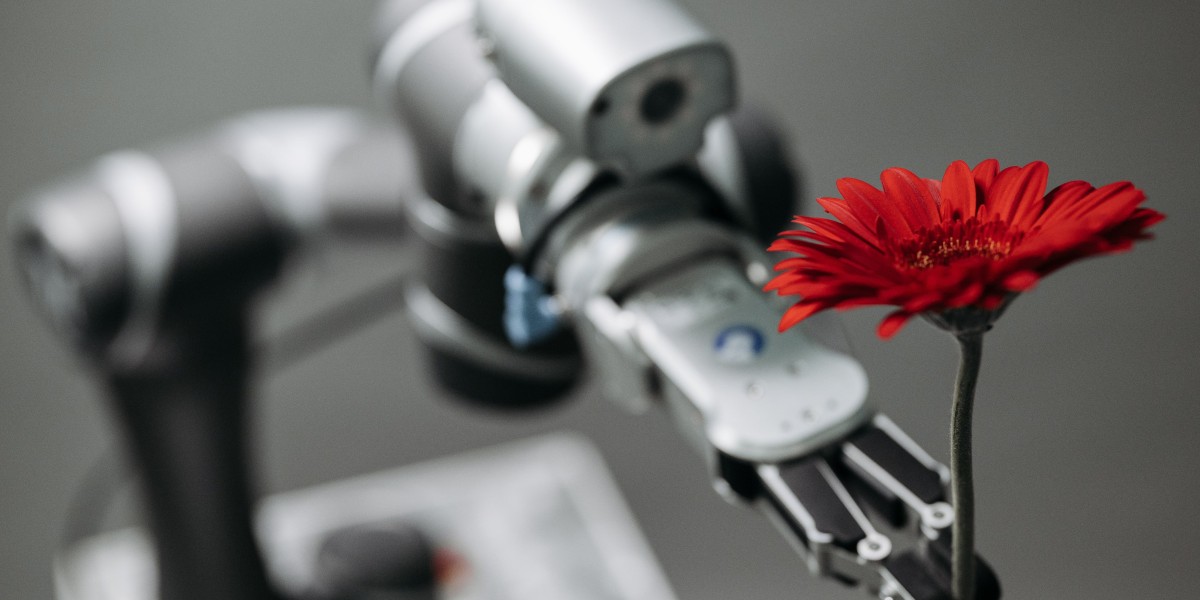


The Robotic Grippers Market is becoming increasingly important as manufacturers, warehouses, logistics operators, and other industries expand automation across handling, assembly, packaging, sorting, and machine-tending operations. Robotic grippers serve as the physical interface between robotic arms and objects, making their reliability, precision, adaptability, and speed critical to overall system performance.
Despite technological progress, the industry faces several obstacles. Modern applications increasingly require grippers to handle objects with different sizes, shapes, weights, textures, and levels of fragility. Conventional grippers can perform highly repetitive tasks efficiently, but changing production requirements are creating demand for more flexible and intelligent solutions.
The major Challenges in the Robotic Grippers Market include high development costs, limited adaptability, complex integration, sensing limitations, maintenance requirements, safety concerns, and difficulties associated with achieving reliable autonomous grasping.
High Cost of Advanced Robotic Grippers
One of the most significant challenges is the investment required for advanced gripper technology. Basic pneumatic or mechanical grippers can be relatively straightforward, but intelligent grippers equipped with sensors, cameras, sophisticated actuators, and control systems require considerably greater investment.
Manufacturers must consider not only the purchase price of the gripper but also installation, programming, integration, tooling, maintenance, training, and system upgrades. For small and medium-sized manufacturers, these additional expenses can make automation projects difficult to justify.
The cost challenge becomes even more prominent when companies require multiple grippers for different production lines or applications. Specialized end-effectors may need to be designed for individual products, increasing engineering and deployment expenses.
Limited Flexibility Across Different Applications
Another important challenge is the difficulty of creating a single gripper capable of handling a broad variety of objects. Industrial products can differ considerably in dimensions, surface characteristics, rigidity, weight, and geometry.
A gripper optimized for rigid components may not be appropriate for soft or deformable products. Similarly, a vacuum gripper that performs effectively with smooth surfaces may struggle with porous, irregular, or textured objects.
This limitation is particularly important in high-mix, low-volume manufacturing environments. Frequent product changes can require finger replacement, tool changes, reprogramming, or even an entirely different gripper. These interruptions can reduce productivity and increase operational complexity.
Precision and Grasping Reliability
Reliable grasping requires the correct combination of position, force, speed, and contact configuration. Even a small error can cause an object to slip, become damaged, or fall.
Precision becomes more difficult when objects are randomly positioned or have inconsistent dimensions. Advanced applications also require robots to recognize where and how an object should be grasped rather than simply following a predetermined movement.
Force control and tactile sensing can improve performance, but incorporating these technologies introduces additional hardware and software complexity. Achieving accurate real-time control remains a significant technical hurdle, particularly for delicate or irregular objects.
Sensor Integration and Data Processing
Sensors are increasingly important for intelligent robotic grasping. Force-torque sensors, tactile sensors, proximity sensors, and vision systems can provide information about object position, contact pressure, movement, and potential slippage.
However, integrating multiple sensors into a compact gripper is challenging. Sensors must operate reliably in demanding industrial environments while remaining sufficiently accurate and durable.
The data generated by these systems must also be interpreted rapidly. A gripper may need to adjust its force almost instantly after detecting an unexpected change in contact conditions. Processing delays or inaccurate measurements can reduce grasping reliability.
As intelligent grippers become more dependent on real-time sensing, manufacturers will need to improve sensor durability, calibration, communication, and data-processing capabilities.
Mechanical Complexity and Durability
Advanced grippers often contain multiple moving components, actuators, joints, transmission systems, and sensors. Increasing functionality can therefore increase mechanical complexity.
More components may create additional points of failure. Wear, friction, backlash, vibration, and contamination can gradually affect accuracy and performance. In high-cycle manufacturing environments, grippers may perform thousands or millions of operations, making durability essential.
The challenge is to develop mechanisms that are simultaneously lightweight, strong, precise, compact, and cost-effective. Increasing one characteristic can sometimes compromise another. For example, adding structural strength may increase weight, while reducing weight may affect payload capability or durability.
Difficulty Handling Fragile and Irregular Objects
Handling fragile objects remains a major obstacle for the Robotic Grippers Market. Products such as food items, glass components, electronics, medical products, and delicate packaging can be damaged by excessive gripping force.
At the same time, insufficient force can cause the object to slip. This creates a narrow operating range in which the gripper must hold the product securely without causing deformation or damage.
Soft and adaptive grippers offer a potential solution because their compliant structures can conform to irregular surfaces. However, these designs introduce their own challenges involving material durability, actuation, cleaning, repeatability, and precise control.
Integration With Existing Robotic Systems
Installing a new gripper is not simply a matter of attaching it to a robotic arm. The end-effector must communicate properly with the robot controller, sensors, safety systems, and manufacturing equipment.
Compatibility problems can occur because robotic systems use different communication protocols, mounting configurations, software environments, and electrical interfaces.
Integration can therefore require engineering expertise and customized programming. Businesses that lack skilled automation personnel may experience longer deployment periods and greater implementation costs.
Safety and Human-Robot Collaboration
As robots increasingly operate alongside human workers, gripper safety is becoming more important. High-speed movements and strong gripping forces can create risks when workers enter the operating area.
Collaborative applications require grippers that can detect unexpected contact, regulate force, and respond appropriately to human interaction. Sharp edges, exposed mechanisms, excessive force, and uncontrolled movements can all create safety concerns.
Designers therefore need to balance productivity with safe operation. This can require additional sensing, compliant mechanisms, protective systems, and sophisticated control strategies, increasing overall system complexity.
Maintenance and Downtime
Industrial users expect robotic equipment to operate consistently with minimal interruptions. Grippers, however, are directly exposed to workpieces and production environments, making them vulnerable to contamination, impact, mechanical wear, and component degradation.
Maintenance requirements can increase operating costs and reduce productivity if replacement components are not readily available. In industries operating continuously, even short periods of downtime can have significant consequences.
Predictive maintenance, modular components, condition monitoring, and improved materials can help address these issues, but these technologies may increase initial investment.
Shortage of Specialized Skills
The growing sophistication of robotic grippers also creates a skills challenge. Designing, programming, integrating, calibrating, and maintaining advanced end-effectors requires knowledge of mechanical engineering, robotics, electronics, automation, sensing, and software.
Many manufacturers may have difficulty finding personnel with experience across all these disciplines. This can slow deployment and increase dependence on external system integrators.
Training programs and simplified programming interfaces can help reduce this barrier. Manufacturers are also working toward more intuitive systems that allow operators to configure grippers without extensive robotics expertise.
Standardization and Interoperability Issues
The absence of universal standards across gripper technologies can complicate system integration. Different manufacturers may use proprietary interfaces, mounting arrangements, communication systems, and software tools.
This can make it difficult for users to replace one gripper with another without modifying the surrounding robotic system. Greater standardization could improve interoperability, reduce integration time, and encourage wider adoption.
Future Strategies to Overcome Market Challenges
Addressing these challenges will require progress across hardware, software, sensing, materials, and automation platforms. Modular gripper architectures can allow manufacturers to change fingers or gripping mechanisms without replacing the complete system.
Artificial intelligence and machine vision can also improve object recognition and grasp planning. More advanced force and tactile sensing may enable robots to adjust gripping pressure dynamically according to real-time conditions.
At the same time, manufacturers are likely to focus on lightweight materials, energy-efficient actuation, simplified programming, predictive maintenance, and standardized interfaces. These developments can help reduce the total cost of ownership while improving flexibility and reliability.
Conclusion
The Robotic Grippers Market has substantial potential as industries pursue greater automation, but technological advancement alone will not eliminate the sector's major barriers. High costs, limited versatility, complex integration, sensing difficulties, mechanical wear, safety requirements, and skilled-labor shortages continue to influence adoption.
The next stage of development will depend on making grippers more adaptive, intelligent, durable, affordable, and easier to integrate. Solutions that combine reliable mechanical performance with real-time sensing and intelligent control will be particularly important.
As manufacturers increasingly demand flexible automation capable of handling diverse products, overcoming these Challenges will be essential for expanding robotic gripper applications across both established and emerging industries.









