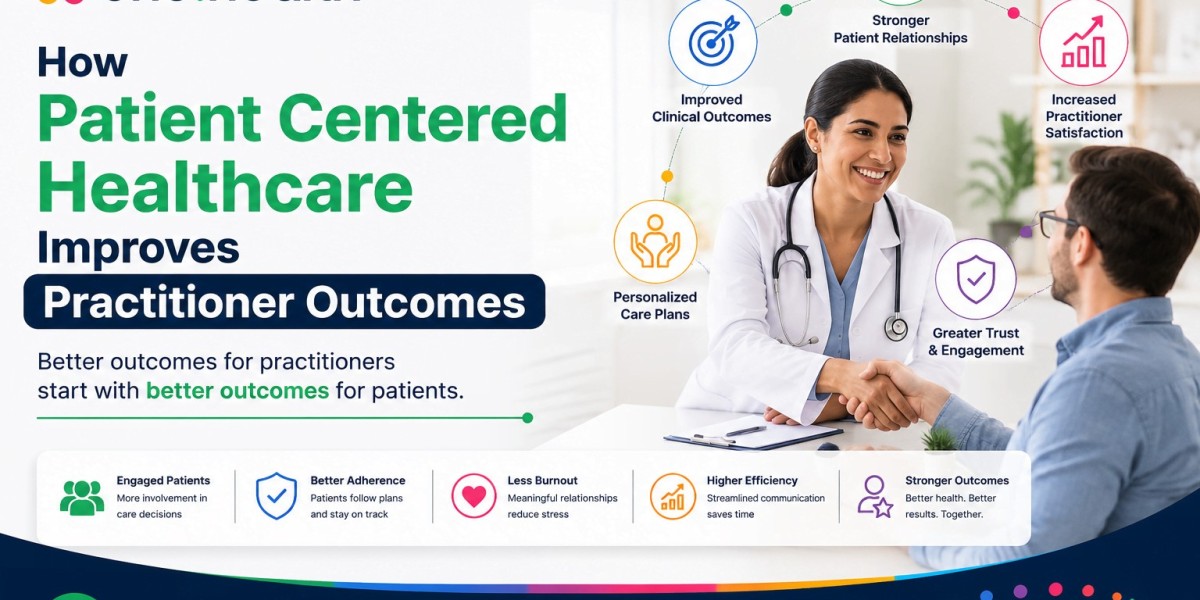


Ask any doctor how their week has gone lately, and you'll rarely hear "great." Physician burnout numbers have hovered somewhere around half of all practicing doctors for years now, and honestly, anyone who's spent time around a busy practice already knew that before the surveys confirmed it. I've talked to enough physicians, office managers, and clinical staff to notice a pattern. The complaint is almost never about the medicine itself. It's about everything wrapped around it: the paperwork, the referrals that go nowhere, the systems that make simple things complicated.
This is exactly where patient centered healthcare starts to matter, not just for patients, but for the people delivering the care. When a practice shifts away from fragmented, transactional medicine toward a model built around coordination, something shifts for practitioners too. Fewer dropped handoffs. Less time chasing records. More time actually practicing medicine. That's the thesis of this piece, and by the end, you'll see why this shift is showing up in how doctors talk about their work, their patients, and their own sense of purpose.
The Old Model Wasn't Built for Doctors Either
Most people assume fragmented healthcare mainly hurts patients, and it does. But practitioners absorb a lot of that friction too. When specialty referrals disappear into a black hole, or a discharge summary from a skilled nursing facility never makes it back to the primary physician, the doctor is the one left guessing.
I've noticed this especially in specialty care, where a single patient might touch four or five different providers across a few months. Without real care coordination, physicians end up practicing with half the picture. That's exhausting, and frankly it's a little dangerous.
Patient centered healthcare flips that. Instead of a doctor operating in isolation, they're plugged into a broader healthcare network built to keep information, referrals, and follow-up moving in the right direction.
What Changes for Practitioners When Care Is Actually Coordinated
Here's where it gets practical. When a practice or a physician group partners with an organization built around integrated healthcare services, a few things tend to happen fairly quickly:
Referrals stop disappearing. Specialty healthcare services connected through a shared coordination model mean physicians know their patient actually made it to the appointment, and that the results come back.
Administrative load drops. Practices that plug into a coordinated care services structure often offload the scheduling, insurance verification, and follow-up tracking that used to eat into clinical hours.
Clinical decisions stay with the physician. This one matters more than people realize. In value-based healthcare arrangements built around physician-led partnerships, doctors keep authority over treatment decisions instead of answering to someone whose main concern is quarterly numbers.
Post-acute transitions get smoother. For practices working with skilled nursing facilities, having a connected care platform linking facility to home care means fewer readmissions and fewer 2 a.m. calls trying to track down a patient's status.
None of this is theoretical. It's the same reasoning behind why organizations like One Health built their model around physician partnerships in the first place. One Health Partners exists specifically because physicians kept saying the same thing: they wanted to practice medicine without a shareholder looking over their shoulder.
The Ripple Effect Patients Feel, Even Though It Starts With the Doctor
Here's the part that surprised me a little when I started digging into this. Improving practitioner outcomes through better patient care coordination doesn't just help the doctor's day. It shows up in the patient experience almost immediately.
A physician who isn't buried in administrative backlog has more time during appointments. A doctor who trusts that referrals and specialty healthcare services are actually being tracked feels more confident making them. And patients, whether they're navigating specialty care or moving between a skilled nursing facility and home, notice when their providers are actually talking to each other.
This is part of why One Health Specialties operates as a network of Centers of Excellence rather than a scattered list of specialists. And it's why One Health Complete was built to connect facility-based care with home care instead of treating those as two separate worlds. The healthcare support services sitting behind the scenes, things like pharmacy coordination and clinical infrastructure, exist so physicians aren't the ones stitching everything together manually.
Why This Matters More Now Than It Did a Decade Ago
Healthcare services in the USA have gotten more specialized, which is good for outcomes but harder to coordinate. A patient with a complex condition might see a rheumatologist, a pharmacist managing specialty medication, a primary care physician, and eventually a post-acute care team. Without a real coordination structure behind all of that, physicians end up doing detective work instead of doctoring.
I'll be honest, this is the part of the current system that frustrates most physicians I've spoken with. It's not the medicine. It's the noise around it. Patient centered healthcare, done properly, cuts a lot of that noise out.
What This Looks Like for a Physician Considering a Change
If you're a physician weighing whether a coordinated model is worth exploring, a few questions tend to come up again and again:
Will I keep control over how I treat my patients?
Will administrative support actually reduce my workload, or just shift it around?
Does the organization reinvest in care, or does it answer to outside investors?
Are specialty referrals and post-acute transitions genuinely tracked, or just promised?
Physicians who've partnered with nonprofit, physician-led organizations tend to answer those questions the same way. They mention having more time with patients, fewer administrative headaches, and a renewed sense that they're practicing medicine the way they intended to when they started.
Bringing It Together
Coordinated healthcare solutions isn't just a nicer way to describe patient experience. It's a structural shift that changes how physicians work day to day, how much of their time gets eaten by administrative noise, and how much authority they retain over their own clinical decisions. When referrals, specialty care, pharmacy support, and post-acute transitions are actually connected instead of scattered, practitioners get their time and their confidence back.
So what does that mean for you, whether you're a physician, a practice administrator, or someone weighing a partnership? It means the model you choose matters. A coordinated, physician-led structure isn't just better for patients on paper. It changes what your workday actually feels like.
If you're ready to see what practicing medicine looks like inside a model built around people instead of shareholders, it might be worth a real conversation with One Health.
FAQs
1. What does patient centered healthcare actually mean for a physician's daily workload?
It usually means less time spent chasing referrals, records, and follow-ups, and more time spent with patients. When care coordination is handled by the organization instead of the individual physician, administrative noise drops significantly.
2. Does patient centered healthcare mean giving up clinical control?
Not in a properly structured model. Physician-led partnerships, like the ones One Health Partners builds, are specifically designed to keep treatment decisions with the doctor, not a shareholder or outside investor.
3. How does care coordination affect patients with complex or specialty conditions?
Patients seeing multiple specialists benefit the most, since coordinated care services make sure referrals, test results, and follow-ups actually reach the right people instead of getting lost between providers.
4. Why do skilled nursing facilities need a connected care model too?
Transitions between facility care and home care are where a lot of things fall apart, from missed follow-ups to unnecessary readmissions. A connected structure, like the one One Health Complete uses, keeps that transition smoother for both patients and physicians.
5. Is patient centered healthcare only beneficial for patients?
No, and that's honestly the part people miss most. Practitioners see real benefits too, including reduced burnout, more time for actual patient care, and more trust that referrals and specialty services are being handled properly.









