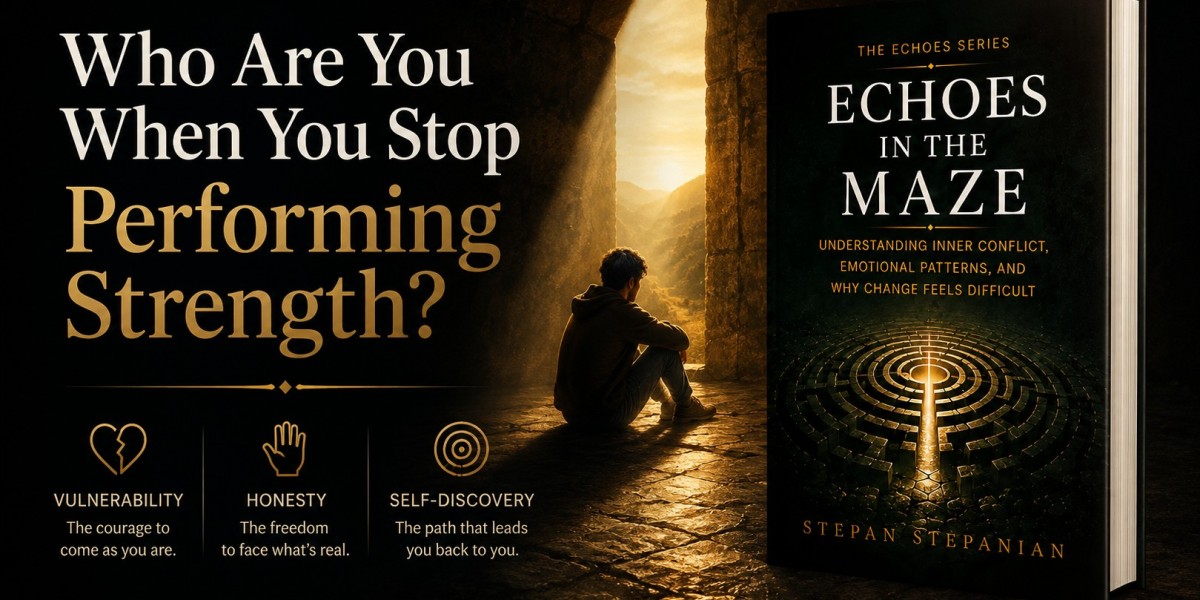


The Compliment That Feels Like a Trap
"You are always so strong."
The words are kind, and they describe something real. You have handled difficult seasons, kept promises under pressure, and shown up when disappearing felt easier.
Still, the compliment can land strangely when you are exhausted or hoping someone will ask whether you need help. Instead, the identity returns: strong, dependable, composed. You know how to wear it, so you do.
In Echoes in the Maze, Stepan Stepanian examines the defended self. It may be built from genuine qualities that helped us survive and succeed. Trouble begins when one valued quality becomes too narrow to hold the whole person.
How a Trait Becomes a Role
Roles often form through praise. The mature child finds confusion embarrassing. The calm family member treats anger as dangerous. The reliable friend experiences cancellation as betrayal. The competent professional finds asking for guidance threatening.
No one may demand the performance. The person protects it because the role brings approval or belonging. Strength becomes more than a quality; it becomes the condition under which they feel safe to know.
The role can help someone function in chaos, but usefulness hides cost. The strong person keeps carrying. The independent person stops asking. The calm person edits every reaction. The helpful person gives before checking what remains.
Eventually, the trait stops serving the person, and the person begins serving the trait.
The Loneliness of Being Known for One Part
There is a particular loneliness in being admired for a version of yourself that is true but incomplete.
Praise reaches the visible quality while the hidden experience remains untouched. People celebrate your resilience without noticing your exhaustion. They trust your calm and miss the fear. They appreciate your advice without imagining your uncertainty.
The result often looks like continued functioning. Messages are answered, deadlines met, and others supported while the inner life remains untended.
This is why a compliment can produce sadness. It confirms that others see you, but only through the doorway you have kept open. The parts needing tenderness remain behind the locked rooms.
Why Receiving Help Can Feel More Exposing Than Giving It
People identified with strength are comfortable being useful because usefulness offers control. Receiving help means letting someone witness your limitation before you have solved it.
That can feel risky. Will they lose confidence in you? Will they see you as demanding? Will the relationship change if you are no longer the person holding everything together?
These fears may have history. Vulnerability may have been ignored or used against you. Unreliable support made self-containment intelligent. A defense can deserve understanding and still require change when its cost grows too high.
The question is not whether strength was real. The question is whether strength has become a rule that forbids the rest of your humanity.
Making the Self Larger
Loosening a defended identity does not mean becoming its opposite. Strength need not become helplessness, independence need not surrender judgment, and composure need not disappear.
The goal is expansion.
Strength can include fatigue. Independence can include chosen support. Competence can include learning in public. Calm can include honest anger. Generosity can include a limit. When the identity becomes larger, one human experience no longer threatens the whole structure.
This expansion usually begins in ordinary moments. You admit that you do not know. You delay an answer because you need time. You tell a trusted person that the week has been harder than it looked. You accept assistance without immediately planning how to repay it.
The old role may protest. You may feel exposed, guilty, or less recognizable to yourself. Those feelings do not prove the expansion is wrong. They show how tightly the older identity was practiced.
A fuller self also changes the way you recognize strength: not as endless endurance, but as the freedom to tell the truth before exhaustion turns honesty into crisis again.
Letting Relationships Meet the Fuller Person
As you reveal more of yourself, relationships become clearer. Some people make room. They do not withdraw respect when you express need, uncertainty, or frustration. The connection becomes less efficient and more real.
Other people may resist. They may prefer the version of you that required little and provided much. Their discomfort does not automatically make them cruel, but it reveals what the relationship had learned to expect.
You are allowed to outgrow an identity that once protected you. You can honor the version that survived without requiring it to manage every future season.
Strength is most trustworthy when it is chosen, not performed under threat. The aim is not to stop being the person others have admired. It is to become spacious enough that admiration no longer traps you inside only one part of yourself.









