

Introduction
Spy fiction has fascinated readers for generations because it offers a glimpse into a hidden world where secrets shape history, loyalties are constantly tested, and danger often lurks beneath ordinary appearances. While thrilling action scenes and high-tech gadgets can certainly entertain, the stories that leave the strongest impression are those that feel believable from beginning to end.
The best realistic spy fiction goes beyond cinematic explosions and impossible escapes. It focuses on carefully crafted undercover identities, the psychological demands of intelligence work, and the emotional consequences of living a life built on deception. Readers become invested because the characters face challenges that feel authentic, even within extraordinary circumstances.
Website: https://geraldschoelzel.com/
Rather than portraying spies as invincible heroes, realistic espionage novels recognize that intelligence officers are people first. They experience fear, uncertainty, loneliness, and moral conflict while carrying out missions that often require extraordinary courage. This balance between suspense and humanity creates stories that remain memorable long after the final chapter.
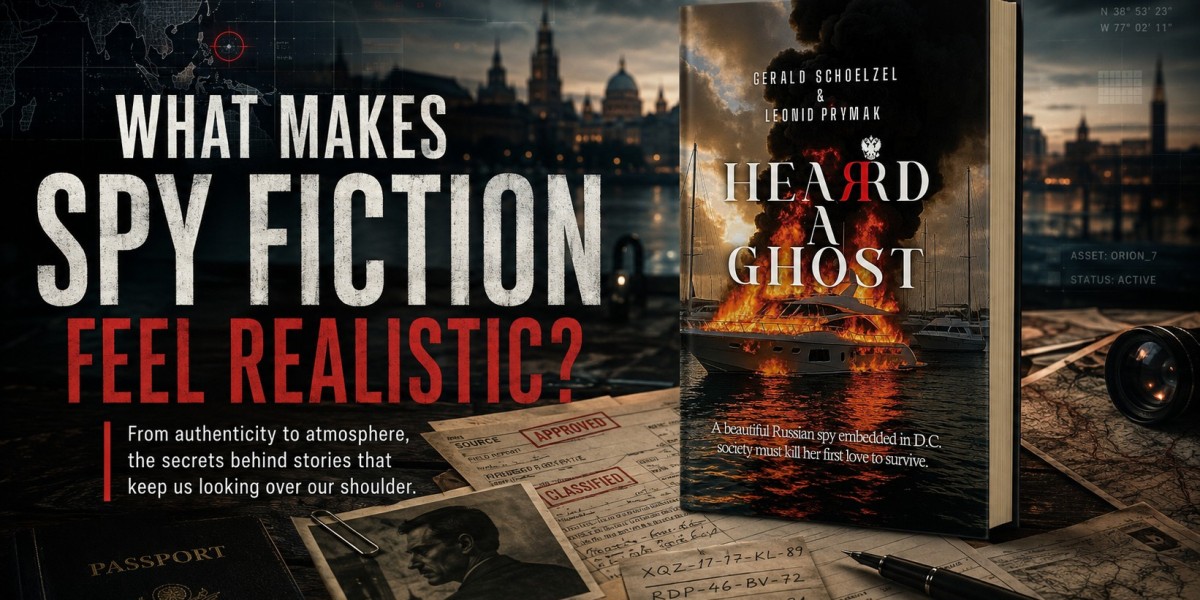
Heard a Ghost: Love, Murder & Revenge embraces this tradition by presenting espionage through believable undercover operations, emotionally complex characters, and relationships that become just as important as the mission itself.
Convincing Secret Identities
One of the defining characteristics of realistic spy fiction is the creation of believable undercover identities.
Successful intelligence work rarely depends on dramatic disguises or elaborate costumes. Instead, it relies on becoming someone who naturally fits into everyday society without attracting attention.
The most convincing undercover operatives blend into their surroundings so completely that no one questions who they are.
Professional Covers
Every undercover agent needs more than a false name.
A convincing identity includes an entire life that can withstand careful scrutiny.
Professional covers often involve:
- Established careers
- Authentic social circles
- Financial records
- Consistent personal history
- Everyday routines
The stronger the cover, the less likely anyone is to suspect hidden motives.
In realistic espionage fiction, authors pay close attention to these practical details because readers quickly recognize when an undercover identity feels incomplete or unrealistic.
The most effective covers are often surprisingly ordinary.
Rather than pretending to be mysterious strangers, spies frequently adopt professions that naturally explain travel, public interaction, or access to influential people.
This subtle approach creates much more believable suspense.
Everyday Deception
Real espionage is usually built on small lies rather than dramatic performances.
An undercover operative must constantly monitor conversations, maintain consistency, remember invented details, and respond naturally under pressure.
Every interaction becomes important.
Simple questions such as:
- Where did you grow up?
- How long have you worked here?
- What are your hobbies?
can become dangerous if answers fail to match previous conversations.
This constant need for consistency creates ongoing psychological pressure that realistic spy fiction explores exceptionally well.
Readers appreciate stories where deception feels like continuous work rather than effortless performance.
Attention to Detail
Believability depends upon details.
Realistic espionage stories often include:
- Careful planning
- Observation skills
- Cultural awareness
- Language proficiency
- Patience
Small mistakes can expose years of preparation.
This emphasis on precision creates suspense because readers understand that success often depends on seemingly insignificant moments.
A forgotten fact.
A familiar expression.
An unexpected question.
These ordinary situations frequently become the most dangerous parts of an intelligence mission.
Emotional Costs of Espionage
Perhaps the greatest difference between action-focused thrillers and realistic spy fiction is the recognition that espionage carries significant emotional consequences.
Living under constant deception affects every aspect of a person's life.
Isolation
Undercover operatives frequently live with profound loneliness.
Because revealing their true identity could endanger both themselves and others, they must keep even close relationships carefully controlled.
They often cannot fully trust:
- Friends
- Colleagues
- Romantic partners
- Neighbors
- Professional associates
This isolation creates internal conflict that often proves more difficult than physical danger.
Many realistic spy novels portray loneliness as one of the profession's greatest sacrifices.
Readers relate to these emotions because they reflect universal human needs for honesty, belonging, and connection.
Constant Pressure
Unlike brief moments of action, intelligence work requires sustained concentration.
An undercover operative cannot simply relax after completing one difficult assignment.
The role continues every day.
Every conversation.
Every social event.
Every unexpected encounter.
This constant vigilance becomes emotionally exhausting.
Realistic spy fiction acknowledges that maintaining a false identity requires enormous mental discipline.
The danger comes not only from enemies but also from simple human fatigue.
The possibility of making one careless mistake keeps tension consistently high throughout the story.
Difficult Choices
Perhaps no profession demands more impossible decisions than espionage.
Characters often face conflicts between:
- Duty and personal relationships
- National security and individual compassion
- Professional success and personal integrity
- Mission objectives and innocent lives
These ethical dilemmas create meaningful suspense because there are rarely perfect solutions.
Readers become emotionally invested when characters must choose between equally painful alternatives.
Rather than presenting clear heroes and villains, realistic espionage often explores the gray areas where morality becomes far more complicated.
Human Stories Behind Intelligence Work
The most memorable espionage novels ultimately succeed because they tell human stories.
Readers may initially pick up a spy novel expecting mystery and suspense, but they continue reading because they care about the people behind the mission.
Relationships
Relationships give espionage stories emotional weight.
Family members.
Former friends.
Mentors.
Romantic partners.
Professional allies.
Each relationship raises the stakes beyond completing an assignment.
When danger threatens people readers have come to care about, suspense naturally becomes more powerful.
This emotional investment transforms intelligence operations into deeply personal journeys.
Trust
Trust is perhaps the rarest commodity in espionage.
Characters constantly ask themselves:
- Who is telling the truth?
- Who is hiding something?
- Who deserves loyalty?
- Who has another agenda?
These questions extend beyond professional investigations.
They influence friendships, partnerships, and personal identity.
Readers enjoy solving these puzzles alongside the characters, gradually discovering that trust must often be earned repeatedly rather than granted once.
This uncertainty creates psychological suspense that lasts throughout an entire novel.
Sacrifice
Every meaningful espionage story involves sacrifice.
Success often requires giving up:
- Personal freedom
- Privacy
- Stable relationships
- Career ambitions
- Emotional security
Unlike action scenes, these sacrifices remain long after the mission ends.
Realistic spy fiction recognizes that victories frequently come with personal costs.
Characters may save lives while permanently changing their own.
These consequences make success feel meaningful rather than effortless.
Readers remember stories where accomplishments carry emotional weight because they reflect the difficult choices that define true courage.
Authentic Tradecraft Creates Believability
Another hallmark of realistic spy fiction is its portrayal of tradecraft—the practical techniques intelligence professionals use to gather information and protect themselves. While fictional stories may take creative liberties, grounding espionage in plausible methods helps readers suspend disbelief.
Tradecraft is often quiet rather than dramatic. It may involve careful observation, coded communication, surveillance detection, secure meetings, or patiently building relationships over months or even years. These methods require discipline, planning, and attention to detail far more than spectacular action sequences.
By emphasizing patience and preparation, authors create suspense that feels earned. Readers understand that every decision matters, and even a routine interaction can carry enormous consequences if a cover is compromised or a message is intercepted.
Why Readers Value Realism
Modern readers have access to countless spy stories through novels, films, television, and documentaries. As a result, they often recognize familiar clichés and appreciate stories that offer a more grounded perspective.
Realistic espionage fiction appeals because it treats intelligence work as both intellectually demanding and emotionally complex. Readers enjoy watching capable characters solve problems through observation, strategy, and resilience rather than relying solely on luck or impossible feats.
This realism also makes the emotional journey more compelling. When characters feel authentic, their victories are more satisfying, their losses more heartbreaking, and their sacrifices more meaningful.
Heard A Ghost: Espionage Rooted in Human Experience
Heard A Ghost reflects many of the qualities that define compelling realistic spy fiction. The novel presents espionage not as a series of nonstop action scenes but as a world where believable undercover identities, careful observation, and emotional history shape every decision.
Its suspense grows from more than covert operations. Relationships, memory, loyalty, and personal sacrifice all become essential elements of the story. Characters must navigate not only external threats but also the emotional consequences of choices made years earlier, creating tension that feels genuine and deeply personal.
By grounding its espionage in authentic human experiences, the novel demonstrates that the most gripping spy stories are those in which readers care as much about the people as they do about the mission.
Conclusion
The enduring appeal of realistic spy fiction comes from its balance of authenticity and suspense. Convincing secret identities, meticulous attention to detail, emotional sacrifice, and richly developed relationships transform espionage from simple adventure into compelling human drama.
Readers may come for the intrigue, hidden agendas, and covert operations, but they stay for the characters whose lives are shaped by impossible choices and unwavering commitment. When espionage is portrayed with both realism and emotional depth, every mission carries greater significance.
Heard A Ghost captures this balance by combining believable undercover work with powerful personal relationships and psychological tension. In doing so, it reminds readers that the most unforgettable spy novels are not defined by explosions or gadgets, but by the very human stories hidden behind the secrets.






