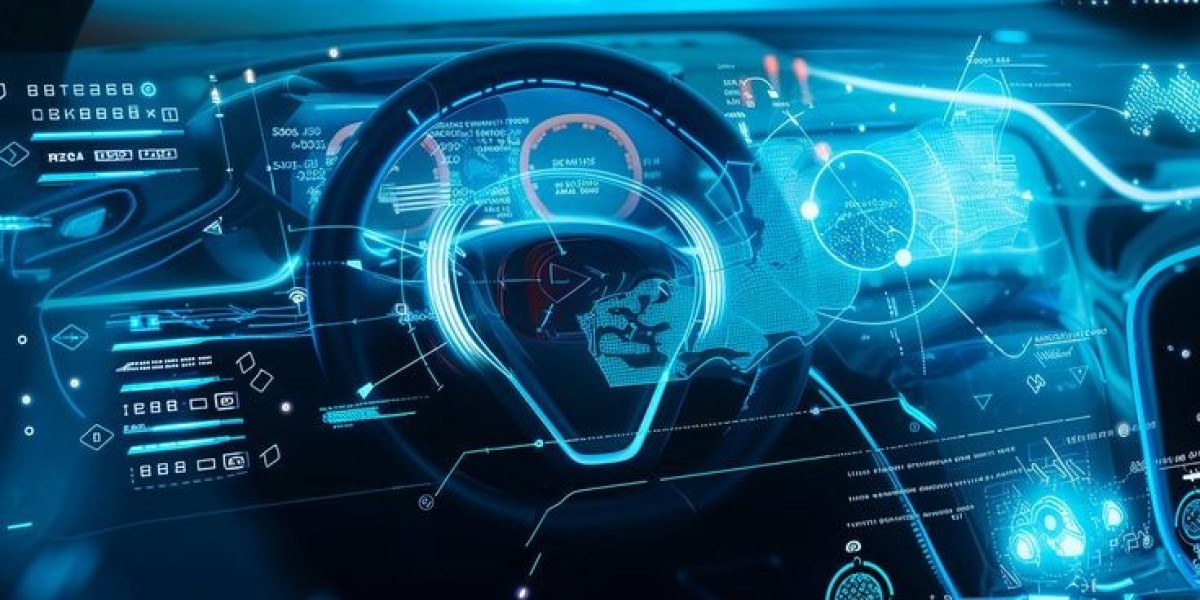


The auto infotainment market opportunities are expanding as vehicles evolve from transportation machines into connected digital environments. Drivers and passengers increasingly expect the same level of convenience, personalization, connectivity, and entertainment inside a vehicle that they experience with smartphones and other smart devices. This shift is encouraging automakers, technology providers, software developers, and component manufacturers to explore new ways to improve in-car experiences.
Modern infotainment systems now combine navigation, entertainment, communication, vehicle information, smartphone connectivity, voice assistance, and cloud-based services. As these functions become more integrated, the market is opening opportunities across both hardware and software.
Growing Demand for Connected Vehicle Experiences
One of the strongest opportunities comes from the increasing adoption of connected vehicles. Drivers want seamless access to navigation, traffic information, music, messaging, weather updates, and other digital services without constantly handling a smartphone.
Connected infotainment platforms can use cloud services and real-time data to deliver personalized information during a journey. Automakers can also connect infotainment systems with vehicle diagnostics, maintenance alerts, remote functions, and digital customer services.
This creates an opportunity to move beyond traditional radio and navigation systems toward broader connected-car ecosystems. Companies that can provide reliable connectivity while maintaining simple user interfaces are well positioned to benefit.
AI Is Creating Smarter In-Car Interactions
Artificial intelligence is becoming an important area of opportunity within automotive infotainment. AI-powered systems can understand natural language, learn user preferences, recommend content, and make interactions more conversational.
Instead of relying entirely on fixed commands, drivers may increasingly communicate with vehicles using natural speech. AI assistants can help manage navigation, adjust cabin settings, suggest destinations, control entertainment, and provide useful information while reducing the need for manual interaction.
Generative AI could further expand this opportunity by enabling more flexible conversations and context-aware assistance. The challenge for manufacturers will be developing systems that are useful without becoming distracting or overly complicated.
Advanced Displays and Digital Cockpits
Automotive display technology is another area offering significant growth potential. Traditional dashboards are increasingly being replaced or supplemented by large central screens, digital instrument clusters, head-up displays, and passenger displays.
High-resolution screens can present navigation, vehicle information, entertainment, and connected services through a unified interface. Some premium vehicles are also introducing wider displays and immersive digital cockpit designs.
There is an opportunity for suppliers to develop lighter, brighter, energy-efficient, and more durable automotive displays. Flexible screen technologies and improved human-machine interfaces could also support new dashboard layouts in future vehicle models.
Smartphone Integration and Seamless Connectivity
Smartphone integration remains an important opportunity because consumers already rely heavily on mobile applications for communication, entertainment, navigation, and digital services.
Infotainment systems that provide smooth smartphone connectivity can improve the driving experience while reducing the learning curve associated with vehicle-specific software. Wireless connectivity, voice controls, synchronized applications, and cloud-based profiles can make the transition between personal devices and vehicles more seamless.
The opportunity extends beyond basic phone mirroring. Automakers can develop connected ecosystems where vehicle services, mobile applications, and digital accounts work together across multiple touchpoints.
Software-Defined Vehicles Open New Possibilities
The shift toward software-defined vehicles is changing how infotainment functions are developed and delivered. Instead of treating infotainment as a fixed feature installed when a vehicle is manufactured, automakers can increasingly improve software throughout the vehicle's lifecycle.
Over-the-air updates can introduce new features, improve interfaces, enhance security, and resolve software issues without requiring a physical service visit. This creates opportunities for continuous product development and stronger customer engagement.
Subscription-based digital features may also become more common. Premium navigation services, advanced connectivity, entertainment packages, personalized interfaces, and other software capabilities could generate recurring revenue after the vehicle has been sold.
Electric Vehicles Strengthen Infotainment Integration
The expansion of electric vehicles is creating another important opportunity for infotainment providers. EV drivers often require more information about battery status, charging locations, estimated driving range, energy consumption, and route efficiency.
Infotainment platforms can integrate these functions into a single interface. Navigation systems can consider charging requirements when planning routes, while connected applications can provide information about charging availability and vehicle status.
Because EV platforms are often designed with highly digital architectures, manufacturers have greater flexibility to integrate software, connectivity, and infotainment from the beginning of vehicle development.
Immersive Entertainment and Passenger Experiences
Infotainment opportunities are not limited to the driver. As vehicles become more connected and automated, passengers could become an increasingly important audience.
Rear-seat entertainment, high-quality audio, streaming content, gaming, interactive displays, and personalized passenger controls can transform travel time into a more engaging experience. Premium audio systems and spatial sound technologies can further differentiate vehicle interiors.
For families and commercial mobility services, passenger-focused entertainment could become an important feature. Automakers may also explore partnerships with digital content providers to create customized in-car entertainment ecosystems.
Augmented Reality and Intelligent Navigation
Augmented reality offers another promising direction. AR-enabled head-up displays can overlay navigation instructions, road information, and relevant alerts onto the driver's field of view.
Instead of looking down at a conventional screen, drivers could receive visual guidance aligned with the road environment. This can make navigation easier to understand and potentially reduce the amount of time drivers spend looking away from the road.
Future systems could combine AR with cameras, sensors, mapping data, and AI to provide more context-aware information. This creates opportunities for companies working across automotive software, optics, sensors, displays, and digital mapping.
Personalization and Data-Driven Services
Consumers increasingly expect technology to recognize their preferences. Infotainment systems can personalize music recommendations, navigation settings, frequently visited locations, language preferences, display configurations, and other functions.
Cloud-based profiles could allow preferences to follow users across different vehicles or devices. However, this opportunity also requires strong attention to cybersecurity, privacy, and transparent data practices.
Companies that balance personalization with user control can build stronger trust while creating more valuable digital services.
Commercial Vehicles and New Mobility Services
Commercial vehicles represent another area of opportunity. Fleet operators can use connected infotainment platforms for navigation, communication, driver information, route support, and vehicle monitoring.
Ride-hailing, car-sharing, rental, and mobility-service providers may also benefit from passenger-oriented infotainment. Digital interfaces can provide travel information, entertainment, advertisements, and service updates while creating additional engagement opportunities.
Future Outlook
The auto infotainment market opportunities are becoming broader as connectivity, artificial intelligence, electrification, advanced displays, and software-defined vehicle architectures converge. The next phase of development will likely focus on creating systems that are not only feature-rich but also intuitive, secure, responsive, and personalized.
Automakers and technology suppliers that successfully combine hardware, software, cloud connectivity, and digital services can build stronger relationships with vehicle users. As the vehicle becomes an increasingly connected digital platform, infotainment is moving from an optional convenience toward a central part of the modern automotive experience.









