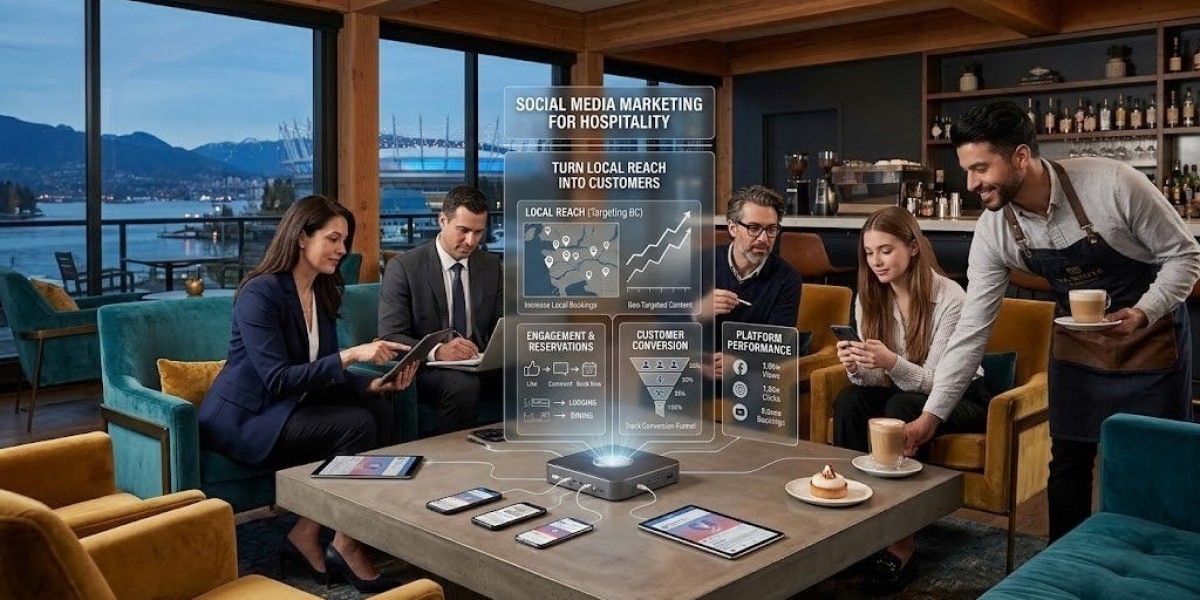


Social Media Marketing for Hospitality Businesses: How to Turn Local Reach Into Customers
Social media has become one of the most powerful ways for hospitality businesses to connect with local customers. Restaurants, cafés, bars, hotels, and other hospitality brands can use platforms such as Instagram and Facebook to showcase their experiences, build trust, promote offers, and encourage customers to visit or make a booking.
However, having followers is not the same as generating customers.
The real opportunity lies in turning local social media reach into measurable business results.
For hospitality businesses in Vancouver, Chilliwack, and across British Columbia, an effective social media strategy should go beyond posting attractive photos. It should combine content, local targeting, community engagement, paid advertising, conversion optimization, and consistent brand messaging.
This guide explains how hospitality businesses can use social media to attract more local customers and build a stronger digital presence.
Why Social Media Marketing Matters for Hospitality Businesses
Hospitality is an experience-driven industry.
Customers want to see what a restaurant looks like, what food is being served, how a café feels, what a bar offers, or what a hotel experience might look like before deciding to visit.
Social media makes this possible.
A strong social presence can help businesses:
Increase local awareness
Showcase products and experiences
Build brand recognition
Promote offers and events
Engage with potential customers
Encourage website visits
Generate enquiries and bookings
Retarget interested audiences
Build customer loyalty
This is why working with a professional social media marketing agency can be valuable for hospitality businesses that want to turn content into a structured growth channel.
Social Media Reach vs. Real Customers
One of the biggest mistakes businesses make is measuring social media success only through likes, followers, and views.
These metrics can provide useful information, but they don't necessarily indicate revenue.
A hospitality business should ask:
Did this post generate a website visit?
Did someone make a reservation?
Did customers call the business?
Did an offer generate visits?
Did social advertising produce enquiries or bookings?
The objective should be to create a journey such as:
Social Media → Interest → Website/Profile → Trust → Action → Customer
A good social media marketing services strategy should therefore connect content with measurable business objectives.
Build Content Around the Hospitality Experience
Hospitality businesses have a major advantage on social media: they are naturally visual.
Instead of simply promoting a product, businesses can showcase an entire experience.
Restaurants
Restaurant content can include:
Signature dishes
Behind-the-scenes kitchen content
Chef introductions
Customer experiences
Seasonal menus
New dishes
Special offers
Restaurant interiors
Events
Coffee Shops
For social media marketing for coffee shops, content can include:
Coffee preparation
Latte art
New beverages
Café interiors
Pastries
Morning routines
Seasonal drinks
Local community content
Bars
A social media marketing for bars strategy can highlight:
Signature cocktails
Live music
Events
Happy-hour promotions
Atmosphere
Food pairings
Weekend experiences
The key is to sell the experience rather than constantly saying, "Come visit us."
Use Local Content to Reach Nearby Customers
Hospitality businesses don't need to reach everyone.
They need to reach the people who are most likely to visit.
A restaurant in Vancouver may want to reach customers within specific neighbourhoods or nearby areas.
A café in Chilliwack may want to build awareness among people living, working, or studying nearby.
Local content can include:
Local events
Community activities
Neighbourhood guides
Local collaborations
Nearby attractions
Seasonal activities
Customer stories
A strong social media marketing Vancouver strategy should therefore reflect the local culture, audience, and customer behaviour of the market.
Instagram and Facebook for Hospitality Marketing
Instagram is particularly valuable for visual hospitality businesses because food, interiors, experiences, and short-form video can communicate a brand quickly.
Facebook can also be useful for local community engagement, events, promotions, reviews, and reaching established local audiences.
Instead of treating each platform independently, businesses should develop a consistent brand strategy and adapt the content format to each platform.
A social media agency Canada businesses choose should understand how content, audience targeting, and platform-specific behaviour work together.
Short-Form Video Can Increase Discovery
Short-form video provides hospitality businesses with an opportunity to demonstrate experiences quickly.
For example:
Restaurant: Show a dish being prepared from kitchen to table.
Coffee shop: Show a morning coffee-making routine.
Bar: Show the atmosphere during a busy evening.
Hotel: Give viewers a quick room or property tour.
The purpose isn't necessarily to make every video viral.
The goal is to attract relevant attention from people who could realistically become customers.
This is where a professional social media digital marketing agency can help businesses create content that supports awareness while connecting it to broader marketing objectives.
Turn Content Into Offers
Content creates attention.
Offers can create action.
Hospitality businesses can use social media to promote:
Limited-time menus
Seasonal offers
Weekend specials
Happy hours
Brunch promotions
Special events
Loyalty incentives
Catering packages
Private dining
Holiday experiences
However, offers should have a clear purpose.
Instead of posting "Special Offer!" without context, explain:
What is the offer?
Who is it for?
When is it available?
Where can customers access it?
What should they do next?
A clear call to action can significantly reduce friction.
Social Media Advertising for Hospitality Businesses
Organic social media can build awareness, but paid advertising can help businesses reach specific local audiences more efficiently.
A social media ad agency can help hospitality businesses develop campaigns around objectives such as:
Awareness
Website traffic
Engagement
Leads
Reservations
Event promotion
Retargeting
For example, a Vancouver restaurant launching a new menu could use short-form video to introduce the dishes to nearby audiences.
A Chilliwack café could promote a seasonal drink to people within its local service area.
The campaign can then retarget people who interacted with the content or visited the website.
Social Media Advertising for Restaurants
Social media advertising for restaurants can be particularly effective when the creative is visually compelling and the targeting is geographically relevant.
Restaurant advertising creative could feature:
Hero food photography
Reels
Customer experiences
Chef content
Restaurant atmosphere
Limited-time offers
Event promotions
The landing experience should also match the advertisement.
If an advertisement promotes a special menu, customers should be able to find that menu quickly.
Sending every advertisement to a generic homepage can create unnecessary friction.
Paid Social Media Agency vs. DIY Advertising
Running advertisements through an advertising platform may appear simple.
However, effective campaigns require strategic decisions around:
Audience targeting
Creative testing
Budget allocation
Campaign objectives
Retargeting
Landing pages
Conversion tracking
Performance analysis
A paid social media agency can help manage these areas systematically.
The objective should not simply be to spend more.
It should be to learn which audiences, messages, offers, and creative formats produce the strongest business results.
Social Media for Food Businesses
The food industry is particularly suited to social media because customers make emotional decisions based on appearance, atmosphere, recommendations, and experiences.
A strong social media for food business strategy can combine:
Food + Story + Community + Locality + Offer + Action
For example, instead of posting only a photograph of a burger, a restaurant could show the preparation process, introduce the chef, explain the ingredients, highlight customer reactions, and finish with a clear invitation to visit.
This creates a stronger connection than a product photograph alone.
Social Media Marketing for Small Restaurants
Small restaurants often assume they need a huge advertising budget to compete.
They don't necessarily need to compete with large chains on budget.
They can compete through:
Authentic content
Local community connections
Strong customer service
Unique brand personality
Consistent posting
Local collaborations
Customer-generated content
Targeted advertising
A focused social media marketing for small restaurants strategy can concentrate resources on the audiences most likely to become customers.
For smaller businesses, consistency and relevance can be more valuable than trying to be everywhere.
Choose the Right Social Media Agency
Choosing an agency shouldn't be based only on the number of followers it promises to generate.
Look for a partner that understands:
Hospitality marketing
Local audiences
Content strategy
Social advertising
Creative testing
Analytics
Conversion tracking
Customer journeys
When comparing social media agency services, ask how the agency measures success.
Good metrics may include:
Reach
Engagement
Website traffic
Leads
Calls
Reservations
Online orders
Cost per result
Conversion rate
Return on advertising spend
A social media marketing agency services provider should be able to explain how activity translates into measurable outcomes.
Why Vancouver Hospitality Businesses Need a Local Strategy
Vancouver is a highly competitive hospitality market.
Restaurants, cafés, bars, hotels, and entertainment businesses are constantly competing for attention.
A generic national campaign may not resonate with a specific Vancouver neighbourhood.
Local social media marketing should reflect:
Local events
Neighbourhood culture
Seasonal demand
Local customer interests
Competitor activity
Tourism
Community partnerships
This is where a social media agency Vancouver businesses can work with locally can bring additional market understanding.
Why Choose Third Eye Marketing?
Third Eye Marketing helps hospitality businesses build stronger digital visibility through social media, SEO, paid advertising, content, website experience, and performance marketing.
For restaurants, cafés, bars, and other hospitality businesses in Vancouver, Chilliwack, and British Columbia, strategies can be adapted around the business's audience, location, goals, creative assets, and customer journey.
The focus isn't simply on creating more posts.
It is about creating content and campaigns that help customers:
Discover → Engage → Trust → Visit → Book → Return
As a social media marketing agency in Canada, Third Eye Marketing can help businesses combine organic social media with paid campaigns and broader digital marketing activities.
Social media can be a powerful customer acquisition channel for hospitality businesses, but success requires more than posting consistently.
Restaurants, cafés, bars, hotels, and other hospitality businesses need a strategy that combines compelling content, local targeting, community engagement, paid advertising, clear offers, and measurable conversion goals.
Whether you're investing in organic social media or working with a social media marketing agency Canada businesses can rely on, the objective should remain the same:
Turn attention into action and local reach into real customers.
For hospitality businesses in Vancouver and Chilliwack, the strongest opportunities often come from combining social media with local SEO, Google Business Profile optimization, paid advertising, website optimization, and conversion tracking.
Social media creates the conversation.
A strong digital strategy turns that conversation into business growth.
Ready to Turn Social Media Reach Into Customers?
Let Third Eye Marketing help your hospitality business build a stronger social media and digital growth strategy.
Call us at+1 236-880-3783
Webiste: thirdeyemarketing.ca
Book a FREE consultation with Third Eye Marketing and discover how social media marketing, paid advertising, local SEO, and conversion-focused digital strategies can help your hospitality business attract more local customers.
Frequently Asked Questions
Is social media marketing effective for hospitality businesses?
Yes. Hospitality businesses are highly visual and experience-driven, making social media useful for showcasing food, interiors, events, services, offers, and customer experiences while building local awareness.
How can restaurants turn social media followers into customers?
Restaurants can connect social content with clear offers, calls to action, reservation pages, menus, online ordering, local targeting, retargeting, and conversion tracking. The goal is to move users from awareness to a measurable action.
Is paid social media useful for small restaurants?
Yes. Paid social can allow small restaurants to focus their advertising on relevant local audiences rather than trying to reach a broad market. Campaigns can also be tested with different creatives, offers, and audiences.
What should a hospitality business post on social media?
Hospitality businesses can post food and product content, behind-the-scenes videos, customer experiences, events, seasonal offers, staff stories, local content, educational content, and short-form videos that communicate the overall experience.
Should hospitality businesses use both organic and paid social media?
In many cases, yes. Organic social media can build community and brand presence, while paid social can expand reach, target specific audiences, promote offers, and retarget people who have already interacted with the business.