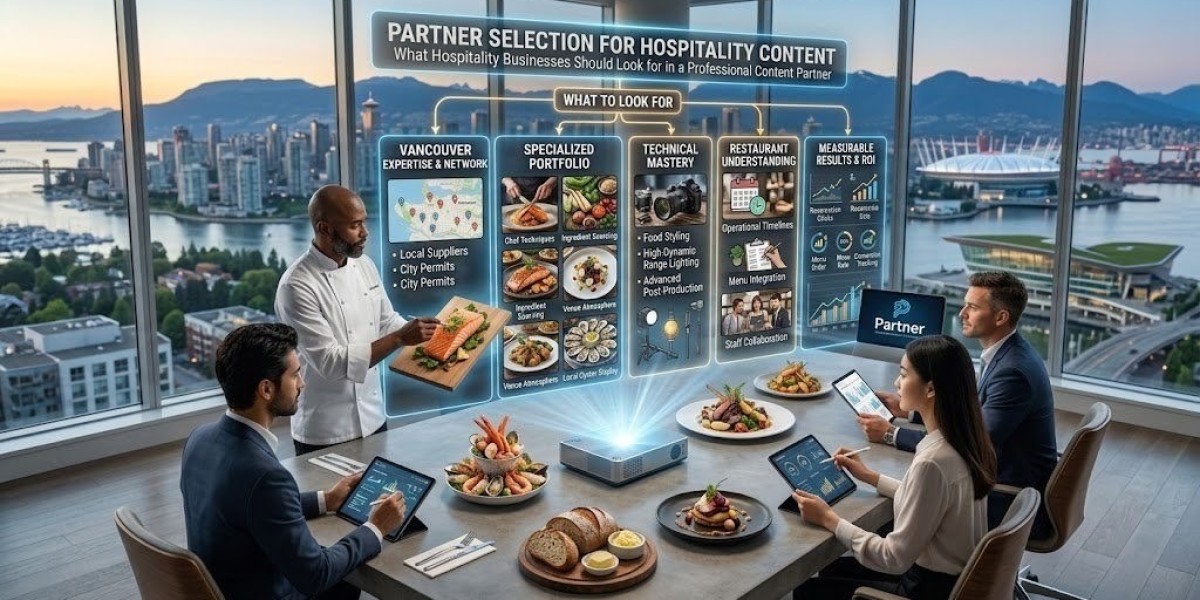


Food Photography in Vancouver: What Hospitality Businesses Should Look for in a Professional Content Partner
In Vancouver's competitive hospitality industry, customers often discover restaurants, cafés, bars, and other food businesses through visual content before they ever visit the location.
A beautifully photographed dish can stop someone while scrolling through Instagram. A professional restaurant interior can influence where a customer decides to dine. A well-produced video can communicate an experience within seconds.
This makes professional food photography more than a creative service. For hospitality businesses, it can become an important marketing asset that supports social media, websites, Google Business Profile, paid advertising, content marketing, and brand development.
But choosing the right content partner requires more than finding someone who can take attractive photographs.
Hospitality businesses in Vancouver should look for a partner who understands food, branding, content strategy, social media, and the customer journey.
Why Food Photography Matters for Vancouver Hospitality Businesses
Food is one of the most naturally visual products.
Customers want to see what they are ordering, what the restaurant looks like, and what kind of experience they can expect.
Professional visual content can help communicate:
Food presentation
Product quality
Restaurant atmosphere
Brand personality
Menu variety
Hospitality experience
Ingredients and preparation
Overall customer experience
For Vancouver businesses competing for attention across Instagram, Google, Facebook, websites, and advertising platforms, strong visuals can help create a more professional and consistent digital presence.
The goal isn't simply to make food look attractive.
The goal is to make potential customers want to experience the business.
What Should You Look for in a Food Photography Partner?
Choosing a professional content partner should involve more than reviewing a few beautiful images.
Hospitality businesses should evaluate whether the provider understands how visual content will actually be used.
Here are some important factors to consider.
1. Look for Hospitality and Food Industry Experience
Food photography has unique requirements.
A photographer working with restaurants needs to understand lighting, composition, food styling, texture, colour, presentation, and the restaurant's overall brand.
A hospitality-focused partner should also understand that different businesses need different types of content.
For example:
Restaurant: Signature dishes, interiors, chefs, customer experiences.
Coffee shop: Coffee preparation, pastries, drinks, atmosphere.
Bar: Drinks, ambience, events, food, entertainment.
Hotel: Rooms, amenities, dining, common areas, guest experience.
Industry experience helps ensure that the final images aren't just technically good—they are commercially useful.
2. Review the Portfolio Carefully
A portfolio can reveal a lot about a content provider.
Don't only look for attractive images.
Ask:
Does the photographer have restaurant experience?
Are food textures captured well?
Is lighting consistent?
Are interiors photographed professionally?
Do the images communicate an experience?
Does the visual style match your brand?
Are there both close-up and lifestyle photographs?
A restaurant may need dozens of different visual formats throughout the year.
A strong portfolio should demonstrate versatility.
3. Consider Video and Photography Services Together
Modern hospitality marketing increasingly relies on short-form video.
This is why businesses may benefit from video and photography services from the same content partner.
A single content session could produce:
Hero food photographs
Instagram Reels
Short-form videos
Behind-the-scenes footage
Chef content
Food preparation clips
Restaurant tours
Promotional videos
This approach can create a much larger content library without requiring separate production sessions for every marketing channel.
4. Make Sure the Content Supports Social Media
Professional photography becomes significantly more valuable when it is connected to a social media strategy.
For example, social media for food business campaigns can use visual content to showcase:
Signature dishes
Seasonal menus
New products
Restaurant atmosphere
Customer experiences
Special offers
Behind-the-scenes moments
The content should also be produced in formats suitable for different platforms.
Vertical video may be useful for Reels and Stories, while high-resolution photographs can support websites, menus, Google Business Profile, and advertising.
5. Understand the Needs of Coffee Shops
A coffee shop has a different visual identity from a fine-dining restaurant.
A strong social media marketing for coffee shops strategy may feature:
Coffee preparation
Latte art
Seasonal drinks
Pastries
Café interiors
Baristas
Morning experiences
Customer lifestyle content
The objective is to sell the atmosphere as much as the product.
A customer isn't simply buying coffee.
They may be buying a morning routine, a workspace, a social experience, or a relaxing place to spend time.
Photography should communicate that experience.
6. Understand the Needs of Bars
Bars also require a distinct visual approach.
A social media marketing for bars strategy can showcase:
Signature beverages
Food
Atmosphere
Live entertainment
Events
Interior design
Customer experiences
Special promotions
Lighting becomes particularly important.
A content partner should understand how to photograph a darker environment while maintaining the atmosphere that makes the venue distinctive.
The final content should feel authentic rather than overly staged.
7. Understand Small Restaurant Marketing
Smaller restaurants often have limited marketing budgets and resources.
That means every piece of content should work harder.
A social media marketing for small restaurants strategy can use professional photography to create a reusable library of visual assets.
The same signature-dish image could potentially be used for:
Instagram → Website → Google Business Profile → Paid Advertisement → Email Campaign → Promotional Content
This makes professional photography a reusable marketing investment rather than a one-time social media expense.
8. Look for Food and Beverage Photography Expertise
Hospitality businesses don't only need photographs of food.
They may also need beverages, interiors, people, events, and experiences.
Professional food and beverage photography should therefore consider the complete visual identity of the business.
For example, a restaurant may need photographs of:
Appetizers
Main courses
Desserts
Coffee
Mocktails
Specialty beverages
Tables
Dining areas
Chef interactions
This gives the business enough visual variety to maintain consistent marketing throughout the year.
9. Choose a Partner Who Understands Food Industry Marketing
Photography and marketing shouldn't operate in isolation.
A provider with knowledge of food industry social media marketing can create content with the intended marketing purpose in mind.
For example, instead of simply photographing ten dishes, the content plan might be designed around:
New menu campaign
Seasonal promotion
Social media content calendar
Google Business Profile updates
Paid advertising creative
Website refresh
This strategic approach can increase the value of every photoshoot.
10. Think About Vancouver-Specific Content
Vancouver's hospitality industry is highly competitive and visually driven.
Restaurants, cafés, bars, hotels, bakeries, and other food businesses are competing for attention from local residents, tourists, workers, students, and visitors.
This makes food photography Vancouver businesses can use across multiple channels particularly valuable.
Visual content can incorporate the restaurant's location, neighbourhood, atmosphere, and local identity.
For example, a Vancouver restaurant could create content around:
Seasonal dining
Local events
Vancouver neighbourhood experiences
Patio season
Holiday dining
Local ingredients
Special events
Tourism periods
Local relevance can make content feel more connected to the audience the business actually wants to attract.
How Food Photography Supports Local SEO
Visual content can also support a broader local SEO strategy.
Restaurants can use authentic photographs across their website and Google Business Profile to help potential customers understand the business before visiting.
For example, images can showcase:
Exterior
Interior
Signature dishes
Seating
Staff
Events
Amenities
However, photographs should complement—not replace—core SEO activities such as:
On-page optimization
Local keyword targeting
Google Business Profile optimization
Reviews
Local content
Technical SEO
The objective is to create a complete digital presence.
Don't Forget Website Performance
High-resolution photography is valuable, but large image files can negatively affect website performance if they aren't properly optimized.
A professional content partner should understand that images may eventually be used online.
Restaurants should consider:
Appropriate image dimensions
File compression
Modern image formats
Responsive images
Descriptive file names
Relevant alt text
This helps balance visual quality with website performance.
Professional photography should make your website better—not unnecessarily slower.
Use Photography for Paid Advertising
Professional images can also become advertising assets.
For example, a restaurant could use a signature dish photograph for:
Meta Advertisement → Local Audience → Menu Page → Reservation
A café could promote:
Seasonal Drink → Local Audience → Café Website → Visit
A catering business could use:
Event Photography → Catering Advertisement → Enquiry Page → Lead
This is why visual content should be planned with advertising use in mind.
The strongest content can potentially support both organic and paid campaigns.
Ask About Content Usage and Deliverables
Before hiring a photography partner, clarify what you will receive.
Important questions include:
How many final photographs are included?
Are edited images included?
Will video be included?
What formats will be provided?
Are vertical images available?
Can content be used for advertising?
How quickly will the final assets be delivered?
Will the provider help with content planning?
Clear expectations can prevent confusion after the photoshoot.
Think Beyond One Photoshoot
One of the biggest mistakes hospitality businesses make is treating a photoshoot as a one-time project.
Instead, consider creating a content calendar.
For example:
January: New-year menu content
Spring: Seasonal dishes
Summer: Patio and outdoor dining
Fall: Seasonal beverages and menus
Holiday season: Events, celebrations, and special menus
This creates a consistent supply of fresh visual assets.
Why Choose Third Eye Marketing?
Third Eye Marketing helps hospitality businesses develop integrated digital marketing strategies that combine content, social media, SEO, paid advertising, website experience, and conversion optimization.
For restaurants, cafés, bars, and food businesses in Vancouver, Chilliwack, and across British Columbia, visual content can be developed with the broader customer journey in mind.
Rather than creating photographs that simply look good, the objective is to create assets that can support:
Social Media → SEO → Google Business Profile → Advertising → Website → Conversions
Whether you need restaurant photography, food photography services, or a combination of video and photography services, your content should contribute to a larger marketing strategy.
Professional food photography can play an important role in helping Vancouver hospitality businesses compete for attention online.
But the right content partner should provide more than a camera and editing software.
Restaurants, cafés, bars, and other hospitality businesses should look for a partner who understands food styling, branding, social media, advertising, website content, local marketing, and the customer journey.
The best visual content does more than show customers what your food looks like.
It helps them imagine themselves experiencing it.
For Vancouver hospitality businesses, that distinction can turn professional photography from a simple creative expense into a valuable digital marketing asset.
Ready to Create Better Visual Content for Your Hospitality Business?
Let Third Eye Marketing help your restaurant or hospitality business build a stronger visual and digital marketing presence.
Call us at +1 236-880-3783
Website: thirdeyemarketing.ca
Book a FREE consultation with Third Eye Marketing and discover how food photography, video, social media, SEO, paid advertising, and digital strategy can work together to attract more customers.
Frequently Asked Questions
What should restaurants look for in a food photography partner?
Restaurants should look for hospitality experience, a strong portfolio, knowledge of food styling and lighting, content versatility, video capabilities, and an understanding of how photographs will be used across websites, social media, Google, and advertising.
Why is professional food photography important for Vancouver restaurants?
Vancouver has a highly competitive hospitality market. Professional photography can help restaurants create stronger visual presentation across social media, websites, advertising, Google Business Profile, menus, and other customer touchpoints.
Should restaurants invest in both photography and video?
In many cases, yes. Photography is useful for menus, websites, branding, social media, and advertising, while video can communicate preparation, atmosphere, movement, and customer experiences.
How often should a restaurant update its photography?
Restaurants should consider new photography when they launch new menus, introduce seasonal dishes, renovate their space, change branding, launch new services, or when existing content no longer represents the current customer experience.
Can food photography help restaurant social media marketing?
Yes. Professional food photography provides high-quality visual assets that can support organic posts, Reels, paid advertising, promotions, Google Business Profile content, and other digital marketing campaigns.









