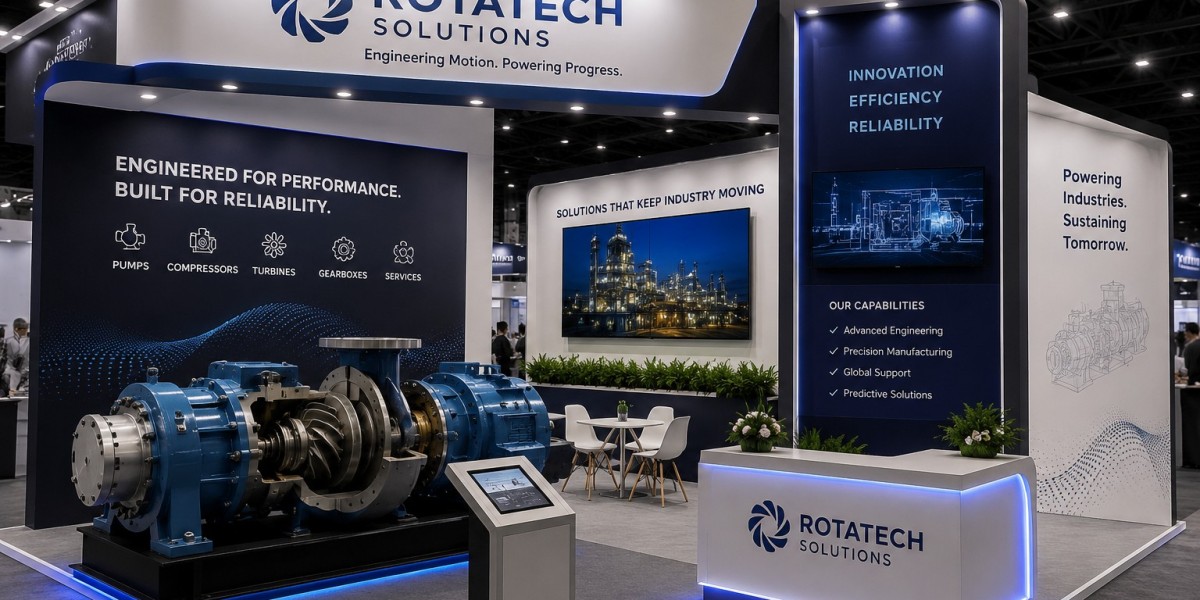


In the competitive industrial exhibition space, simply showing up with a booth is no longer enough. Engineering companies need an exhibit that attracts the right visitors, communicates technical value clearly, and leaves a lasting impression after the event ends. Well-planned Rotating equipment expo exhibits can help manufacturers and engineering brands turn complex products into engaging experiences while creating meaningful conversations with engineers, procurement teams, plant managers, distributors, and industry decision-makers. A memorable booth is not only visually appealing; it should make visitors understand what the brand offers, why it matters, and how its solutions can solve real industrial challenges.
Why Brand Experience Matters at Industrial Expos
Industrial exhibitions bring together companies that often offer similar categories of products and services. Pumps, compressors, turbines, motors, bearings, generators, drives, and other rotating machinery can look highly technical to an average visitor. Even when the products are excellent, exhibitors may struggle to communicate their unique value in a crowded exhibition hall.
This is where brand experience becomes important. Instead of treating the booth as a simple product display area, companies can create an environment where visitors interact with the brand. Every part of the exhibit, from the entrance and graphics to demonstrations and staff interactions, can contribute to the overall experience.
A strong brand experience helps visitors remember the company beyond the event. They may not remember every specification discussed during a busy exhibition, but they are more likely to remember a booth that explained a difficult engineering concept clearly or demonstrated how a product solves a common maintenance problem.
Start With a Clear Brand Story
The foundation of a memorable exhibit is a clear brand story. Before selecting graphics, furniture, displays, or technology, exhibitors should determine what they want visitors to understand.
A rotating equipment manufacturer might want to position itself around reliability, energy efficiency, predictive maintenance, engineering expertise, product innovation, or lifecycle support. Trying to communicate everything at once can make the booth confusing.
Instead, the exhibit should have one central message supported by a few important themes. For example, a company focused on industrial pumps could build its experience around improving uptime and reducing maintenance costs. The graphics, product demonstrations, videos, and conversations at the booth can all reinforce that message.
When visitors encounter the same message through different parts of the exhibit, the brand becomes easier to understand and remember.
Design the Booth Around Visitor Movement
Booth design should consider how people naturally move through an exhibition space. A visitor walking through a busy hall should be able to recognize the brand quickly and understand where to enter.
The most important message should be visible from a distance. Large, readable graphics can introduce the company and its primary value proposition without forcing visitors to stop and read lengthy technical information.
Once visitors enter the booth, the layout should guide them through different experiences. A product demonstration could occupy one area, consultation space another, and a digital presentation zone another.
Good spatial planning prevents the booth from becoming crowded. It also gives sales representatives enough room to have meaningful conversations without blocking the main visitor pathway.
Make Complex Products Easy to Understand
Rotating equipment can involve complicated mechanical systems, engineering principles, operating conditions, and performance specifications. Exhibitors should avoid overwhelming visitors with technical information immediately.
Instead, information can be presented in layers.
The first layer should explain the basic benefit. The second can introduce the product or technology. The third can provide technical specifications for visitors who want deeper information.
For example, instead of covering an entire wall with specifications for an industrial compressor, an exhibit could first communicate its primary benefits, such as improved efficiency or reduced downtime. A nearby interactive screen could then allow engineers to explore operating parameters, performance curves, configurations, and technical documentation.
This approach serves different types of visitors while keeping the booth approachable.
Use Real Products Whenever Possible
Physical products can make a powerful impression at industrial exhibitions. A real pump, motor component, bearing assembly, turbine part, or other piece of rotating equipment can immediately attract technical visitors.
Visitors can see the construction, materials, components, and design details directly rather than relying only on photographs.
If the full product is too large for the booth, companies can display a scaled model, cutaway section, component assembly, or working demonstration unit. These displays allow visitors to understand how the technology works without requiring the exhibitor to transport massive machinery.
The goal should be to turn the product from something visitors simply look at into something they can understand.
Create Demonstrations That Solve Real Problems
Demonstrations are one of the most effective ways to create an engaging exhibition experience. Rather than simply explaining what a product does, exhibitors can show it in action.
For example, a company could demonstrate vibration monitoring, predictive maintenance technology, energy optimization, lubrication systems, condition monitoring, or equipment diagnostics.
A demonstration becomes even more memorable when it starts with a problem. The presenter can explain a common industrial challenge, show what happens when the problem is ignored, and then demonstrate how the company's solution addresses it.
This structure creates a natural story: problem, impact, solution, result.
It also makes technical discussions easier because visitors can connect the demonstration to challenges they may experience in their own facilities.
Incorporate Interactive Technology
Technology can add another dimension to the booth experience when used strategically. Touchscreens, interactive product configurators, augmented reality, virtual demonstrations, digital twins, and immersive presentations can help visitors explore equipment in ways that traditional graphics cannot.
For example, an interactive display could allow a visitor to select an industrial application and see which equipment configuration may be appropriate. Another screen could show the internal components of a machine and explain how each part contributes to performance.
The key is not to add technology simply because it looks modern. Every digital feature should have a purpose. If technology makes the product easier to understand or encourages useful conversations, it can strengthen the overall brand experience.
Use Graphics to Communicate, Not Decorate
Exhibition graphics should do more than make the booth attractive. They should help visitors understand the company.
Large headlines can communicate the primary message. Supporting graphics can explain applications, industries served, product benefits, or technical capabilities.
Industrial exhibitors should also consider using diagrams and simplified illustrations. A well-designed visual explanation can communicate a mechanical process much faster than several paragraphs of text.
The brand's logo, typography, imagery, and messaging should remain consistent throughout the booth. Consistency makes the exhibit look professional and reinforces brand recognition.
Build an Experience Around Different Visitor Types
Not every person entering an industrial booth has the same needs.
An engineer may want technical specifications and performance information. A procurement manager may be more interested in cost, reliability, delivery, and support. A plant manager may want to know how the solution can improve uptime. A distributor may be interested in product range and partnership opportunities.
A successful exhibit can accommodate these different interests without becoming complicated.
Interactive stations, technical literature, demonstrations, consultation areas, and knowledgeable booth staff can provide different entry points into the brand experience.
The objective is to make every visitor feel that the booth has something relevant to their role.
Create Comfortable Conversation Areas
A memorable brand experience also depends on human interaction. Even an impressive booth can fail if visitors have nowhere comfortable to talk with representatives.
Conversation areas should be positioned so they feel accessible but do not interfere with visitor movement. Depending on the booth size, exhibitors can include informal standing discussion areas as well as private seating for longer technical or commercial conversations.
The environment should feel professional without becoming overly formal.
When visitors are comfortable, they are more likely to discuss their equipment requirements, operational challenges, upcoming projects, and purchasing plans.
Train Staff to Become Part of the Experience
Booth design gets visitors through the door, but staff interactions often determine what they remember.
Exhibition staff should understand the company's products, applications, differentiators, and target industries. They should also know how to start conversations naturally.
Instead of immediately asking visitors whether they want a brochure, representatives can ask questions about their current equipment, operational priorities, or challenges.
A technical visitor might respond better to a question about equipment performance or maintenance. A business decision-maker may prefer to discuss project requirements or operational costs.
Good staff training turns the booth from a static display into an active brand experience.
Make Sustainability Part of the Exhibit
Sustainability is becoming increasingly relevant across industrial sectors. Exhibitors can reflect responsible practices through their booth construction and event materials.
Reusable structures, modular components, energy-efficient lighting, recyclable graphics, and digital documentation can reduce unnecessary waste.
More importantly, sustainability can become part of the brand story when it connects naturally with the company's products. If the company develops energy-efficient motors, pumps, compressors, or other equipment, the exhibit can demonstrate how those technologies contribute to more efficient operations.
This makes sustainability more meaningful than simply adding an environmental message to the graphics.
Use Lighting to Create Focus
Lighting is often overlooked in industrial booth design, but it can dramatically influence how visitors experience the space.
Focused lighting can highlight a particular product, demonstration, graphic, or architectural feature. Ambient lighting can make the booth feel more welcoming, while accent lighting can create visual hierarchy.
The objective is to direct attention toward the areas that matter most.
For example, if a company has a new piece of rotating equipment being launched at the event, lighting can help make it the visual centerpiece of the exhibit.
Make Product Launches Memorable
Trade shows can be ideal platforms for introducing new products. However, simply placing a new product on a pedestal may not generate enough interest.
A launch can become an experience by creating a dedicated reveal area, demonstration schedule, interactive presentation, or technical session.
The company could invite visitors to a short demonstration at specific times during the exhibition. This creates anticipation and can attract multiple visitors at once.
A memorable product launch can also generate conversations that continue after the event.
Integrate Lead Generation Naturally
Lead collection should not feel disconnected from the visitor experience. Instead of asking every visitor to complete a long form, exhibitors can create useful reasons for people to share their contact information.
For example, visitors might request technical documentation, receive a customized product recommendation, schedule a consultation, or access a detailed demonstration.
Digital lead capture can make the process faster while allowing sales teams to record important information about the visitor's interests.
The quality of the interaction matters more than simply collecting a large number of contacts.
Follow the Visitor Journey Beyond the Booth
The brand experience should not end when visitors leave the exhibition hall.
After the event, companies can follow up with relevant information based on each visitor's interests. Someone who discussed predictive maintenance should receive information related to that topic rather than a generic company email.
Sales representatives can also refer back to specific conversations from the event. This makes follow-up feel more personal and relevant.
The strongest exhibition strategies connect the pre-show, on-site, and post-show experience into one continuous customer journey.
Work With the Right Exhibit Partner
Creating a memorable industrial exhibit requires more than attractive graphics. The booth needs to balance engineering requirements, branding, visitor movement, product presentation, technology, lighting, storage, installation, and event regulations.
An experienced exhibit partner can help transform an initial concept into a practical exhibition environment.
When evaluating booth builders, exhibitors should consider their experience with industrial brands, design capabilities, project management process, fabrication quality, installation support, and ability to work within the event's requirements.
The right partner should understand that an exhibition booth is not simply a physical structure. It is a marketing environment designed to support business goals.
Measure What Made the Experience Successful
After the event, exhibitors should evaluate the results rather than relying only on general impressions.
Companies can review the number and quality of leads, product demonstrations completed, meetings held, visitor engagement, social media activity, follow-up responses, and sales opportunities generated.
It is also useful to ask the booth team what visitors responded to most strongly. Perhaps the product demonstration generated the most conversations, while a particular graphic helped visitors understand the company's offering.
These observations can guide improvements for future exhibitions.
Final Thoughts
A memorable exhibition presence is created when design, technology, products, people, and messaging work together around a clear purpose. For engineering and industrial companies, Rotating equipment expo exhibits should make complicated technologies easier to understand while creating an environment where technical buyers feel comfortable asking questions and exploring solutions. From interactive demonstrations and real product displays to strong graphics, trained staff, comfortable meeting areas, and thoughtful visitor journeys, every detail can contribute to a stronger brand experience. Companies preparing for their next event can explore Rotating equipment expo exhibits to find and compare booth-building options that can help turn their exhibition vision into a professional and memorable experience.






