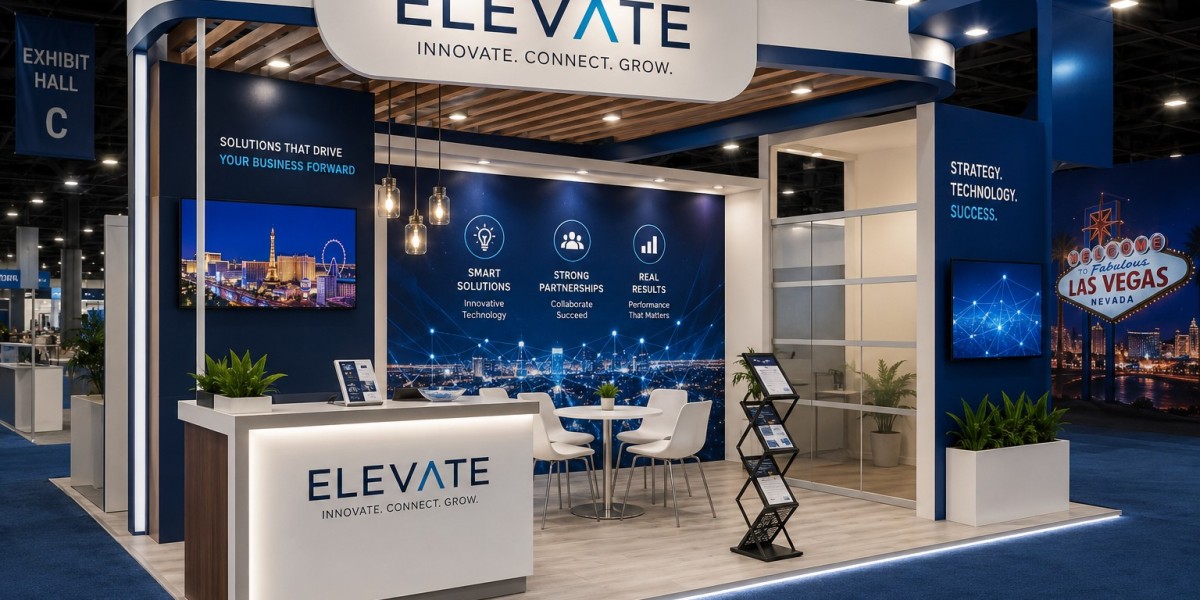


Trade shows are becoming more competitive every year, and exhibitors have only a few seconds to capture attention. A well-planned booth can make your brand easier to notice, understand, and remember. Working with experienced Las Vegas trade show booth builders can help you turn current design ideas into a practical exhibit that reflects your brand and connects with visitors. From immersive technology and bold graphics to flexible layouts and comfortable meeting areas, today's best booth designs focus on creating experiences rather than simply filling floor space.
Why Trade Show Booth Design Matters
Think about walking into a busy exhibition hall.
Hundreds of brands are competing for attention. Visitors are surrounded by banners, product displays, screens, promotional materials, and sales teams.
So, what makes one booth stand out from another?
Usually, it isn't simply size.
A successful exhibit combines visual impact, clear messaging, thoughtful layout, visitor interaction, and brand consistency.
Your booth needs to answer an important question almost immediately:
Why should someone stop here?
Good design makes that answer obvious.
1. Bold and Minimalist Branding
One of the biggest design trends is the use of bold branding with fewer visual distractions.
Instead of covering every available surface with text, exhibitors are increasingly choosing:
Large logos
Short headlines
Strong imagery
Simple color schemes
Minimal copy
Clearly defined brand messages
Why?
Because visitors don't have time to read an entire brochure while walking past your booth.
A concise message can communicate your value proposition much faster.
Less Text, More Impact
A common mistake is trying to explain everything on the booth walls.
Your exhibit isn't your website.
Instead, use the booth to create curiosity and encourage visitors to start a conversation.
Your graphics should communicate the most important message quickly, while your staff and digital content can provide additional information.
2. Immersive Booth Experiences
Visitors increasingly expect experiences rather than static displays.
An immersive booth can encourage people to interact with your brand instead of simply looking at it.
Depending on your industry, this could involve:
Interactive demonstrations
Product simulations
Touchscreens
Virtual experiences
Digital presentations
Hands-on product testing
Interactive games
Demonstration stations
The goal isn't to add technology simply because it looks impressive.
The technology should support your marketing objective.
3. Interactive Technology
Technology continues to influence modern trade show booth design.
Large LED screens, touch displays, interactive kiosks, and digital product presentations can make a booth more engaging.
For example, a technology company might allow visitors to explore a software platform through a touchscreen.
A manufacturer might use a digital display to demonstrate how a machine works.
A healthcare brand could use interactive content to explain a complex solution.
The possibilities are extensive.
Use Technology With Purpose
Before adding technology, ask:
What does this help the visitor understand or do?
If the answer isn't clear, the technology may become an expensive distraction.
4. Large LED Displays
Large-format LED displays can create an immediate visual impact.
Instead of relying exclusively on printed graphics, exhibitors can use dynamic content to change their messaging throughout an event.
LED walls can display:
Brand videos
Product demonstrations
Customer testimonials
Animations
Presentations
Event announcements
Social media content
They can also help create a more modern atmosphere.
However, content quality matters.
A giant screen displaying poorly designed slides won't automatically create a great experience.
5. Sustainable Booth Design
Sustainability has become an important consideration for many exhibitors.
Companies are exploring ways to reduce waste and make their exhibits more environmentally responsible.
Popular approaches include:
Reusable structures
Modular components
Recyclable materials
Energy-efficient lighting
Reusable graphics
Rental exhibits
Sustainable flooring
Digital materials instead of excessive printing
A sustainable booth can also support your company's broader environmental messaging.
Reusable Components
A modular exhibit can be particularly useful for brands attending multiple events.
Instead of creating an entirely new booth for every show, certain components can be reused, reconfigured, or updated.
This can potentially reduce material waste while making future exhibiting more efficient.
6. Flexible and Modular Layouts
Flexibility is becoming increasingly important.
Why build a booth that only works for one event?
Modular designs can potentially be adapted to different booth sizes and event requirements.
For example, the same design system might be configured as:
A compact inline exhibit
A larger corner booth
A peninsula exhibit
A spacious island booth
This flexibility can be useful for brands participating in several trade shows.
7. Open Floor Plans
Open layouts are another popular approach.
A booth with too many walls or barriers can unintentionally make visitors feel that they aren't welcome.
An open design can create a more inviting environment.
Visitors can easily see:
Who you are
What you offer
Where they can enter
Where products are displayed
Where they can speak with staff
Improve Visitor Flow
Think about how people move through your booth.
Is there a natural path?
Can multiple visitors interact with your team at the same time?
Are product demonstrations blocking traffic?
Can visitors comfortably enter and leave?
A thoughtful layout can improve the overall experience.
8. Comfortable Meeting Areas
Trade show conversations can quickly become crowded.
For companies selling complex products or services, private or semi-private meeting areas can be extremely valuable.
Modern booths may include:
Lounge seating
Small meeting tables
Semi-private discussion areas
Enclosed conference rooms
Bar-height tables
Casual conversation spaces
The design should match the type of interaction you want.
If your sales cycle requires detailed discussions, a quieter meeting area may be more useful than another promotional display.
9. Hospitality-Focused Booths
Some exhibitors are transforming booths into welcoming hospitality spaces.
This might include:
Comfortable seating
Refreshment areas
Charging stations
Coffee service
Casual lounges
Product demonstration counters
Why does this work?
People naturally spend more time in spaces where they feel comfortable.
And more time can create more opportunities for meaningful conversations.
Of course, hospitality should support your business objective rather than simply becoming a free snack station.
10. Experiential Product Demonstrations
Product demonstrations remain one of the strongest ways to engage visitors.
Instead of simply placing products on shelves, exhibitors can create demonstrations around them.
For example:
Technology brands can demonstrate software or hardware.
Manufacturers can show equipment in operation.
Consumer brands can allow visitors to test products.
Healthcare companies can use models or digital demonstrations.
The more effectively visitors understand your product, the easier it becomes for your sales team to continue the conversation.
11. Strategic Lighting
Lighting is often overlooked.
Yet it can dramatically influence how a booth looks and feels.
Strategic lighting can highlight:
Logos
Product displays
Key graphics
Reception counters
Demonstration areas
Architectural features
Different lighting techniques can also create different moods.
Bright, clean lighting may work well for technology or healthcare brands, while warmer lighting may be appropriate for hospitality or lifestyle companies.
Don't Overdo It
More lighting isn't necessarily better.
Too much brightness can make a space uncomfortable and distract from the message.
The goal is controlled emphasis.
12. Three-Dimensional Branding
Flat graphics aren't the only way to display your brand.
Three-dimensional letters, architectural elements, layered graphics, and dimensional signage can add depth to an exhibit.
For example, a large dimensional logo suspended above the booth can help visitors identify your location from across the exhibition hall.
Dimensional branding can also make the booth feel more premium.
13. Eye-Catching Hanging Signs
If your booth allows a hanging sign, use the opportunity strategically.
A hanging structure can make your brand visible from farther away.
This is particularly useful in large exhibition halls where visitors may struggle to identify individual booths.
Your hanging sign should remain:
Easy to read
Consistent with your branding
Visually balanced
Visible from multiple directions
Don't overload it with information.
Your company name and a simple visual identity may be enough.
14. Natural and Biophilic Elements
Some modern exhibits incorporate natural design elements to create a more comfortable atmosphere.
These can include:
Plants
Natural textures
Wood-inspired finishes
Organic shapes
Natural-looking materials
Even small elements can soften an otherwise highly technological booth.
This approach can be particularly effective when your goal is to create a relaxed environment for conversations.
15. Lounge-Style Spaces
Traditional trade show booths often feel very corporate.
Lounge-style designs can create a more approachable environment.
Comfortable seating, soft furnishings, integrated lighting, and thoughtful layouts can make visitors feel more welcome.
The key is balancing comfort with functionality.
A lounge shouldn't become a place where visitors sit without interacting with your brand.
Use the space to encourage conversations, demonstrations, presentations, or product discovery.
16. Creative Product Displays
How you display a product can be just as important as the product itself.
Instead of simply placing products on counters, exhibitors are experimenting with:
Floating displays
Backlit shelving
Rotating platforms
Transparent cases
Built-in product walls
Suspended elements
Demonstration stations
The display should make the product easy to see and understand.
17. Personalized Visitor Experiences
Personalization is becoming increasingly valuable in event marketing.
Instead of showing every visitor exactly the same content, interactive technology can help tailor the experience.
For example, visitors could select their interests and receive relevant information.
A sales representative can then continue the conversation based on those interests.
This approach can make the interaction feel more useful and less like a generic sales pitch.
18. Integrated Lead Capture
Trade show booth design is increasingly connected to lead generation.
Digital lead capture tools can help exhibitors collect visitor information more efficiently.
Instead of relying entirely on paper forms, your booth can incorporate:
QR codes
Tablets
Digital forms
Badge scanning
Interactive registration
Appointment scheduling
The important thing is to make lead capture easy.
If visitors have to complete a long form before receiving anything useful, they may simply walk away.
19. QR Codes With a Purpose
QR codes can provide a bridge between the physical booth and your digital marketing ecosystem.
Visitors can scan a code to:
Download product information
Watch a demonstration
Book a meeting
Visit a landing page
Access a case study
Request a quote
Follow your social channels
But don't put QR codes everywhere.
Give each code a clear purpose and explain what visitors will receive after scanning it.
20. Social Media-Friendly Booths
A booth can also become a backdrop for online content.
Creative installations, branded photo areas, interactive displays, and visually distinctive architectural elements can encourage visitors to take pictures and share them.
This can extend your booth's visibility beyond the exhibition floor.
A simple question to ask is:
Would someone want to photograph this space?
If the answer is yes, you may have created an experience with additional marketing potential.
21. Strong Visual Storytelling
Your booth should tell a story.
Instead of presenting disconnected messages, create a logical journey.
For example:
Problem → Solution → Product → Benefit → Action
This structure helps visitors understand your offering without requiring a lengthy explanation.
Graphics, displays, demonstrations, and staff interactions can all contribute to the same story.
22. Multi-Sensory Experiences
Visual design is important, but some brands are exploring additional senses.
Depending on the industry, this might involve:
Product sampling
Sound
Interactive surfaces
Physical demonstrations
Scent
Tactile materials
A multi-sensory experience can make an interaction more memorable.
However, it needs to be appropriate for the environment.
You don't want your booth becoming disruptive to neighboring exhibitors.
23. Hidden Storage Solutions
Good booth design isn't just about what visitors see.
It's also about what they don't see.
Boxes, bags, brochures, personal belongings, promotional materials, and supplies need somewhere to go.
Integrated storage can keep the booth clean and professional.
Useful options include:
Lockable cabinets
Under-counter storage
Built-in closets
Hidden shelving
Back-wall storage
A clutter-free booth always looks more professional.
24. Accessible Booth Design
Modern exhibit planning should also consider accessibility.
Visitors should be able to move through the booth comfortably.
Think about:
Clear pathways
Appropriate counter heights
Accessible meeting areas
Easy-to-read signage
Adequate maneuvering space
An inclusive design creates a better experience for a broader audience.
25. Designing Around Your Audience
The most important trend isn't a particular technology, color, material, or architectural style.
It's audience-focused design.
Before choosing a trend, ask who you're trying to attract.
Are your visitors:
Technical buyers?
Executives?
Consumers?
Healthcare professionals?
Distributors?
Investors?
Existing customers?
Each audience may respond differently.
A highly technical audience might appreciate detailed demonstrations, while an executive audience may prefer efficient conversations and comfortable meeting spaces.
How to Choose the Right Trends
You don't need to incorporate every trend into your booth.
In fact, trying to use everything can make your exhibit confusing.
Instead, choose trends based on your goals.
If Your Goal Is Brand Awareness
Consider:
Large graphics
Hanging signs
LED displays
Strong architectural branding
If Your Goal Is Lead Generation
Consider:
Interactive experiences
QR codes
Lead capture
Product demonstrations
Appointment scheduling
If Your Goal Is Product Education
Consider:
Touchscreens
Demonstration stations
Digital presentations
Hands-on experiences
If Your Goal Is Relationship Building
Consider:
Comfortable seating
Meeting rooms
Hospitality areas
Private conversation spaces
How Professional Booth Builders Bring Trends Together
The challenge isn't knowing what's trendy.
The challenge is combining different ideas into one cohesive exhibit.
Experienced builders can help determine which design elements support your goals and which ones may simply increase complexity.
They can coordinate elements such as:
Architecture
Graphics
Lighting
Furniture
Flooring
Technology
Product displays
Storage
Visitor flow
The result should feel intentional rather than like a collection of unrelated features.
Don't Sacrifice Function for Style
A booth can look incredible in a rendering and still fail on the show floor.
Why?
Because design must work in real life.
Your staff needs somewhere to stand.
Visitors need room to move.
Products need to be accessible.
Meeting areas need to function.
Storage needs to exist.
Technology needs to be reliable.
Always balance visual impact with practicality.
Final Thoughts
The latest exhibit trends offer plenty of opportunities to create a memorable trade show presence, but successful design isn't about following every trend. It's about selecting the right ideas for your audience, brand, space, and objectives. By working with experienced Las Vegas trade show booth builders, exhibitors can combine creative architecture, interactive technology, sustainable materials, strategic lighting, strong branding, and functional layouts into an exhibit that attracts attention and encourages meaningful conversations. Ultimately, the best trade show booth isn't simply the one that looks impressive—it is the one that helps your brand connect with the right people and turn those interactions into valuable business opportunities.









