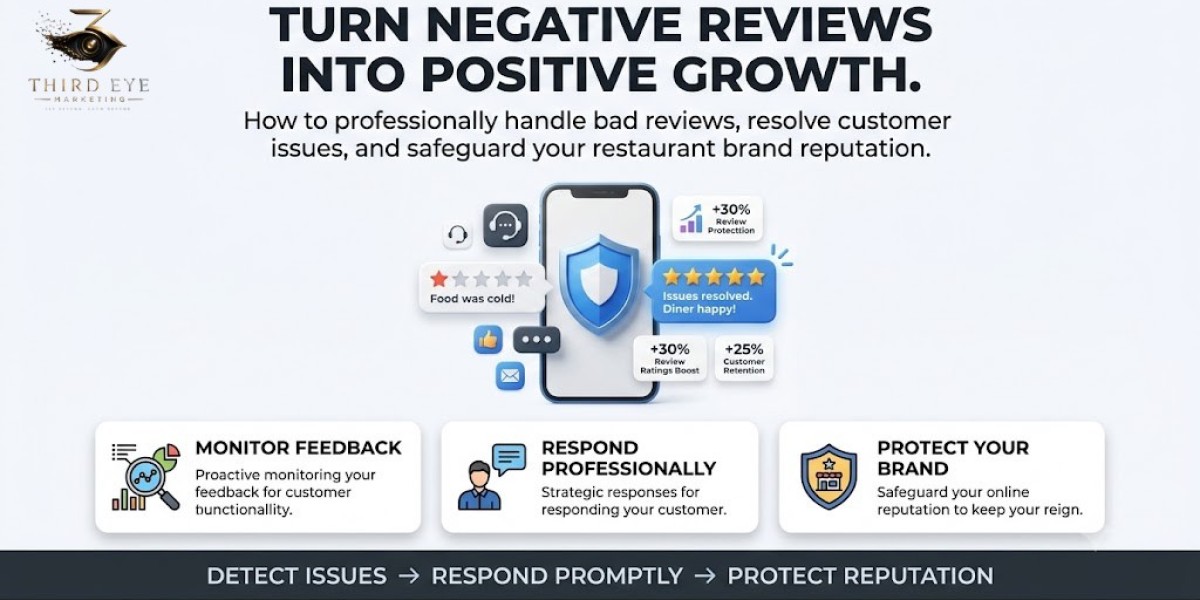


How to Manage Negative Restaurant Reviews and Protect Your Online Reputation
Negative restaurant reviews are unavoidable.
Even restaurants that consistently provide excellent food and service can receive an unhappy customer review from time to time. The important question is not whether your restaurant will ever receive a negative review. It is how you respond when it happens.
For restaurants in competitive markets such as Vancouver and Surrey, online reviews can strongly influence whether potential customers decide to make a reservation, place an order, or choose a competitor.
This makes online reputation management an important part of restaurant marketing. A professional approach to reviews can help protect your brand, demonstrate that you value customers, and turn difficult feedback into opportunities to improve.
The goal should not be to eliminate every negative review. Instead, restaurants should build a reputation that demonstrates transparency, responsiveness, consistency, and excellent customer experiences.
Why Negative Restaurant Reviews Matter
Before visiting a restaurant, customers often look at:
Google reviews
Star ratings
Recent customer feedback
Restaurant photos
Social media comments
Responses from the business
Recommendations from other customers
A single negative review usually will not destroy a restaurant's reputation.
However, a pattern of unanswered complaints, outdated information, or defensive responses can create a negative impression.
For example, imagine a customer discovers two restaurants while searching online.
The first restaurant has hundreds of reviews, responds professionally to feedback, and regularly receives positive comments.
The second restaurant has several unanswered complaints about service and food quality.
Even if both restaurants offer similar menus and prices, the customer may feel more comfortable choosing the first one.
This is why reputation management should be viewed as part of the customer acquisition process.
What Is Online Reputation Management for Restaurants?
Online reputation management is the ongoing process of monitoring, managing, and improving how customers perceive your restaurant online.
It includes activities such as:
Monitoring Google reviews
Responding to customer feedback
Managing social media comments
Monitoring brand mentions
Encouraging genuine customer reviews
Addressing recurring complaints
Updating inaccurate business information
Promoting positive customer experiences
Reputation management is not about hiding criticism.
Instead, it is about making sure your restaurant responds appropriately while creating more positive customer experiences over time.
1. Don't React Emotionally to Negative Reviews
One of the biggest mistakes restaurants make is responding emotionally.
A negative review can feel personal, particularly when restaurant owners and staff work hard to deliver a good experience.
However, responding defensively can make the situation worse.
Avoid statements such as:
“You are wrong.”
“That never happened.”
“You don't understand our food.”
“Other customers loved it.”
“This is your fault.”
Instead, acknowledge the customer's experience and maintain a professional tone.
Remember that your response is not only for the reviewer.
Future customers are reading it too.
A calm, respectful response can demonstrate professionalism even when the original review is negative.
2. Respond Quickly but Thoughtfully
Restaurants should monitor their review platforms regularly.
A timely response shows that the business is paying attention.
However, speed should not come at the expense of quality.
Before responding, understand:
What happened?
Was the complaint related to food?
Was it service?
Was there a billing issue?
Was the customer waiting too long?
Was there a misunderstanding?
Has the same problem been mentioned before?
Once you understand the situation, create a response that addresses the concern without becoming defensive.
3. Acknowledge the Customer's Experience
You do not necessarily have to agree with every statement in a review.
But you can acknowledge that the customer had a poor experience.
A professional response could communicate:
Appreciation for the feedback
Recognition of the customer's frustration
An apology where appropriate
Commitment to improvement
An invitation to continue the conversation privately
This approach creates a more positive impression for people reading the review.
4. Take Sensitive Conversations Offline
Public review platforms are not always the right place to resolve complicated disputes.
If the complaint involves:
Refunds
Billing
Staff disputes
Personal information
Detailed service issues
Serious allegations
Invite the customer to contact the restaurant directly.
The public response should remain concise and professional.
The objective is to demonstrate that you are willing to resolve the problem without turning the review section into a public argument.
5. Look for Patterns Instead of Treating Every Review as an Isolated Incident
One negative review may be an isolated situation.
Ten reviews mentioning the same problem are different.
Restaurants should look for recurring themes.
For example:
Multiple customers mention slow service → Review staffing and processes.
Customers repeatedly mention confusing online ordering → Improve the ordering experience.
Several reviews mention inconsistent food quality → Review kitchen processes and quality control.
This makes reviews a valuable source of business intelligence.
Negative feedback can reveal operational problems that may otherwise remain unnoticed.
6. Manage Your Reputation on Social Media
Restaurant reputation extends beyond Google.
Online reputation social media management is increasingly important because customers frequently discuss restaurants on Instagram, Facebook, and other platforms.
Customers may:
Tag your restaurant
Comment on posts
Share photos
Ask questions
Recommend your business
Complain publicly
Share their dining experiences
Ignoring these conversations can make a restaurant appear disconnected.
Restaurants should monitor relevant comments, mentions, tags, and direct messages and respond appropriately.
Social media also provides an opportunity to proactively build a positive reputation.
Show customers:
Behind-the-scenes preparation
Staff stories
New dishes
Customer experiences
Restaurant events
Community involvement
Fresh menu launches
This helps potential customers see the people and experiences behind the brand.
7. Encourage More Genuine Positive Reviews
The best way to strengthen your online reputation is not to argue with negative reviews.
It is to consistently create positive customer experiences and make it easy for satisfied customers to share them.
Restaurants can encourage genuine feedback through:
QR codes
Email follow-ups
SMS
Receipts
Loyalty programs
Online ordering confirmations
Post-visit communication
The process should never involve fake reviews or pressuring customers to leave only positive feedback.
Instead, invite genuine feedback from customers who have interacted with your restaurant.
Over time, a healthy flow of authentic reviews can provide more balanced social proof.
8. Use Positive Reviews as Marketing Assets
Positive reviews should not simply sit on Google.
With appropriate permission, restaurants can turn customer feedback into marketing content.
For example:
Google Review → Social Media Post → Website Testimonial → Email Content
A strong customer testimonial can help communicate the experience potential diners can expect.
Restaurant websites can also feature selected testimonials alongside:
Food photography
Menu information
Booking CTAs
Customer stories
Restaurant information
This creates additional trust during the decision-making process.
9. Connect Reputation With Repeat Customer Marketing
Reputation management should not only focus on acquiring new customers.
It can also influence existing customer relationships.
Customers who have a positive experience are more likely to return and recommend the restaurant.
This is where repeat customer marketing becomes important.
Restaurants can combine reputation-building with:
Loyalty programs
Email marketing
Personalized offers
Social media engagement
Birthday campaigns
New menu announcements
Special events
For example:
Great Experience → Positive Review → Loyalty Signup → Personalized Communication → Repeat Visit
This creates a cycle where customer experience, reputation, and retention support one another.
10. Monitor Your Online Reputation Consistently
Reputation management should be an ongoing process rather than something you do only after receiving a bad review.
Restaurants should establish a regular monitoring routine.
Check:
Google reviews
Social media comments
Customer messages
Restaurant directories
Brand mentions
Website feedback
Review trends
Track both positive and negative feedback.
This helps identify what customers love about the restaurant and where improvements may be required.
Common Mistakes Restaurants Should Avoid
Deleting Every Negative Comment
Removing legitimate criticism can make the business appear less transparent.
Arguing With Customers
Public arguments can attract more attention to the original complaint.
Copying the Same Response
Generic responses can make customers feel ignored.
Ignoring Reviews
Silence can sometimes create a worse impression than the original complaint.
Buying Fake Reviews
Fake reviews can damage trust and undermine long-term credibility.
Focusing Only on the Star Rating
A restaurant should also monitor review volume, recency, sentiment, response quality, and actual business outcomes.
When Should a Restaurant Consider Professional Reputation Management?
Managing a few reviews every week may be straightforward for a small restaurant.
As the business grows, however, reputation management can become more complex.
Restaurants operating multiple locations or receiving large volumes of customer feedback may benefit from professional support.
An agency in Vancouver with experience in restaurant marketing can help create systems for monitoring reviews, managing responses, generating customer feedback, and connecting reputation with broader digital marketing.
When comparing the best agencies in Vancouver, restaurant owners should look beyond generic marketing promises.
Look for an agency that understands:
Local SEO
Google Business Profile optimization
Reputation management
Social media
Website conversion
Paid advertising
Customer retention
Analytics
The goal should be measurable business growth rather than simply increasing followers or impressions.
How a Digital Marketing Partner Can Help
Reputation management works best when it is connected to the restaurant's complete digital ecosystem.
The right digital marketing company in Canada can help integrate reputation management with SEO, paid advertising, social media, website optimization, content marketing, and customer retention.
A digital marketing agency in Canada may also help restaurants monitor performance across different channels and identify opportunities to improve conversions.
For example:
Local Search → Positive Reviews → Website Visit → Reservation → Great Experience → Review → Repeat Customer
This creates a connected customer journey.
When evaluating the best digital marketing companies, restaurant owners should ask how the agency measures success.
Important metrics can include:
Review volume
Average rating
Review response rate
Website conversions
Booking requests
Phone calls
Direction requests
Repeat visits
Customer acquisition cost
Revenue
The focus should always remain on outcomes that contribute to restaurant growth.
How Third Eye Marketing Can Help
Third Eye Marketing can help restaurants develop an integrated digital strategy that combines local SEO, reputation management, social media, website optimization, paid advertising, content, and customer retention.
Instead of treating negative reviews as isolated problems, the strategy should use customer feedback as a source of insight while building stronger trust across every digital touchpoint.
For restaurants in Vancouver and Surrey, this approach can help create a stronger local presence and a more consistent customer journey.
Negative reviews are part of doing business in the restaurant industry.
The restaurants that handle them best are not necessarily the ones that never receive criticism. They are the ones that respond professionally, learn from feedback, improve the customer experience, and consistently build positive social proof.
Effective online reputation management is therefore about much more than responding to bad reviews.
It is about creating a system:
Listen → Respond → Improve → Engage → Build Trust → Encourage Genuine Reviews → Retain Customers
When reputation management is combined with online reputation social media efforts and repeat customer marketing, restaurants can turn customer feedback into a long-term growth advantage.
For restaurant owners in Vancouver, Surrey, and across Canada, protecting your online reputation is not simply about defending your brand.
It is about giving future customers enough confidence to choose you—and giving existing customers enough reasons to come back.
Ready to Turn Your Digital Marketing Into Real Business Growth?
Whether you need more website visitors, qualified leads, bookings, sales, or stronger local visibility, the right digital marketing strategy can make a measurable difference.
Book your free consultation with Third Eye Marketing and discover practical opportunities to improve your online presence, attract the right customers, and turn more visitors into conversions.
Book Your Free Consultation Today
Website: thirdeyemarketing.ca
Phone: +1 236-880-3783
FAQs
1. Should restaurants respond to every negative review?
Restaurants should generally respond to legitimate negative reviews professionally, particularly when the feedback could influence potential customers. Responses should acknowledge the concern and avoid public arguments.
2. Can a negative review hurt a restaurant's business?
A single negative review is unlikely to determine a customer's decision by itself. However, repeated negative feedback, unresolved complaints, and consistently poor ratings can reduce customer confidence.
3. How can restaurants get more positive reviews?
The best approach is to provide a strong customer experience and make it easy for genuine customers to leave feedback through appropriate channels such as follow-up emails, receipts, QR codes, or loyalty communications.
4. Does social media affect restaurant reputation?
Yes. Customer comments, tags, recommendations, photos, and complaints can influence how people perceive a restaurant. Monitoring and managing online reputation social media activity should therefore be part of a broader reputation strategy.
5. When should a restaurant hire a digital marketing agency?
Restaurants may benefit from professional support when managing reviews, local SEO, social media, advertising, website optimization, and customer retention becomes difficult to handle internally. A qualified digital marketing agency in Canada can help connect these activities into a measurable growth strategy.









