

Introduction
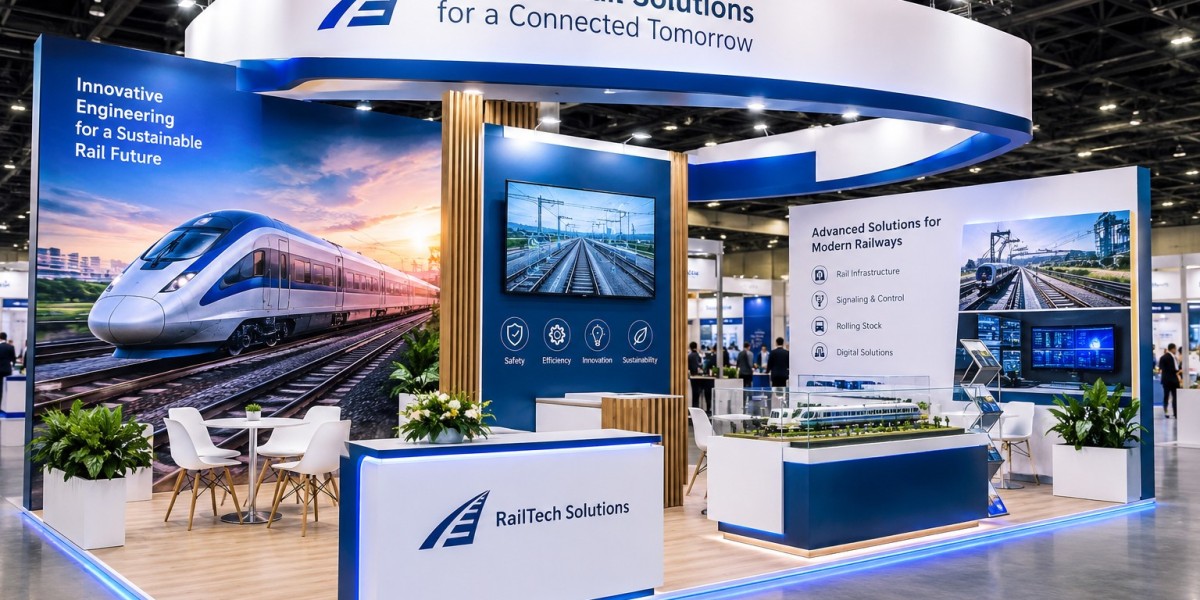
Railway engineering exhibitions provide companies with an opportunity to present products, technologies, infrastructure solutions, and technical expertise to a highly focused professional audience. However, simply having a booth at an industry event does not guarantee meaningful visitor engagement. A poorly planned booth can make even an excellent engineering solution difficult to understand or remember. A strategic Railway engineering trade show booth design should therefore be developed around clear communication, visitor movement, product presentation, technology, staff interaction, and practical exhibition requirements.
Railway engineering is a technically complex field, which makes booth planning particularly important. Exhibitors often need to communicate specifications, infrastructure applications, safety features, project experience, and technological advantages within a limited physical space. Avoiding common design mistakes can help companies create a professional environment that supports both technical discussions and business development.
1. Failing to Define Clear Exhibition Objectives
One of the most common mistakes is beginning the booth design without establishing clear objectives.
A company should determine what it wants to achieve before deciding on colors, furniture, displays, or technology.
Potential objectives include:
Generating qualified leads
Launching a product
Demonstrating new technology
Meeting existing customers
Building industry awareness
Presenting engineering capabilities
Developing partnerships
A booth designed without specific goals can become visually attractive but strategically ineffective.
2. Trying to Communicate Too Much
Railway engineering companies often have extensive technical information.
The problem arises when exhibitors attempt to place everything on booth walls.
Large blocks of text, long specifications, multiple diagrams, and numerous product descriptions can overwhelm visitors.
A better approach is to establish a communication hierarchy:
Main message → Key solutions → Supporting information → Detailed technical resources
Visitors who need additional information can access it through digital displays, brochures, or conversations with technical staff.
3. Using Complicated Technical Language
The audience may understand engineering terminology, but that does not mean every visitor has the same technical background.
Executives, procurement professionals, project managers, engineers, and consultants may look at the same product from different perspectives.
Therefore, messaging should be technically accurate while remaining easy to understand.
Use concise explanations before presenting detailed specifications.
4. Weak or Unclear Branding
Visitors should be able to identify a company quickly.
A booth with weak branding can become visually anonymous in a crowded exhibition hall.
Branding should appear consistently across:
Main signage
Walls
Displays
Digital screens
Product areas
Literature
Staff materials
The company name and primary message should be visible from the main visitor approaches.
5. Poor Booth Layout
A booth may have excellent graphics and products but still perform poorly if visitors cannot move through it comfortably.
Common layout problems include:
Narrow pathways
Excessive furniture
Blocked entrances
Poorly positioned displays
Hidden meeting spaces
Crowded demonstration areas
The layout should encourage visitors to enter naturally and explore different areas without feeling restricted.
6. Ignoring Visitor Flow
Visitor flow should be considered during the earliest planning stages.
Imagine approaching the booth from different directions.
Can visitors immediately see:
Who the company is?
What it offers?
Where the main products are?
Where demonstrations occur?
Where staff are available?
If visitors need to search for this information, the booth may lose valuable engagement opportunities.
7. Overloading the Booth With Technology
Technology can improve an exhibition experience, but more technology does not automatically mean a better booth.
Too many screens, interactive stations, projections, or VR devices can create visual and operational clutter.
Every technology element should serve a clear purpose.
Ask:
Does this technology help visitors understand our solution?
If it does not, it may not be necessary.
8. Using Technology Without Testing It
Technical problems can damage an otherwise professional presentation.
Common issues include:
Videos not playing
Touchscreens freezing
Internet connections failing
QR codes not working
Audio problems
Incorrect software versions
Charging failures
All technology should be tested before the exhibition opens.
Backup content should also be available when possible.
9. Neglecting Lighting
Lighting is sometimes treated as a minor detail.
However, poor lighting can make products, graphics, and important information difficult to see.
Effective lighting can create visual hierarchy by highlighting:
Key products
Brand messaging
Demonstration areas
Architectural features
Meeting spaces
The goal is not simply to make the booth bright but to guide visitor attention.
10. Poor Product Presentation
Railway engineering products can vary significantly in size and complexity.
A component placed randomly on a table may fail to communicate its engineering value.
Products should be displayed with context.
Useful supporting information can include:
Product purpose
Application
Technical features
Operating environment
Installation information
Maintenance considerations
This helps visitors understand why the product matters.
11. Ignoring the Importance of Demonstrations
Technical products are often easier to understand when visitors can see them in operation.
A company may have a sophisticated solution but explain it entirely through brochures.
Where practical, demonstrations can provide stronger communication.
Possible formats include:
Physical demonstrations
Software demonstrations
Simulations
3D models
Interactive displays
Digital twins
Video demonstrations
The demonstration should be short enough to work within the fast-paced trade show environment.
12. Creating Meeting Areas That Are Too Large
Private meetings are important, but dedicating excessive space to them can make the public-facing booth feel closed.
Visitors should still be able to see products and staff.
A balanced approach may include:
Open discussion tables
Semi-private seating
One smaller enclosed meeting room where necessary
The appropriate balance depends on booth size and business objectives.
13. Forgetting Storage
Storage is a practical requirement that can easily be overlooked.
Without dedicated storage, boxes, bags, brochures, cables, and personal belongings can end up in visitor-facing areas.
This can make the booth appear disorganized.
Hidden storage helps maintain a clean professional environment throughout the event.
14. Using Low-Quality Graphics
Poor-quality images can reduce the perceived professionalism of an engineering brand.
Graphics should be:
High resolution
Easy to read
Technically accurate
Consistent with brand standards
Appropriate for the viewing distance
Large-format graphics require particular attention to image quality.
15. Making the Booth Difficult to Understand From a Distance
Visitors often see a booth before they approach it.
If the main message can only be understood after someone walks inside, the booth may miss potential visitors.
The primary communication should therefore work at multiple distances:
From far away: Company and main value proposition.
From medium distance: Key products or solutions.
Up close: Technical details and demonstrations.
16. Choosing Furniture Without Considering Visitor Behavior
Furniture should support the way visitors interact with the booth.
Too many chairs can create unnecessary barriers.
Furniture that is too large can reduce open space.
Furniture that is uncomfortable may discourage longer conversations.
The selection should consider:
Visitor comfort
Staff needs
Available floor area
Meeting duration
Accessibility
Overall visual appearance
17. Forgetting Accessibility
Exhibition spaces should be approachable for visitors with different mobility requirements.
Pathways should provide adequate space, and important information should not be placed where it is difficult to access.
Accessibility should be considered throughout the design rather than treated as an afterthought.
18. Failing to Train Booth Staff
A beautifully designed booth cannot compensate for an unprepared team.
Staff should understand:
The company's key messages
Major products
Demonstration procedures
Target visitor profiles
Lead qualification
Meeting schedules
Follow-up processes
Staff should also know how to invite visitors into conversations without being overly aggressive.
19. Allowing Staff to Cluster Together
Another common mistake is having employees stand together in one area while visitors walk past unattended.
Staff positioning affects approachability.
Team members should remain alert, available, and engaged with visitors.
They should also avoid spending excessive time on personal conversations while potential prospects are nearby.
20. Using an Overly Sales-Focused Approach
Railway engineering exhibitions often involve technically informed visitors.
A highly aggressive sales approach may be counterproductive.
Instead, staff can begin with relevant questions such as:
What type of railway projects are you currently working on?
Which infrastructure challenges are you evaluating?
Are you looking for new technology or maintenance solutions?
Would you like to see how this system operates?
This approach encourages meaningful discussion.
21. Not Creating a Visitor Journey
A booth should have a logical progression.
For example:
Attract → Inform → Demonstrate → Discuss → Connect
If every section competes for attention, visitors may not know where to begin.
A clear journey helps organize both physical space and communication.
22. Ignoring the Importance of Content
Design is not only about physical construction.
Content determines what visitors actually learn.
A strong content strategy should identify:
Primary message
Product stories
Technical information
Project examples
Demonstrations
Calls to action
Design and content should be developed together.
23. Waiting Too Long to Begin Planning
Last-minute booth planning can lead to unnecessary compromises.
Exhibitors may face rushed decisions involving:
Graphics
Fabrication
Technology
Shipping
Furniture
Electrical requirements
Staff schedules
Starting early provides more time for testing, revisions, and quality control.
24. Ignoring Venue and Event Regulations
Every exhibition has specific requirements.
These may cover:
Booth height
Electrical systems
Fire safety
Rigging
Structural elements
Installation
Accessibility
Material use
Failure to review these rules can lead to delays, modifications, or additional expenses.
25. Underestimating Installation Logistics
A booth design may look excellent on paper but become difficult to install if logistics are not considered.
Large components, heavy products, fragile technology, and complicated structures require careful coordination.
The installation plan should identify:
Delivery times
Loading access
Assembly sequence
Electrical requirements
Technology installation
Final inspection
26. Not Having a Backup Plan
Unexpected issues can occur at any exhibition.
A screen might fail, a shipment could be delayed, or a demonstration may stop working.
Backup materials can include:
Offline videos
Printed technical documents
Backup presentation files
Alternative demonstrations
Spare cables
Additional power equipment
Preparation can prevent a small technical issue from becoming a major disruption.
27. Neglecting Lead Capture
A booth may generate significant traffic without generating useful business opportunities.
Lead capture should be simple and connected to visitor interests.
Instead of collecting excessive information, exhibitors can focus on essentials such as:
Contact details
Company
Area of interest
Project requirements
Follow-up preference
Digital lead forms can also connect visitor information with specific product interests.
28. Failing to Measure Results
After the exhibition, companies should evaluate performance.
Useful measurements include:
Total visitors
Qualified leads
Meetings
Product demonstrations
Technical inquiries
Follow-up opportunities
Customer feedback
These metrics can help determine which booth elements were effective.
29. Designing Every Exhibition Booth From Scratch
Companies attending multiple railway events may waste time and resources by starting completely from zero each time.
A modular design system can provide flexibility.
Elements such as:
Product displays
Graphic frames
Counters
Digital screens
Storage
Lighting
can sometimes be adapted for different booth sizes and event environments.
30. Focusing Only on Appearance
Perhaps the biggest mistake is treating the booth primarily as an architectural display.
A beautiful booth is valuable, but appearance alone does not generate meaningful engagement.
An effective exhibition environment should balance:
Branding + Information + Demonstration + Interaction + Comfort + Business Objectives
The design should ultimately help visitors understand the company's solutions and encourage relevant conversations.
31. How to Build a Better Booth Strategy
Avoiding mistakes becomes easier when exhibitors follow a structured process.
Step 1: Establish Objectives
Determine what success should look like.
Step 2: Understand Visitors
Identify the people most likely to benefit from the company's solutions.
Step 3: Prioritize Content
Select the most important messages and products.
Step 4: Plan Visitor Flow
Create an open and intuitive layout.
Step 5: Integrate Technology
Use digital tools where they improve understanding.
Step 6: Prepare Staff
Train the team before the event.
Step 7: Test Everything
Conduct technical and operational checks.
Step 8: Measure Performance
Review results and apply lessons to future exhibitions.
Conclusion
A successful railway exhibition booth depends on much more than an attractive structure. Companies need to consider objectives, visitor behavior, messaging, product presentation, technology, lighting, accessibility, staff preparation, logistics, and post-event measurement. Avoiding common mistakes such as overcrowding the booth, using excessive technical content, neglecting storage, relying on untested technology, or failing to train staff can significantly improve the overall exhibition experience.
For companies preparing to participate in railway engineering events, a strategic Railway engineering trade show booth design should be developed with both visual communication and practical visitor engagement in mind. When the design clearly communicates technical expertise, creates an accessible visitor journey, supports demonstrations, and gives staff the right environment for meaningful conversations, the booth can become a valuable platform for building professional relationships and presenting railway engineering solutions effectively.









